
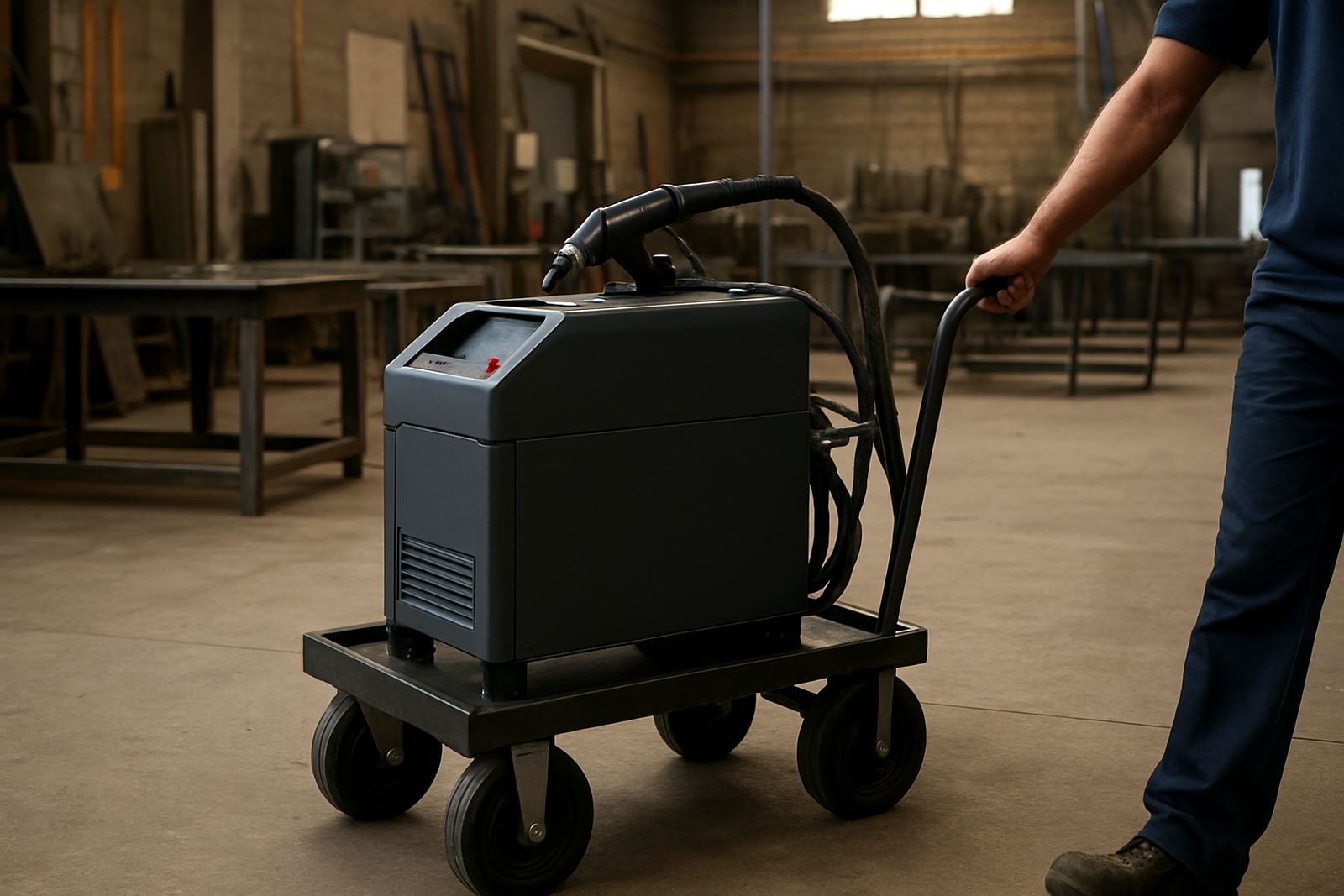
What the shop floor trolley does on a busy weld floor
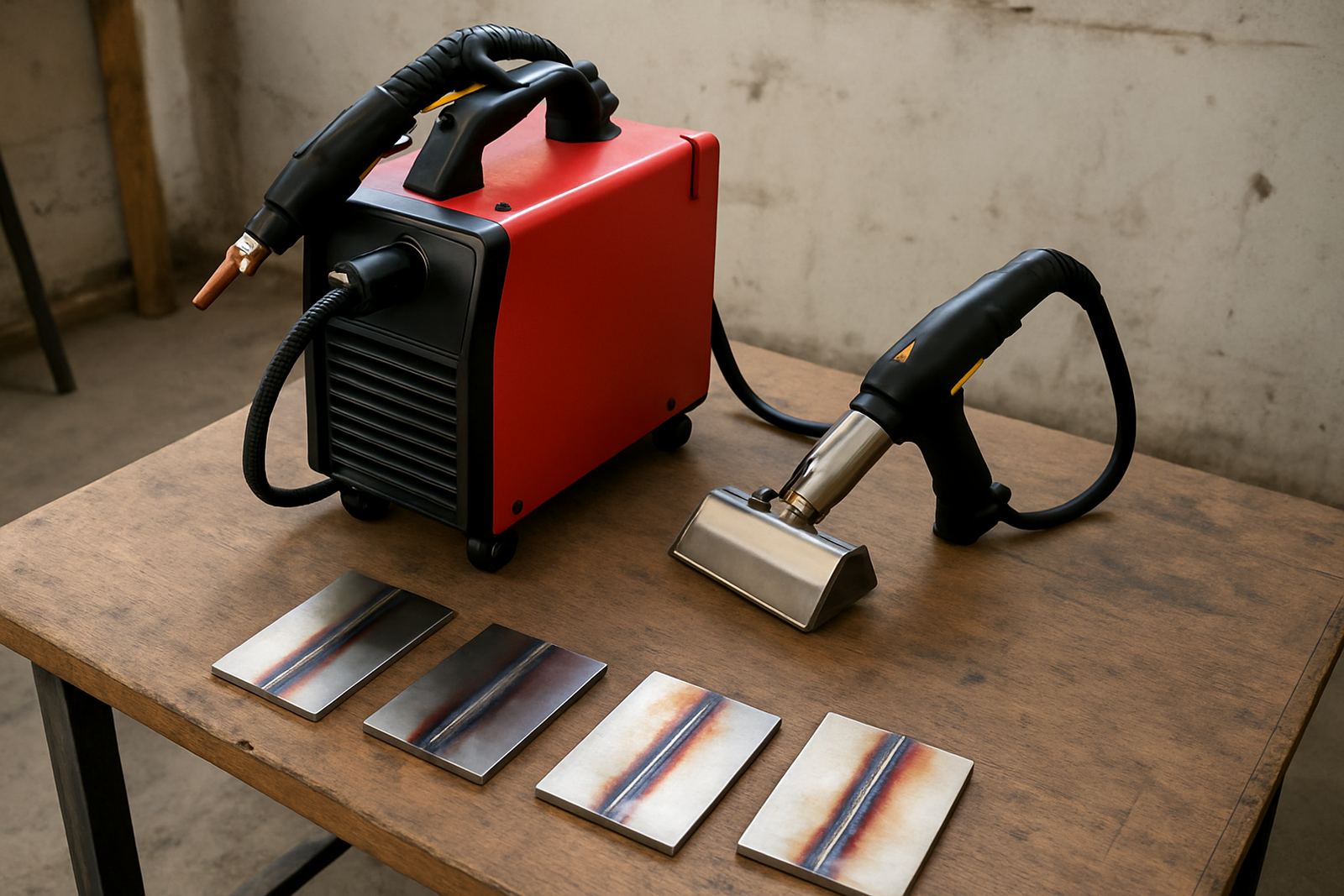
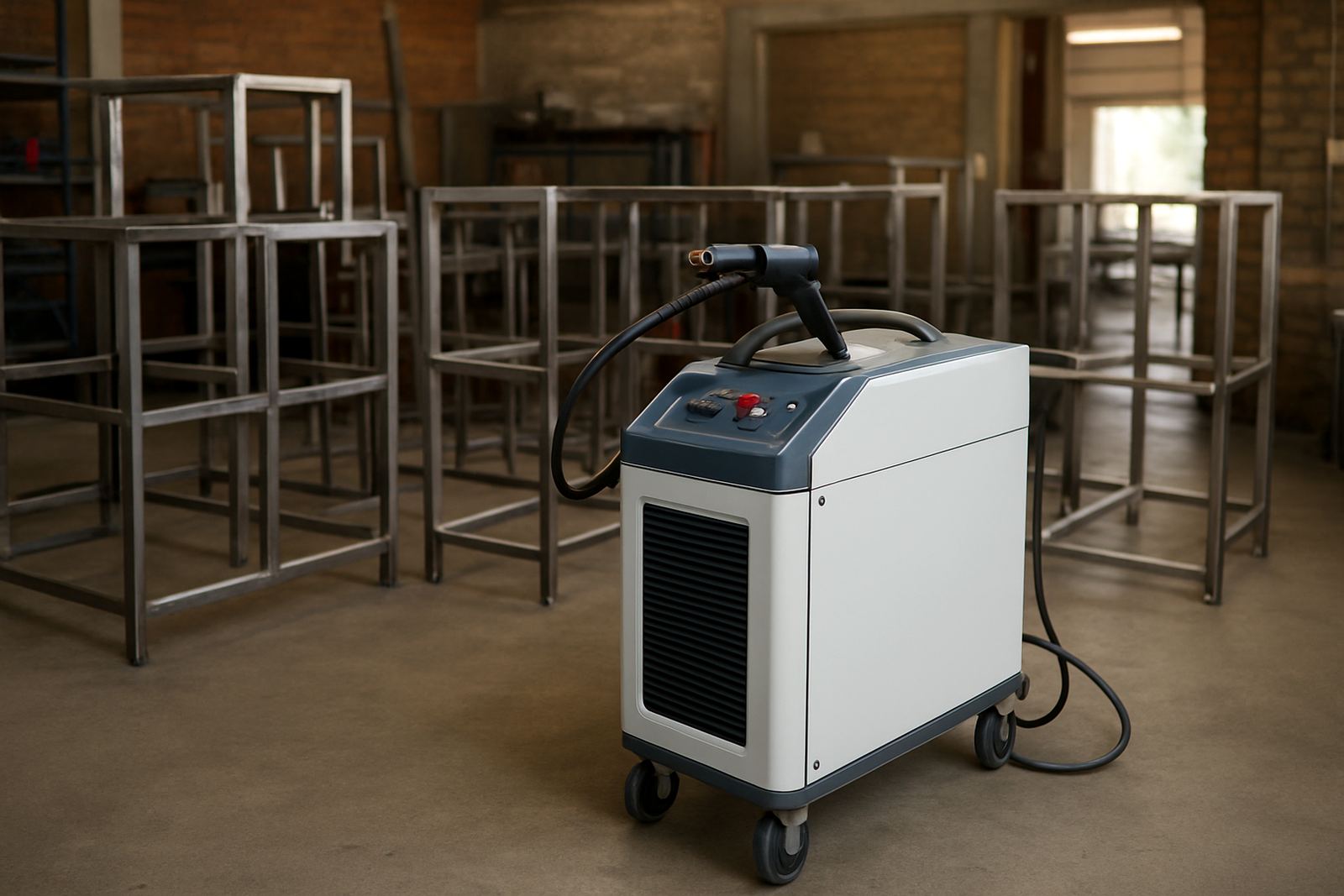
This trolley package is made for fabricators who move a handheld fibre laser welder more than once a day. Instead of lifting the unit by hand or parking it on a random pallet, the machine sits on a stable base with room for the control unit, cable management and working bits that tend to go missing. In smaller shops around Spartan, Kempton Park and Jet Park, that means less clutter and fewer knocks to the machine during shift changes.
The trolley is useful where the welding point changes through the day, for example from cut and fit work to final stainless finish work. It also helps when the machine needs to be wheeled out for a demo, training session or a quick move between fabrication bays. The frame is built for workshop floors, not polished office areas, so it handles concrete dust, mild swarf and the usual busy floor traffic without fuss.
Sizes, layout options and storage choices
Different workshops need different layouts, so the trolley can be set up for a compact footprint or a wider stance depending on the machine size and the space you have between benches. A narrow frame suits tight production lines, while a wider base gives better stability where floors are uneven or where the machine is moved over expansion joints and door lips.
- Compact trolley for smaller bays and tight turnaround areas
- Standard trolley for general fabrication and production use
- Heavy duty frame for larger units and more frequent movement
- Accessory shelf space for torch holders, wire tools or hand tools
- Lockable caster set for parking during welding or storage
For stainless steel workshops, extra shelf room is handy because you can keep consumables, a cleaning cloth and spare nozzles close by. That saves time when a line is waiting and the operator should not be walking back and forth for every small item.
Where this trolley suits best in South African fabrication shops
This setup works well in stainless steel fabrication, light manufacturing, food-grade work, kitchen equipment, balustrade shops and general metalwork where clean movement matters. It is also a practical fit for workshops in Ekurhuleni, where floor space is often shared between cutting, tacking, welding and finishing. In coastal areas the trolley helps keep the machine off damp concrete and away from splash zones, which is useful when humidity is high and corrosion risk climbs.
It suits shops that run day and night shifts, because the machine can be parked in one safe place after use instead of being carried from bay to bay. If your team does production rollouts, refresher training or operator handovers, a mobile stand makes the machine easier to place in the right spot quickly and with less risk of damage. It is also handy for sites with load-shedding, since the machine can be parked neatly near the preferred power point when the supply returns.
Power, gas and site setup before the trolley goes into service
The trolley itself needs no power connection, but it should be matched to the full welder package and the way your shop is arranged. Before ordering, check the floor width, doorway sizes and whether the welder will need to travel over ramps, drains or threshold strips. If the route is rough, a stronger caster set is worth having.
- Confirm the machine dimensions and total weight with accessories fitted
- Measure doorways, gangways and storage bays where the unit will travel
- Check power socket location so the lead reaches without strain
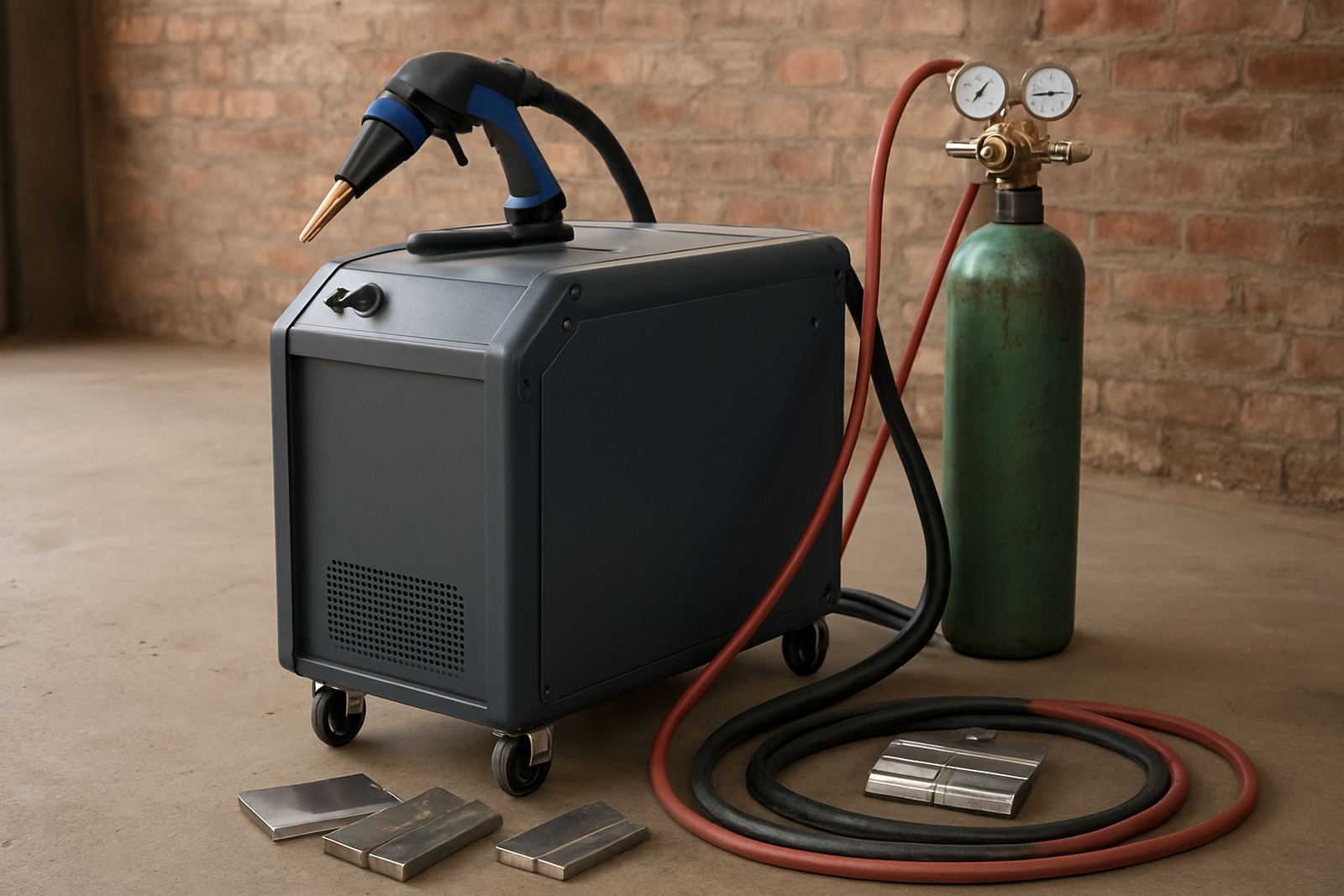
- Allow space for gas cylinder positioning if your setup uses shielding gas
- Plan where the trolley will stand during charging, maintenance or overnight storage
For gas-assisted work, cylinder restraint matters. The trolley should be ordered with the correct mounting arrangement so the bottle is held properly and does not shift when the unit rolls over uneven concrete. If your shop changes layouts often, ask for a configuration that allows quick repositioning without a lot of lifting.
Care, cleaning and maintenance between jobs
Good care keeps the trolley rolling straight and stops small issues becoming bigger repairs. Wipe down the frame regularly, especially if the workshop handles stainless offcuts, grinding dust or light coolant overspray. Check wheels for wrapped wire, grit and metal chips, because that is what usually causes noisy movement and uneven tracking. A quick clean once a week is better than forcing a sticky caster every day.
Also check the fasteners that hold the machine and shelf parts in place. On a busy floor, vibration and repeated movement can loosen fittings over time, especially if the trolley is used on rough concrete. If the machine is moved outside for demos or shop trials, dry it off after use and store it under cover. In humid areas near the coast, that extra care reduces surface rust and keeps the unit looking tidy for longer.
What to check when ordering a trolley package
Ordering the right trolley starts with the welder model and how the machine is used day to day. If the workshop does short runs, a lighter frame may be enough. If the unit is moved often or sits in a production line, go for a stronger build with better wheel lock-up and more stable stance.
- Machine model and overall footprint
- Whether you need extra shelf space or a simple open frame
- Preferred caster size for smooth floors or rough workshop concrete
- Need for cylinder mounting or cable storage
- Access route width for moving the trolley around the shop
- Any site rules on floor loading, aisles or storage near exits
If you are not sure what will fit, our team can check the measurements with you before supply. That is especially useful for fabrication shops in Germiston, Boksburg, Alberton and the wider Ekurhuleni area where bays can be tight and every metre counts.
Key facts
| Product type | Mobile shop floor trolley for handheld fibre laser welders |
|---|---|
| Primary use | Safe movement and parked storage between work areas |
| Frame | Steel welded construction for workshop use |
| Wheels | Lockable caster set for controlled movement and parking |
| Typical use areas | Stainless steel fabrication, light manufacturing, demos and training |
| Service support | Commissioning, training, maintenance, repairs and spares support |