What to send with your sample assessment
The more detail you send, the easier it is for the team to advise you clearly. A good sample assessment starts with the material grade, material thickness, joint type, and what finish you need on the weld. If your job is for kitchen equipment, tanks, handrails or precision fabrications, say so. That helps the team judge whether the process suits the application and where the limits may be.
- Stainless steel grade and thickness in millimetres
- Joint type, for example butt, fillet, lap or corner
- Part size, access points and any tricky angles
- Required finish, including visible weld quality and cleanup level
- Expected output per day or per week
- Photos of the parts, current welds, and problem areas
How the assessment is checked
Once the details come in, the team looks at the job from a practical fabrication point of view. That includes material behaviour, fit-up, heat input, speed, and whether the weld needs extra cleaning or post-processing. In many cases a sample can be reviewed against your current method so you can see where time is saved and where quality may improve.
The aim is not to overcomplicate it. You get a direct answer on suitability, plus clear comments on what settings, prep work, and operator skill are likely to matter most. If a job is borderline, the team will say so and explain the reasons.
What happens after the sample is reviewed
After review, you will get next steps suited to your workshop or site. For some jobs that means a shop demonstration in Spartan, Kempton Park or another service area. For others it means a weld test at your own premises, followed by process optimisation and operator training. If your team needs to see the machine working on real material, a live demo is often the quickest way to settle the question.
- Suitability feedback for your stainless application
- Advice on weld speed, torch handling and joint prep
- Training needs for one operator or a full team
- Recommendations for commissioning, rollout or maintenance
- Notes on consumables, spares and ongoing support
Samples for workshops, factories and field work
Laser-Welder supports stainless fabricators in small shops and larger production environments across Ekurhuleni and nationwide. If you work from a compact workshop in Isando or Jet Park, the assessment may focus on space, power stability, and how often the machine will be moved around. If you are in production, the focus is usually on repeatability, throughput and how the weld holds up over long runs.
For sites affected by load-shedding or unstable supply, that also gets checked. Stable operation matters when production deadlines are tight, and the team can advise on sensible working practices, including how to protect the machine and keep the crew productive.
How to prepare the parts before sending details
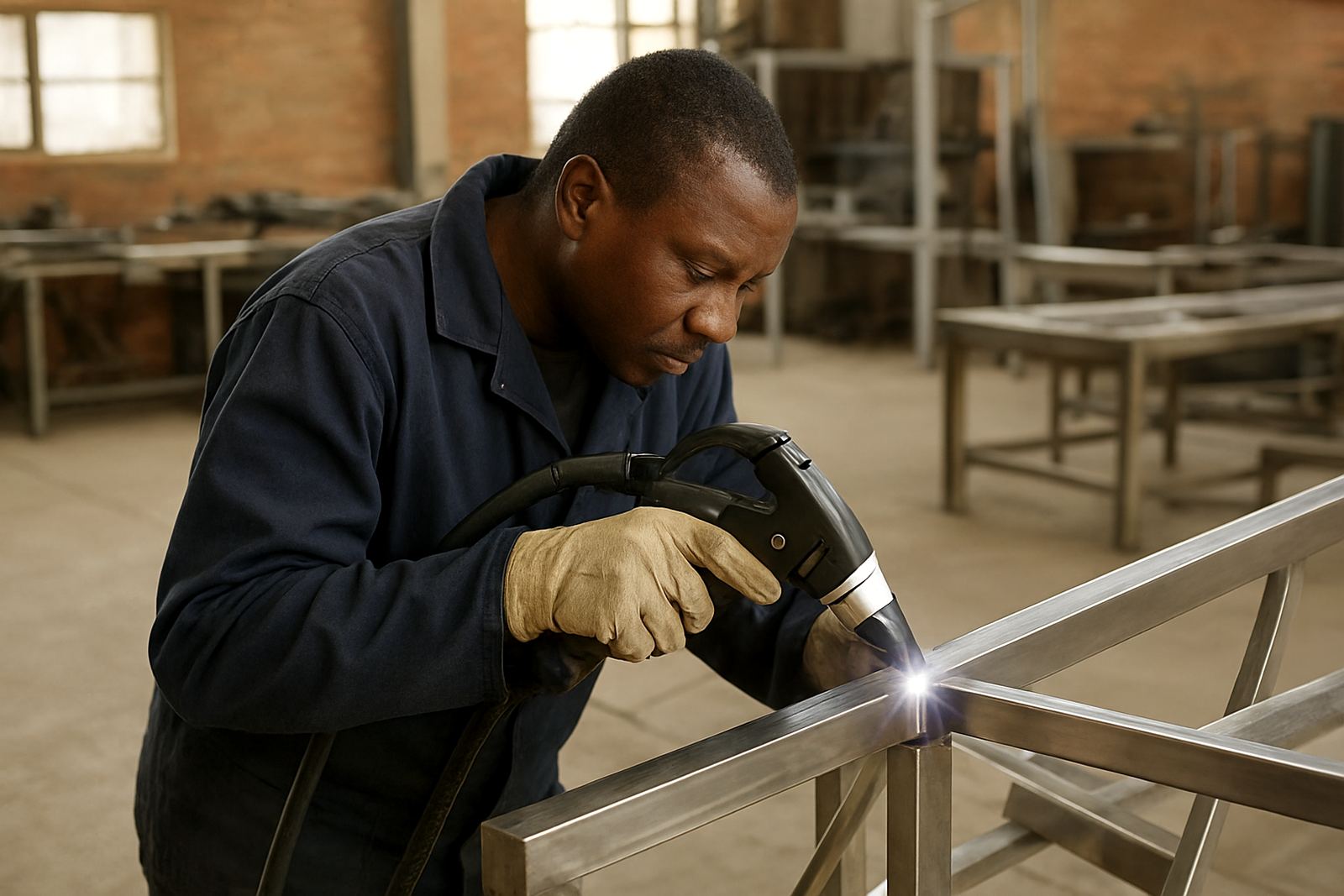
Clean, clear information leads to better advice. Before you send your sample assessment, make sure the job is described as honestly as possible. If there are gaps in fit-up, heavy oxidation, or mixed stainless conditions, say so. Those details affect the result and can change whether the job is best suited to handheld fibre laser welding or another process.
- Remove loose dirt, oil and heavy rust where possible
- Measure thickness with a proper gauge, not a guess
- Note whether the weld is structural or cosmetic
- Include any customer spec, drawing or tolerance notes
- Tell the team if the part is for coastal use or wet areas
Training and support after approval
If the sample is approved, the next step is usually not just delivery and a handshake. The team can assist with machine commissioning, operator training, refresher training, preventive maintenance and breakdown response. That matters when you are trying to keep weld quality consistent over months, not only on the first day. The training lead and technical team work with your operators so the setup makes sense on the shop floor, not only in theory.
Support also covers spares supply, consumables support, remote help and weld testing where needed. That gives your crew a point of contact when a job changes, a weld starts looking inconsistent or production needs to move faster.
Simple way to start the process
Use the enquiry form on the contact page and send through the sample details, photos and any drawing notes you have. If you are near Spartan, Kempton Park, Edenvale, Germiston, Boksburg, Alberton or Isando, the team can often arrange a local demo or assessment path that suits your schedule. Jobs from further afield are handled as well, with on-site demonstrations and training arranged at fabrication shops nationwide.
For stainless work, a careful sample assessment saves time, avoids guesswork and helps you make the right call before production starts.