
Parts matched to the way your workshop runs
Our spares supply service is built for stainless steel fabricators who need the right part first time, not after two or three failed attempts. We coordinate replacement parts and wear items for handheld fibre laser welders used in small fabrication shops, production lines, and site-based repair work. That includes items that affect beam quality, wire feed, cooling, torch handling and general machine reliability.
In practice, this means we help you identify what is wearing out, what should be kept on the shelf, and what can be ordered only when needed. For workshops in Ekurhuleni, Johannesburg, Pretoria, the Vaal and coastal areas, this reduces the cost of waiting on a part that should have been replaced before failure. It also helps when load-shedding, dust or humidity put extra strain on equipment and you need predictable support.
- Wear items for daily production use
- Replacement parts for worn or damaged components
- Consumables support for stainless steel welding work
- Guidance on what to keep as critical stock
What is covered under spares supply
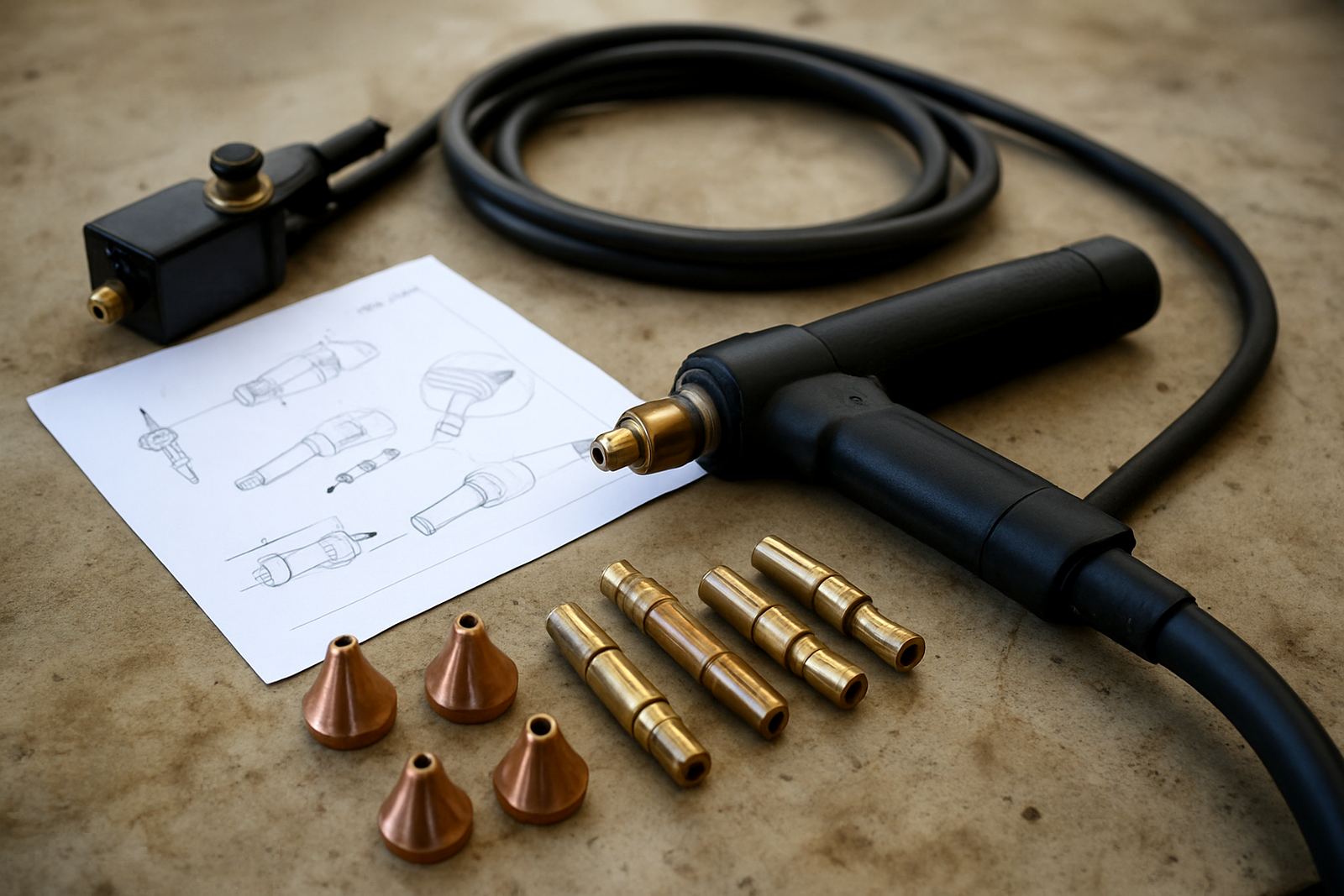
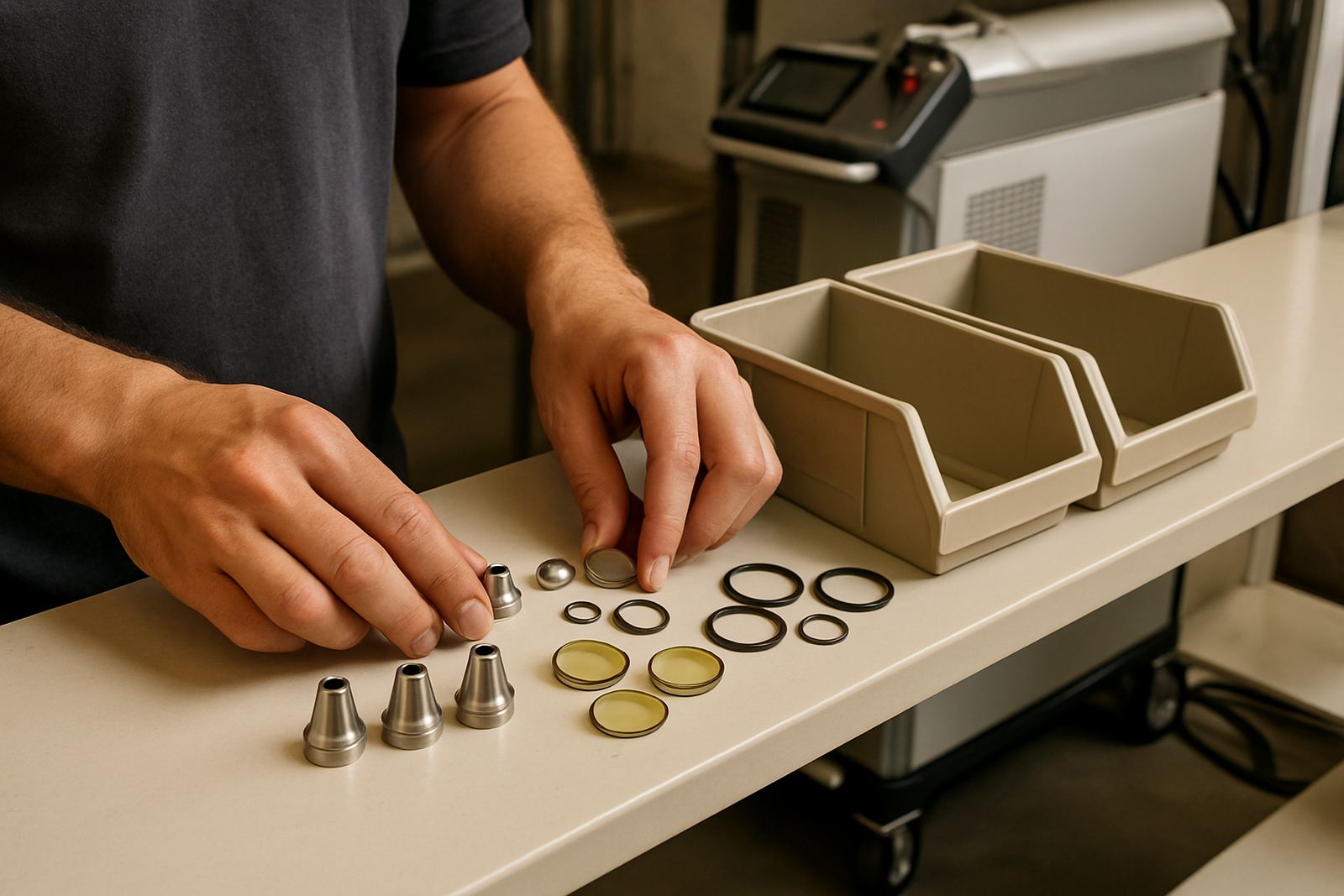
We cover the practical items that keep a handheld fibre laser welding setup operating cleanly and safely. The exact list depends on the machine configuration, but our support normally includes fibre laser welding heads, protective windows, nozzles, wire feed components, lenses and viewing parts, cooling-related items, cable sets, trigger parts, seals and other service wear items. We also help with matching the correct component to the machine rating and duty cycle.
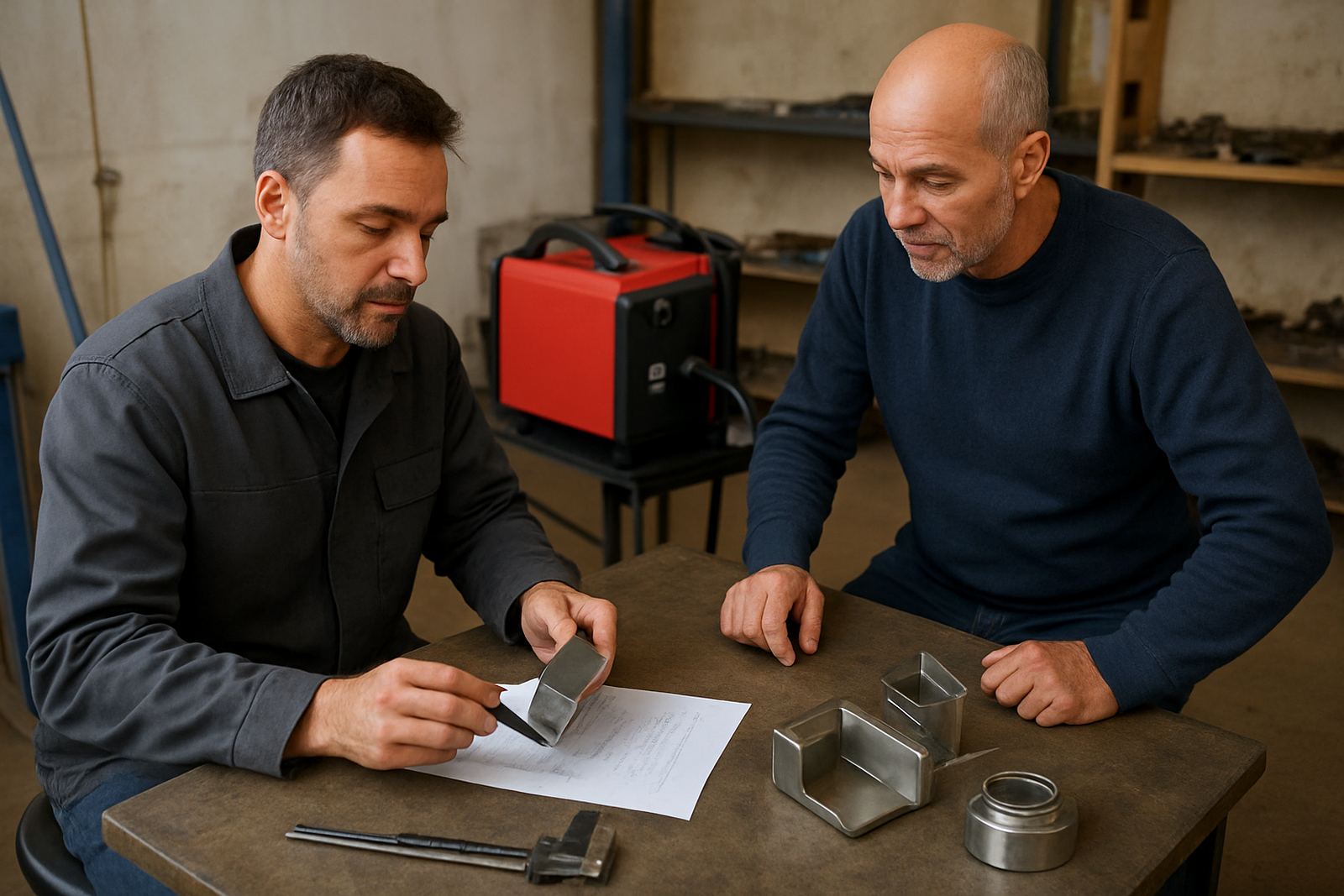
If a part is not obvious by description alone, we work from the machine details, serial number and a photo of the worn part where needed. That helps avoid the common problem of receiving a component that is close, but not quite right. For busy fabrication shops, a small mismatch can stop a job for hours or even days, so accuracy matters more than guesswork.
- Machine-identification checks before ordering
- Wear assessment for parts that can be reused or should be replaced
- Compatibility checking for different torch and head configurations
- Support for both workshop spares and emergency replacements
How the ordering process works
Our process is straightforward and designed to save time. You send through the enquiry form on our contact page with the machine details, the issue you are seeing, and if possible a clear picture of the part. We then confirm what is required, whether the item is held locally, and what the expected lead time will be. If there is a better alternative for your application, we say so before anything is supplied.
For recurring users, we can help build a simple spares list around your production profile. A shop doing constant stainless steel fabrication in Kempton Park will need a different stock plan from a field team doing smaller repair jobs around Gauteng and Mpumalanga. The aim is to keep your shelves practical, not full of parts you will never use. That approach saves Rand and avoids clutter in the store room.
- Step 1: Submit machine details and part request
- Step 2: Confirm compatibility and availability
- Step 3: Receive turnaround estimate and pricing basis
- Step 4: Approve supply and collection or delivery arrangement
Turnaround times and stock planning
Turnaround depends on whether the item is a common wear part, a specialised replacement, or needs to be brought in on request. Where stock is available locally, we move quickly so your workshop does not sit idle. For standard wear items, processing depends on stock availability, order details and the delivery area. Specialised items naturally take longer, especially when they must be matched to a specific machine build.
We also advise on maintenance intervals so you can order before failure rather than after. On busy sites, we often recommend checking high-use consumables weekly and planning scheduled replacement at set operating hours. For many stainless steel workshops that run daily, some items are best inspected every 250 to 500 operating hours, while other service parts can stretch to 1,000 hours or more depending on heat, contamination and how the machine is handled. Coastal humidity, grinding dust and poor storage can shorten those intervals, so a one-size plan does not work.
- Daily checks for visible wear, heat marks and contamination
- Weekly checks for lenses, windows and torch condition
- Monthly review of cooling, cabling and feed components
- Scheduled replacement based on operating hours and duty cycle
Pricing that is clear before you approve
We price spares according to the actual part required, the machine specification and whether the item is standard stock or a special order. That keeps the process fair and transparent. There is no blanket pricing because a protective window, a nozzle set and a major internal component do not carry the same replacement cost or supply lead time. You only approve once the part and pricing basis have been confirmed.
Where possible, we guide workshops toward stocking the items that are cheapest to hold but most expensive to lose when they fail. That usually means wear items and fast-moving consumables first, then higher-value parts only where the production risk justifies it. For businesses in Ekurhuleni and across the country, this helps balance cash flow against downtime risk. A missed shift can cost more than the spare itself, so the buying decision should be practical.
- Quoted per part, not as a vague bundle
- Options for urgent supply or planned replenishment
- Advice on which parts to stock and which to order on demand
- Support for budget planning on high-use machines
Maintenance intervals that protect uptime
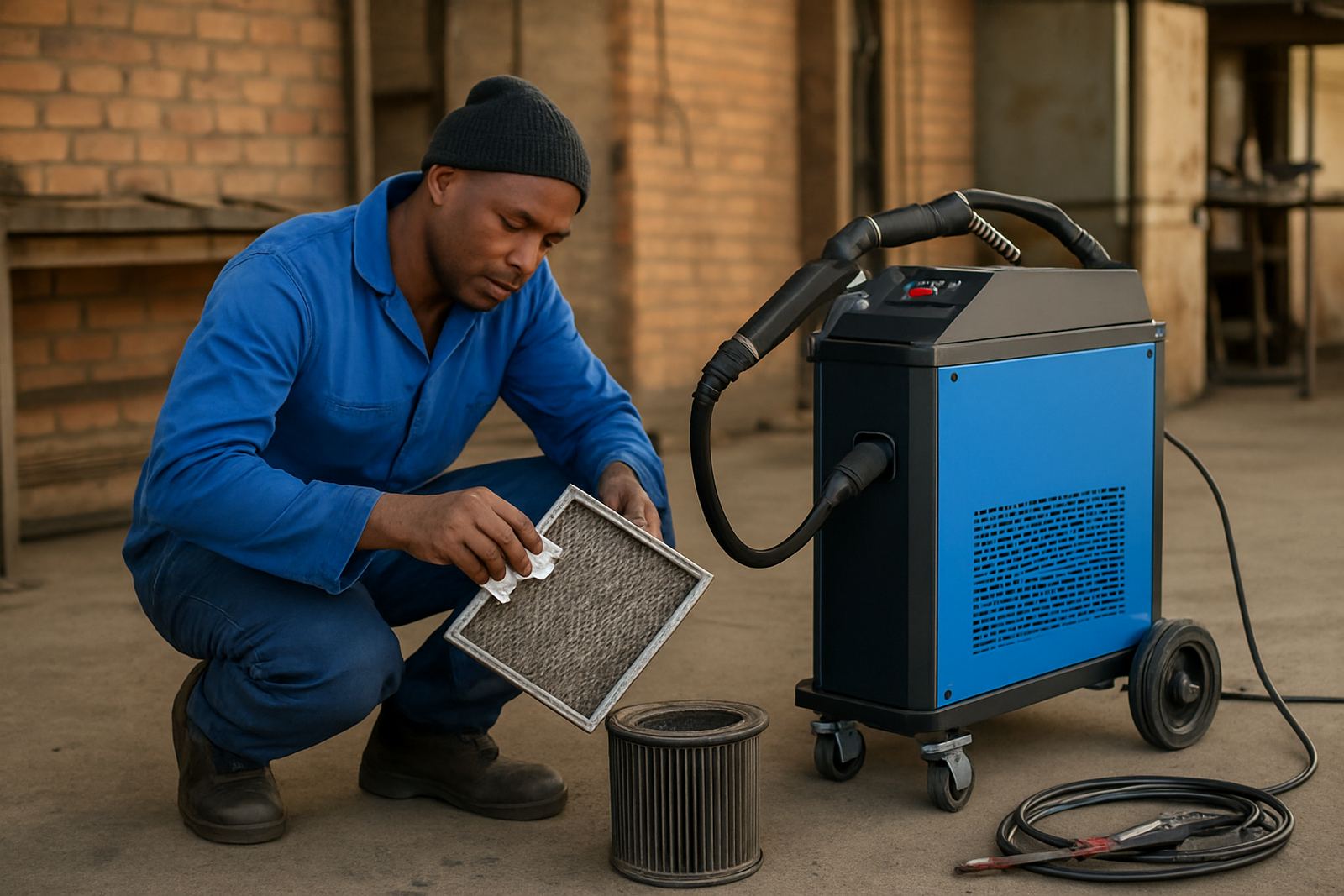
Good spares planning is tied to good maintenance. If the same part keeps failing, the problem is often not the part alone but heat, dirt, poor handling or the wrong settings on the machine. We help identify those patterns so you are not replacing the same item repeatedly. In some cases, a simple cleaning routine or a change in operating practice will extend part life and cut unplanned stoppages.
As a guide, workshops using handheld fibre laser welders should plan routine inspection of the torch and related wear items every week, with a deeper service review each month or after a heavy production run. Machines running long shifts may need tighter intervals, especially where stainless steel prep creates fine dust and the workshop is open to moisture. If the machine is moved between sites, or shared by several operators, the replacement cycle should be shortened. Small habits make a big difference, and skipping a check can turn into a bigger repair.
- Weekly visual inspection and cleaning
- Monthly service review for wear patterns
- Quarterly stock check against actual usage
- Immediate replacement after heat damage or repeated faulting
Why local support matters for fabricators
When a workshop is waiting on a small part, the cost is not just the item itself. It is the job standing still, the operator waiting around, and the knock-on delay to finishing, dispatch and invoicing. Local coordination from Spartan, Kempton Park helps shorten that gap and keeps the response practical for fabricators in Germiston, Jet Park, Boksburg, Alberton, Edenvale and beyond. We understand that many shops work around tight delivery deadlines and limited backup equipment.
Because we support demos, training and service work nationwide, we also see how parts wear in different environments. A workshop in a hot, dusty industrial area faces different challenges from a coastal operation where moisture is the main issue. That experience helps us suggest the right spares pack for your site, not just a list of parts on paper. The result is fewer surprises and better uptime for your production team.
- Local coordination from Spartan, Kempton Park
- Nationwide support for shop and site-based teams
- Advice shaped by real operating conditions
- Spare planning that supports production, not just repairs
Key facts
| Service type | Replacement parts and wear items coordination |
|---|---|
| Typical machine type | Handheld fibre laser welders for stainless steel fabrication |
| Common items | Protective windows, nozzles, lenses, wire feed parts, cable sets |
| Turnaround | Same day to next business day for common stock, subject to availability |
| Pricing method | Quoted per part with approval before supply |
| Maintenance review | Weekly checks, monthly service review, quarterly stock check |
| Base | Spartan, Kempton Park |
| Coverage | South Africa, with demos and training at fabrication shops nationwide |