Purpose-built for stainless cabinet fabrication
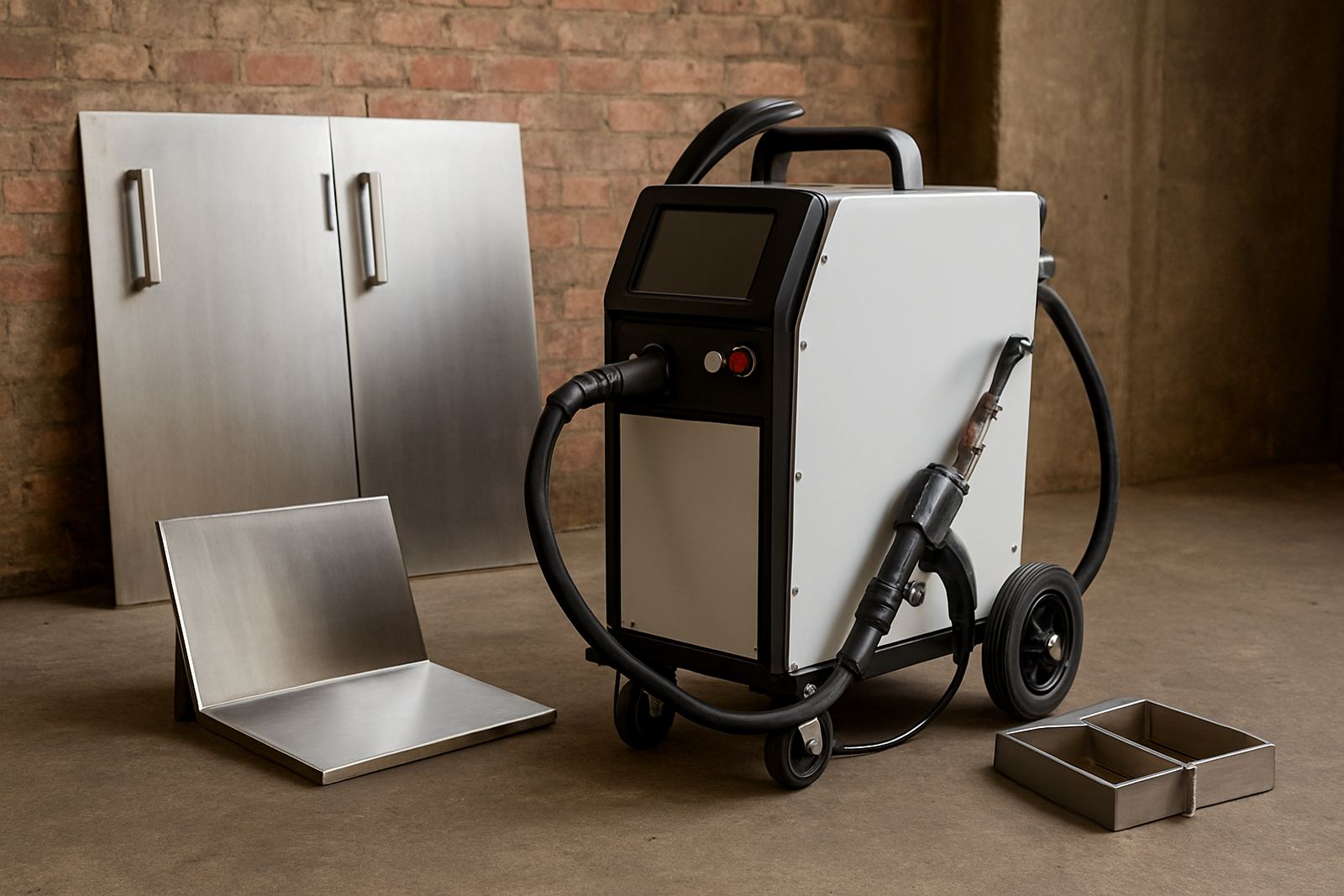
The Cabinet Work Welder is made for stainless steel fabricators who need neat welds on cabinets, prep counters, sink units, extractor surrounds and electrical enclosures. It gives a focused heat input, so thin sheet stays flatter and there is less grinding after the joint is done. For shops working in 0.8 mm to 3.0 mm stainless, that makes a real difference to finish and time on the floor.
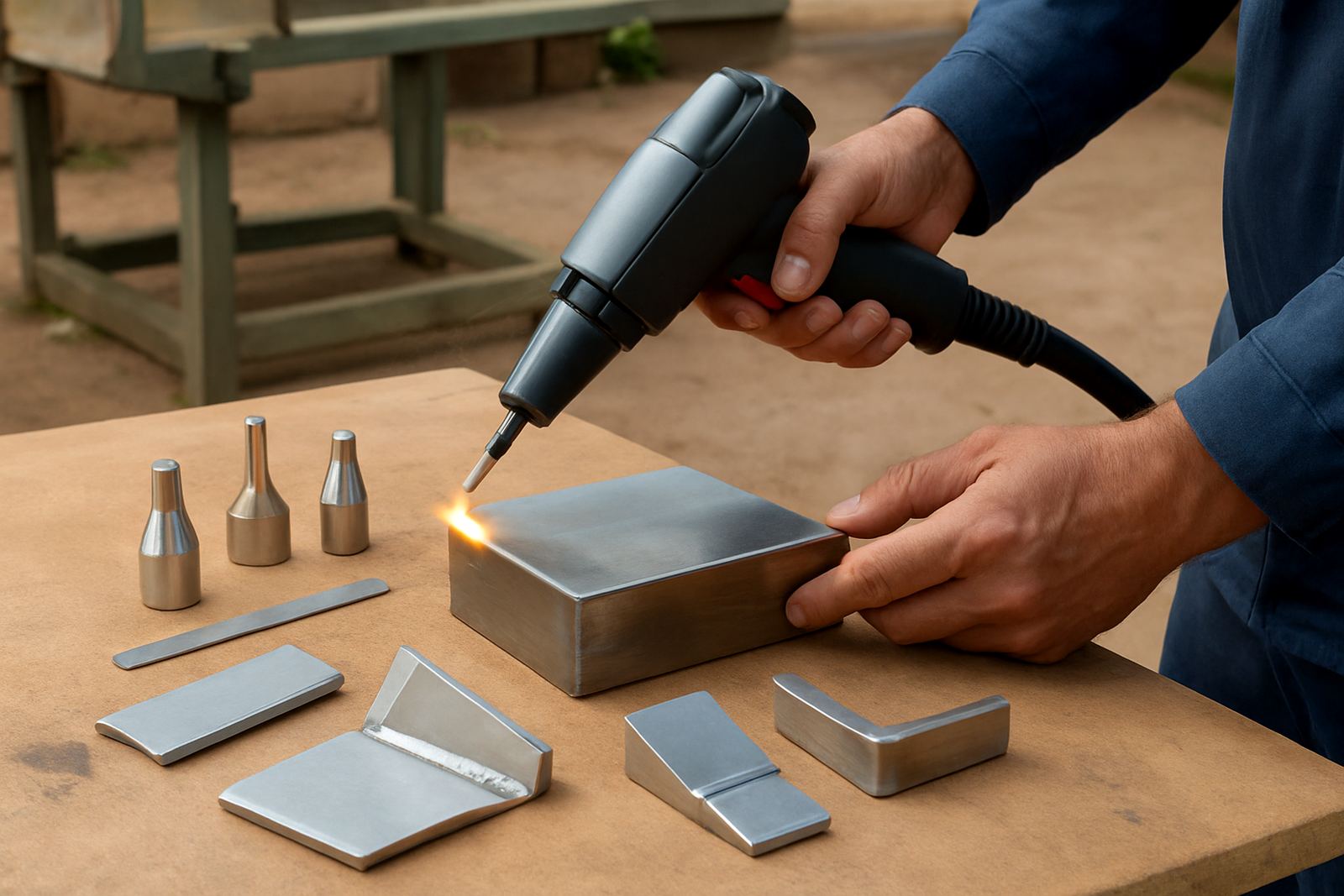
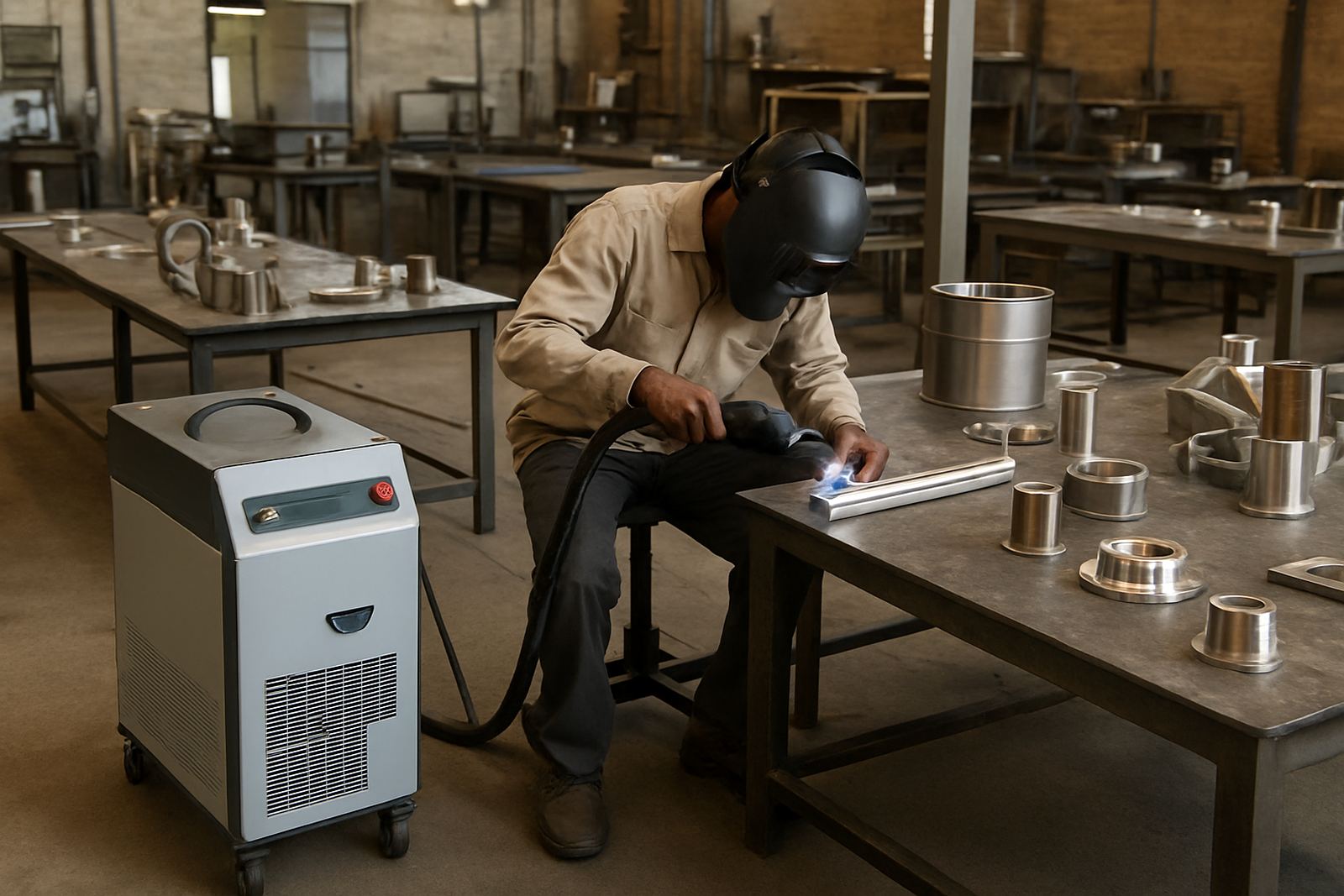
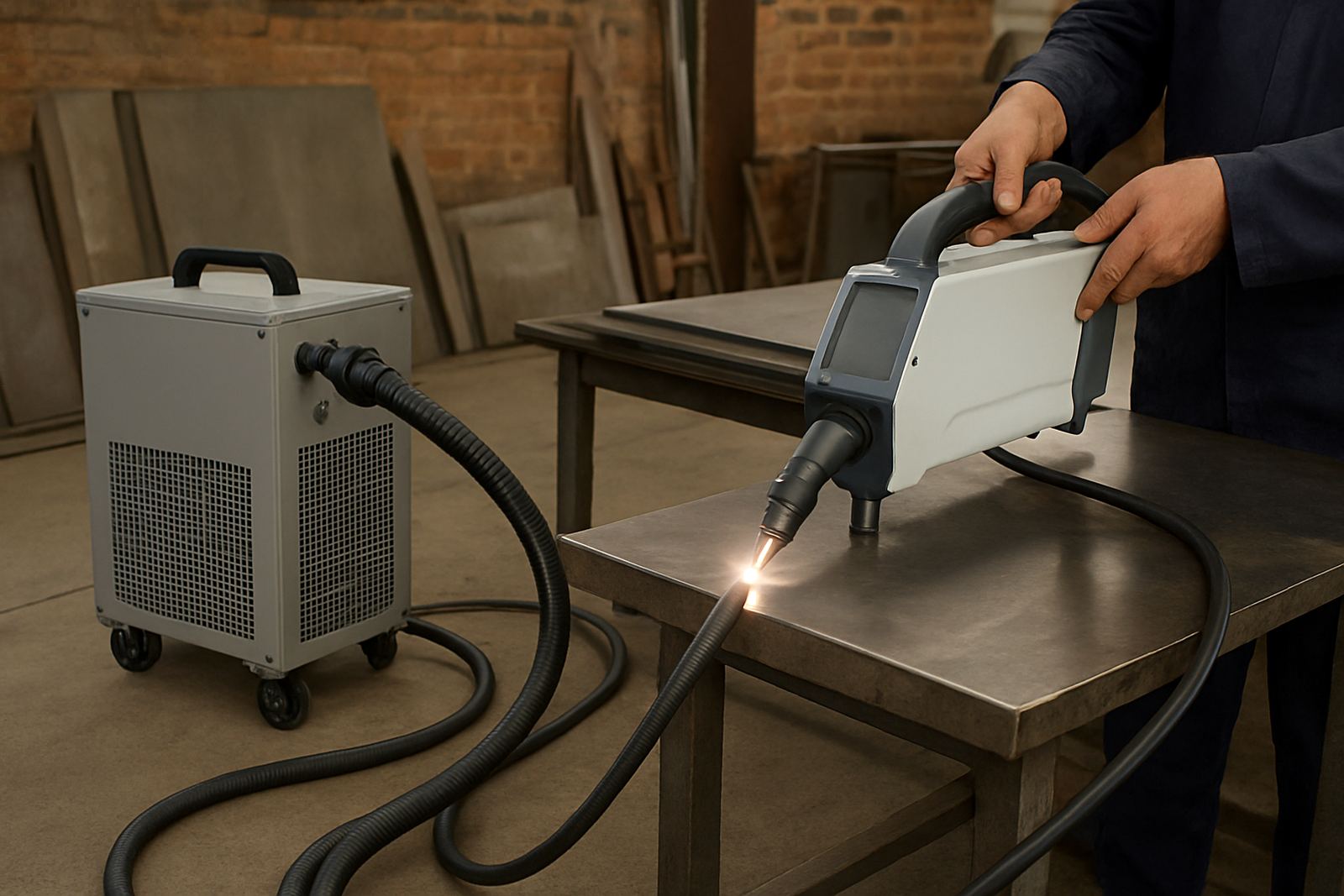
This is a handheld fibre laser system, so the operator guides the torch by hand and controls the weld bead directly. It suits straight seams, corners, returns, patch repairs and short production runs where a TIG setup can be slower. On polished or brushed stainless, the aim is a tidy line with less discoloration and less distortion, which helps when the unit must go straight to installation or polishing.
In many Johannesburg and Ekurhuleni shops, cabinet work has to move fast between cutting, forming and assembly. This machine helps keep the pace up without forcing the team to accept heavy heat marks or long rework cycles.
Typical setups, power levels and working range
The system is supplied in practical power options for fabrication use, with output levels generally from 1.5 kW to 3 kW depending on the material thickness and duty cycle required. For cabinet work, many customers choose a mid-range unit that balances speed and control for thin stainless sheet. The hand torch is light enough for long seam runs and day-to-day shop use.
Available options usually include different fibre cable lengths, nozzle sets and wire feed arrangements. Some jobs are done as autogenous welds, while others use fine filler wire where a corner needs extra build-up or where the fit-up is not perfect. The right choice depends on whether the work is brushed, mirror-polished or destined for a hidden internal weld.
- Stainless sheet thickness: best suited to 0.8 mm to 3.0 mm
- Power options: 1.5 kW, 2 kW and 3 kW class systems
- Cooling: integrated water cooling for steady production use
- Shielding gas: argon or mixed shielding gas, depending on the job
- Input power: typically 220 V or 380 V supply, subject to model
Because loadshedding and voltage dips can interrupt workshop flow, it is worth confirming your supply stability before commissioning. Some sites add power conditioning or backup planning so production does not stop halfway through a run.
Where it fits in the workshop
This welder suits cabinet shops, stainless furniture makers, commercial kitchen fabricators and enclosure builders across Gauteng, the East Rand and further afield. It is especially useful where a clean visible finish matters, like front-facing cabinet seams, food service counters and equipment housings that must look straight before delivery. On coastal work in places like Durban or Gqeberha, the cleaner weld profile also helps when the unit will be exposed to humid air and frequent wash-downs.
It can also help with repeat work for OEM-style production, where the same panel sizes come through often and the team wants predictable bead quality. For municipal or commercial work, neat internal seams can reduce snag points and make cleaning easier, which is important for hygiene-sensitive installations. The machine is not limited to new builds either, it handles repair welding and modification work well when a cabinet needs another opening, bracket or reinforcement added.
- Commercial kitchens and canteens
- Stainless cabinets, drawers and wall units
- Electrical and control enclosures
- Special purpose counters and service units
- Maintenance and repair of existing stainless fabrications
Installation, gas supply and site readiness
Installation starts with a suitable floor space, stable power supply and a clean area for the machine, torch and gas bottle or gas manifold. The unit should sit where operators can work without trailing cables across busy walkways. In a practical workshop, that means planning around cutting tables, press brakes, weld bays and packing space so the flow stays sensible.
Argon supply needs to be clean and correctly regulated. For stainless cabinet work, shielding gas settings matter because poor gas coverage can leave oxidation and a dull finish. The nozzle, wire feed path and lens area must be kept clean as part of normal setup. A short commissioning visit helps the team get the first jobs right, instead of wasting time on test pieces that need to be redone.
- Check available power and phase before delivery
- Confirm gas bottle storage and regulator compatibility
- Allow space for cooling access and safe torch movement
- Plan for extraction or ventilation where the shop is enclosed
Our team can assist with machine commissioning, weld testing and production rollout at fabrication shops in Spartan, Kempton Park, Isando, Jet Park, Edenvale, Germiston, Boksburg and Alberton, as well as nationwide by arrangement.
Care, servicing and keeping weld quality consistent
Like any production tool, the Cabinet Work Welder works best when it is kept clean and checked regularly. The lens area, wire feed path, torch head and cooling circuit should be inspected as part of daily or weekly routines, depending on workload. In shops with high dust levels, stainless offcuts and grinding residue, good housekeeping matters a lot, otherwise the torch gets dirty and the weld quality starts drifting.
Preventive maintenance is cheaper than breakdown recovery. We recommend regular checks on consumables, coolant condition, gas flow, cable wear and nozzle condition. If a shop runs the machine hard through the week, a simple service plan helps avoid stoppages when a production deadline is close. It also makes training easier, because operators learn what a normal weld looks like and spot a problem early.
If a fault does come up, breakdown response and remote help can save time before the machine is pulled apart. Reuben and Ayanda handle technical support and service coordination, while Tshegofatso and the training team can step in where refresher training is needed. That mix matters for smaller workshops too, not only the larger plants.
What to check before you order
Before placing an order, it helps to match the machine to the type of cabinet work you do every week. Thin decorative stainless, heavy commercial units and internal structural seams do not all need the same setup. If your team works with 1 mm to 1.5 mm sheet most of the time, a lighter production specification may be enough. If you regularly weld thicker frame sections or back-up brackets, it may be worth stepping up the output and wire feed configuration.
Also check the finish standard required by your clients. A visible front seam needs a different approach from an internal bracket weld. If the cabinet goes into food service or medical-type environments, neatness and cleanability matter more, and you may want weld testing before rollout. For export or repeat contract work, ask about the exact material grades and whether your current process fits the client spec.
- Stainless grade and thickness range
- Visible finish requirement and post-weld polishing plan
- Need for filler wire or autogenous welding
- Available electrical supply at the shop
- Gas handling and ventilation arrangements
- Operator experience and training needs
Laser-Welder supports enquiries through the contact page enquiry form, and can arrange demos, operator training and process optimisation at selected fabrication shops nationwide. If you need a clean, practical welder for cabinet work, it is worth getting the setup matched properly before the first production run.
Key facts
| Machine type | Handheld fibre laser welder for stainless fabrication |
|---|---|
| Best material range | Stainless steel sheet and fabricated sections, typically 0.8 mm to 3.0 mm |
| Power options | 1.5 kW, 2 kW or 3 kW class systems, depending on application |
| Cooling | Integrated water-cooled system |
| Shielding gas | Argon or suitable mixed shielding gas with correct regulation |
| Support | Commissioning, training, maintenance, remote help and breakdown response |