
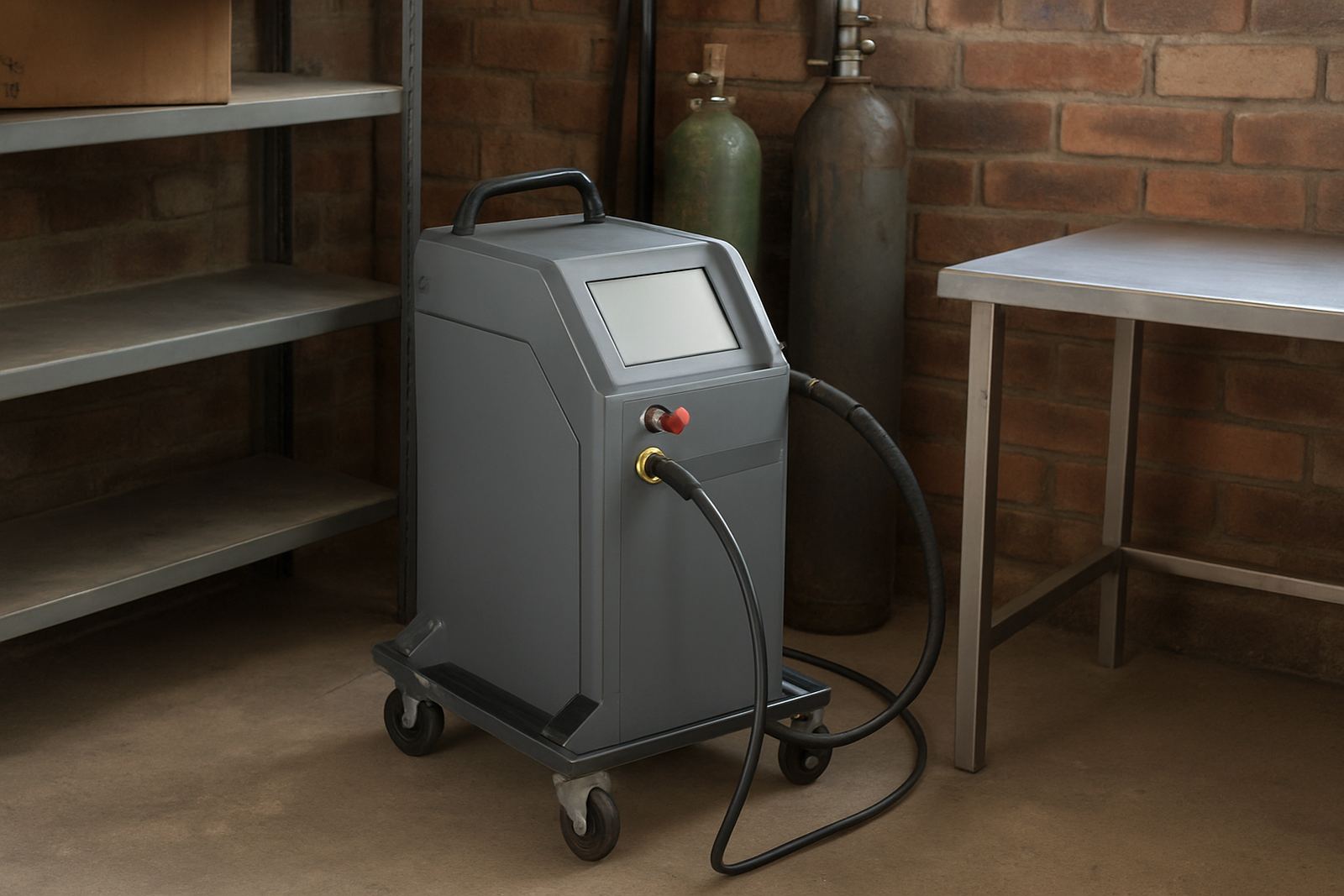
What the Compact Shop Unit is used for
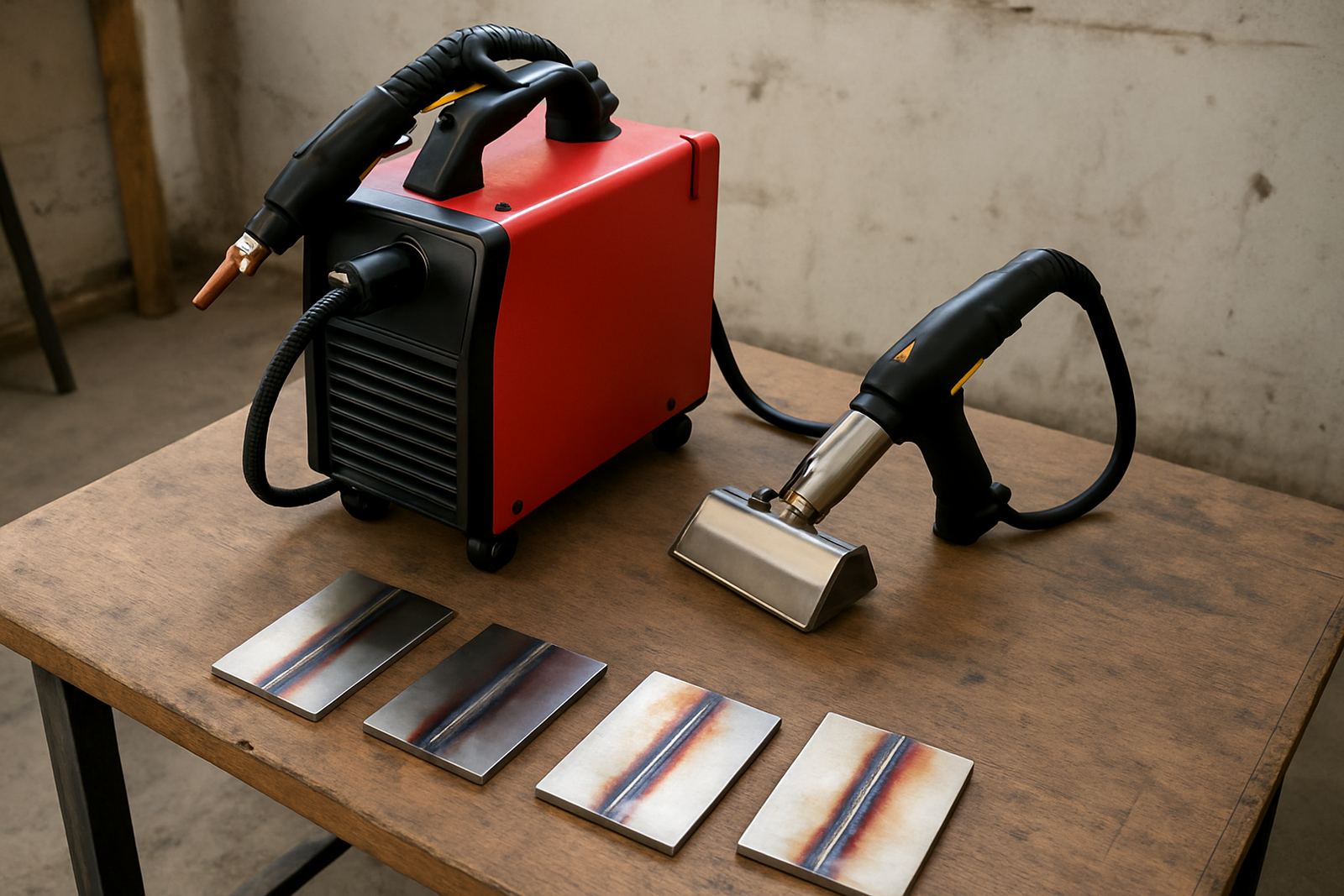
This unit is built for stainless steel fabrication work where space is tight but weld quality still matters. It gives fabricators a fast way to produce neat seams on sheet, tube, light sections and fabricated assemblies, with less rework than many traditional manual methods. For shops handling kitchen fittings, tanks, medical fittings, architectural trims or general stainless jobs, it helps keep production moving during busy shifts and load-shedding planning.
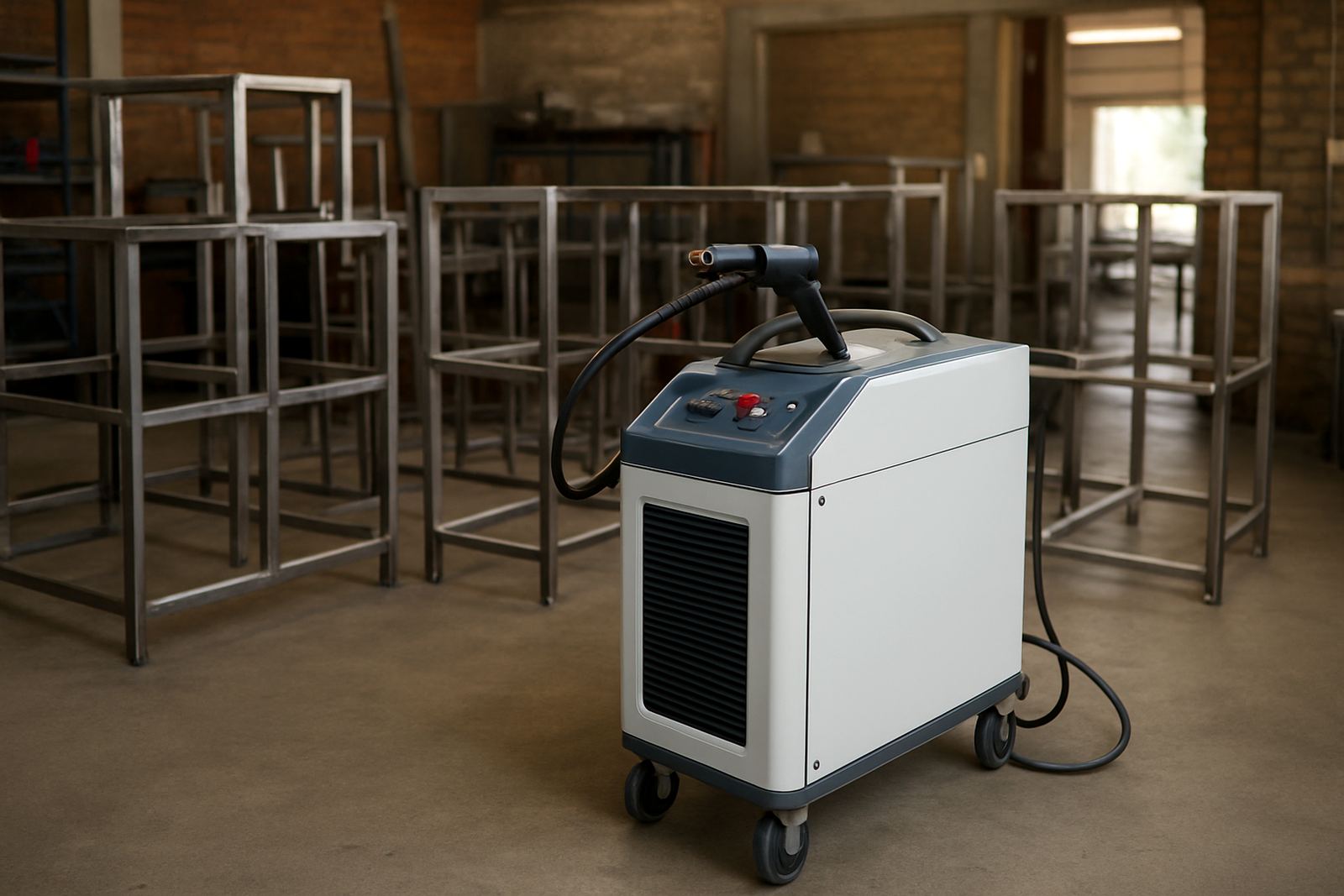
The system is aimed at workshops that need a smaller footprint and a simpler daily workflow. You can position it close to cutting, forming and assembly areas, then move to the next job without a long setup process. It is well suited to fabrication teams that want repeatable results on stainless steel and not a machine that takes over half the floor.
Size options and practical layout choices
The Compact Shop Unit is arranged for smaller floor plans, with cabinet and torch handling that works in tighter bays. Depending on your production needs, the unit can be supplied with different power ratings, wire feed arrangements and cooling setups. That makes it easier to match the machine to the kind of stainless work you do every day, rather than forcing a one-size-fits-all setup.
- Single workstation layout for smaller shops
- Portable hand torch for bench work and short runs
- Optional wire feed for gap filling and thicker sections
- Air or water cooling options depending on duty cycle
- Compact cabinet footprint for limited floor space
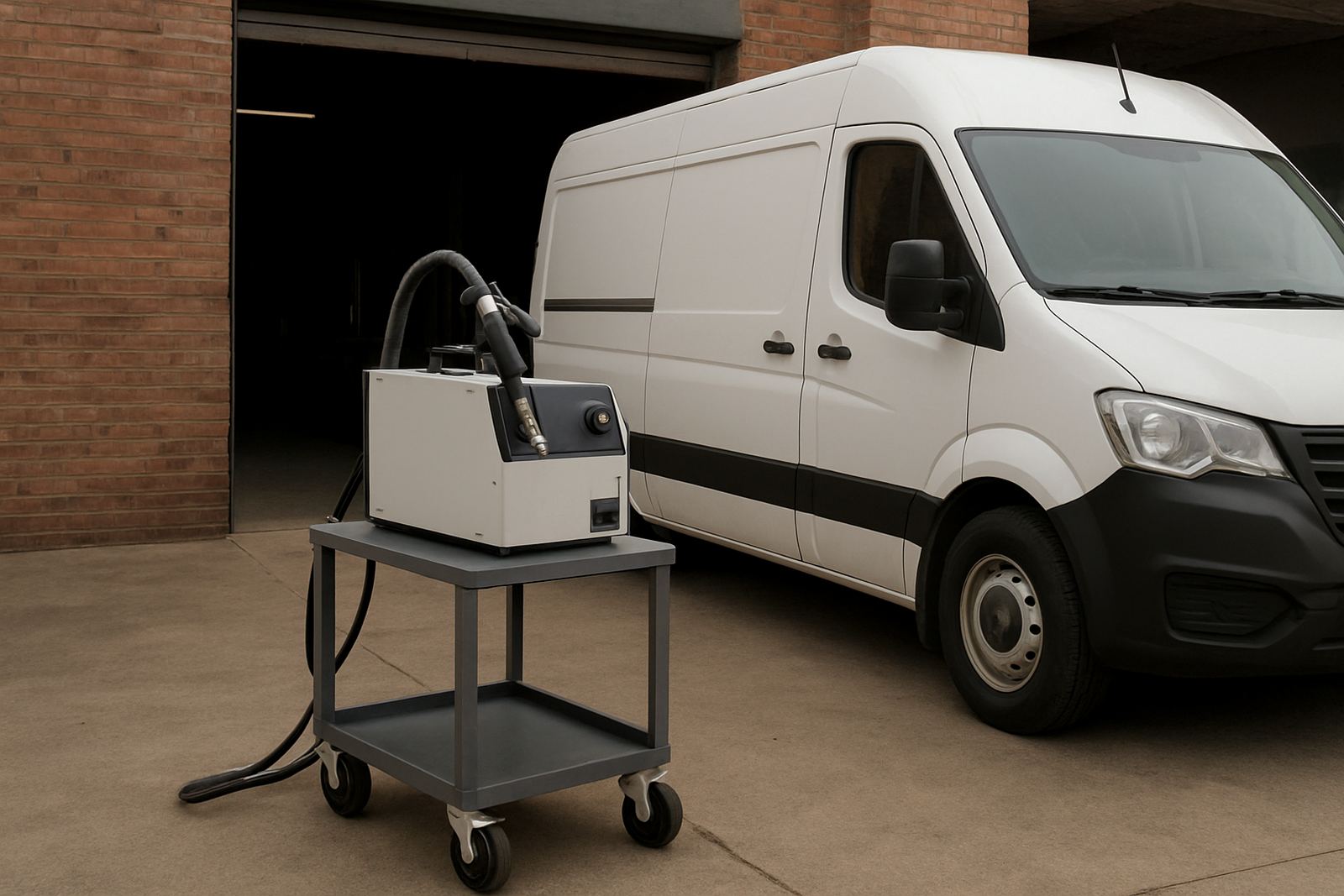
If your shop works in rented premises or a shared industrial unit, the smaller footprint can help with aisle space, material movement and safe access around the machine. It also suits shops that need to keep a clear path for trolleys, stock and finished parts.
Where this system fits best
This product is a good fit for fabrication shops in Spartan, Kempton Park, Isando, Jet Park, Edenvale, Germiston, Boksburg and Alberton where stainless work comes in steady batches rather than very heavy plate. It is also suitable for satellite workshops and production rooms that need a dedicated welding station without a full line of large fixed equipment.
Use it where weld quality, appearance and consistency matter. That includes decorative stainless, food grade equipment, light industrial enclosures, handrails, general fabrication and repair work. If your team is short on floor area, or if you need a machine that can be moved and commissioned with less disruption, this unit makes practical sense.
- Small to medium fabrication shops
- Stainless steel repair and production work
- Busy workshops needing quick changeovers
- Sites with limited three phase capacity or controlled power planning
- Operations wanting cleaner welds with less grinding
Installation, power and gas requirements
Installation is straightforward, but the right utility checks should be done before delivery. The machine typically needs a stable electrical supply, a suitable earth connection and enough space for ventilation around the cabinet. In many workshops, a 380 V three phase supply is preferred, though exact requirements depend on the model and output selected. If your site runs on backup power, the generator or inverter system must be sized properly for starting load and steady use, not just nameplate figures.
For shielding gas, stainless steel work generally uses argon based shielding and the setup must be checked for clean gas delivery, correct pressure and leak free hoses. Where wire feed is fitted, make sure the feed path is clear and the wire size matches the job. A dry, protected area is best, especially in coastal or humid conditions where moisture can affect consumables and storage. The unit should be placed away from wash down areas, grinding sparks and forklift traffic.
Care, servicing and day to day upkeep
Like any workshop tool, the Compact Shop Unit works best when it is kept clean and checked regularly. Daily care usually includes lens inspection, nozzle cleaning, cable checks and making sure the torch head is free of spatter or dust. If the machine is used in a busy fabrication shop, a short end-of-shift check is worth the time because small issues can become downtime very quickly.
- Keep optics clean and protected from dust
- Check cooling flow and coolant levels where applicable
- Inspect hoses, cables and connectors for wear
- Store consumables in a dry cabinet
- Schedule preventive maintenance before peak production periods
Laser-Welder supports machine commissioning, breakdown response, remote help, spares supply and preventive maintenance. That matters for shops that cannot afford long stoppages, especially when orders are due and the team is already under pressure.
What to confirm before ordering
Before placing an order, it helps to confirm the type of work you do, the material thickness range and the finish standard you need. A shop doing light stainless trays has different needs from a team welding thicker brackets or assemblies with wider gaps. It is also useful to know whether your operators need refresher training, whether you want production rollout support and how many shifts the unit will run each week.
Have these points ready so the right setup can be matched to your shop:
- Material type and typical thickness range
- Daily output target and shift pattern
- Available electrical supply and backup power plan
- Whether wire feed is needed
- Space available for the machine and operator movement
- Any site rules for gas storage, ventilation or noise control
If you are not sure which configuration suits your shop, request a demonstration at your premises. That makes it easier to test the unit on your own parts and see how it performs in real working conditions, not just on a sample bench.
Key facts
| Machine type | Handheld fibre laser welding system |
|---|---|
| Primary use | Stainless steel fabrication and repair |
| Power supply | Typically 380 V three phase, model dependent |
| Cooling | Air or water cooling options, depending on output |
| Footprint | Compact shop unit for limited floor area |
| Support | Commissioning, training, maintenance and remote help |