
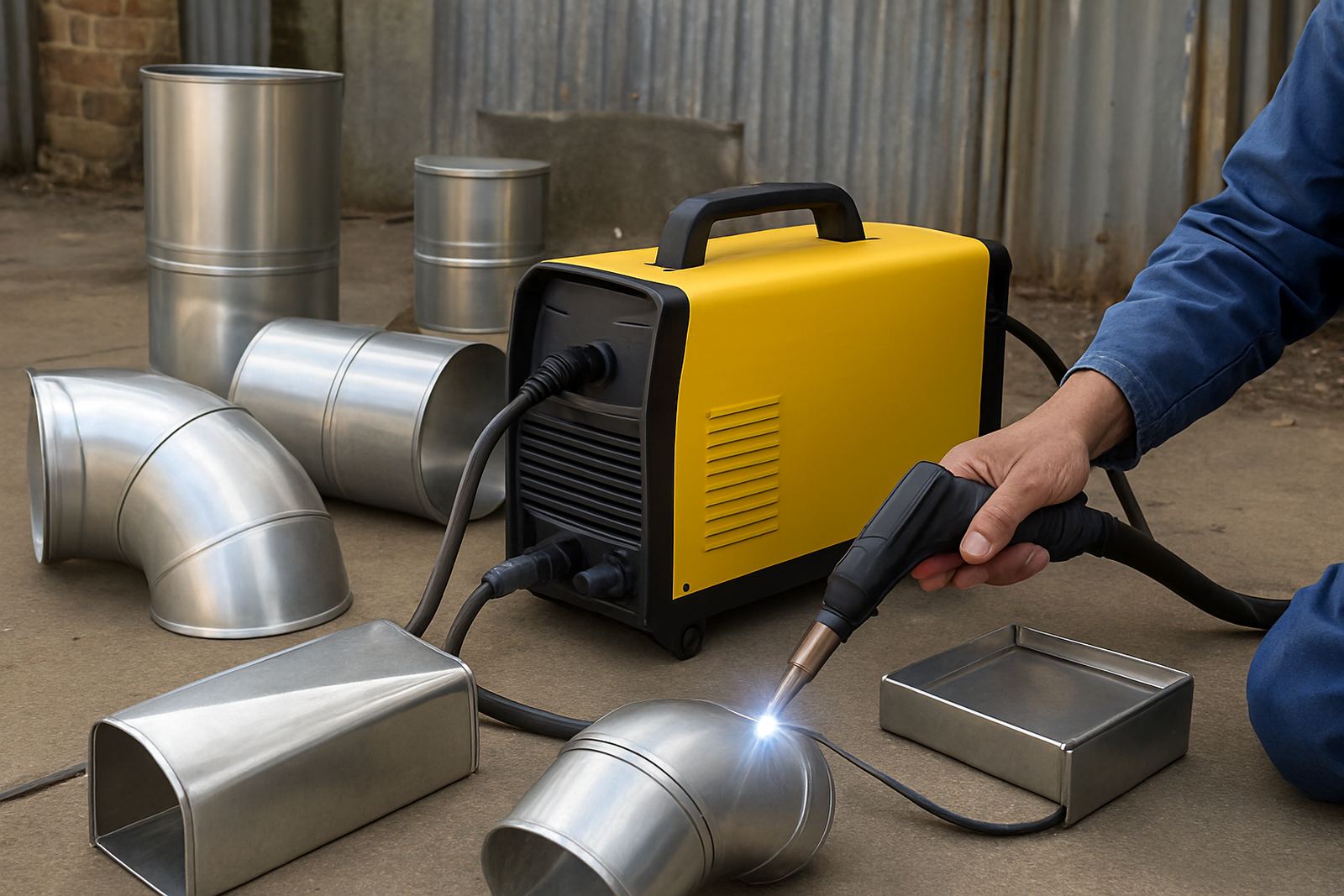
What the Ducting Welder does in a busy shop
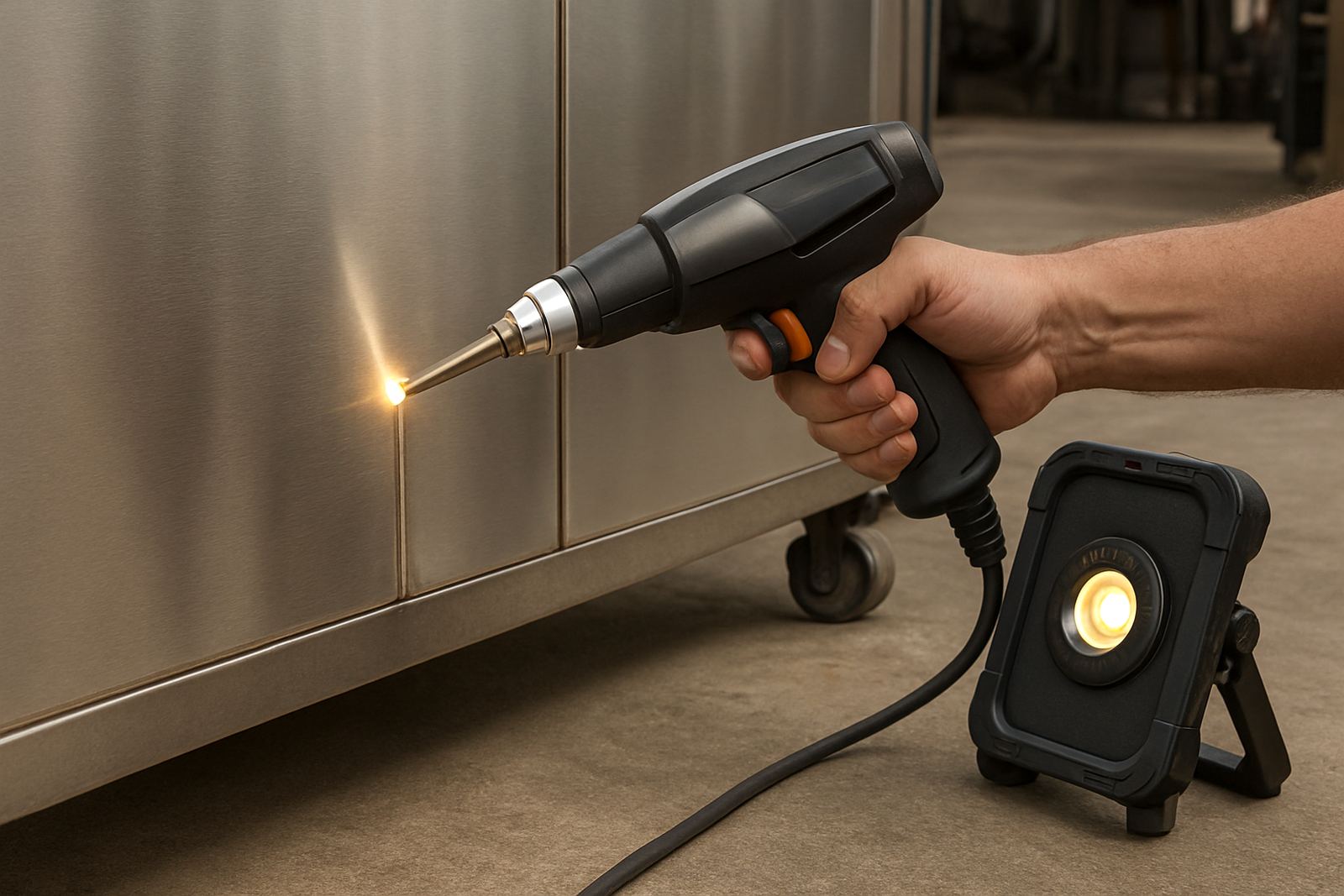
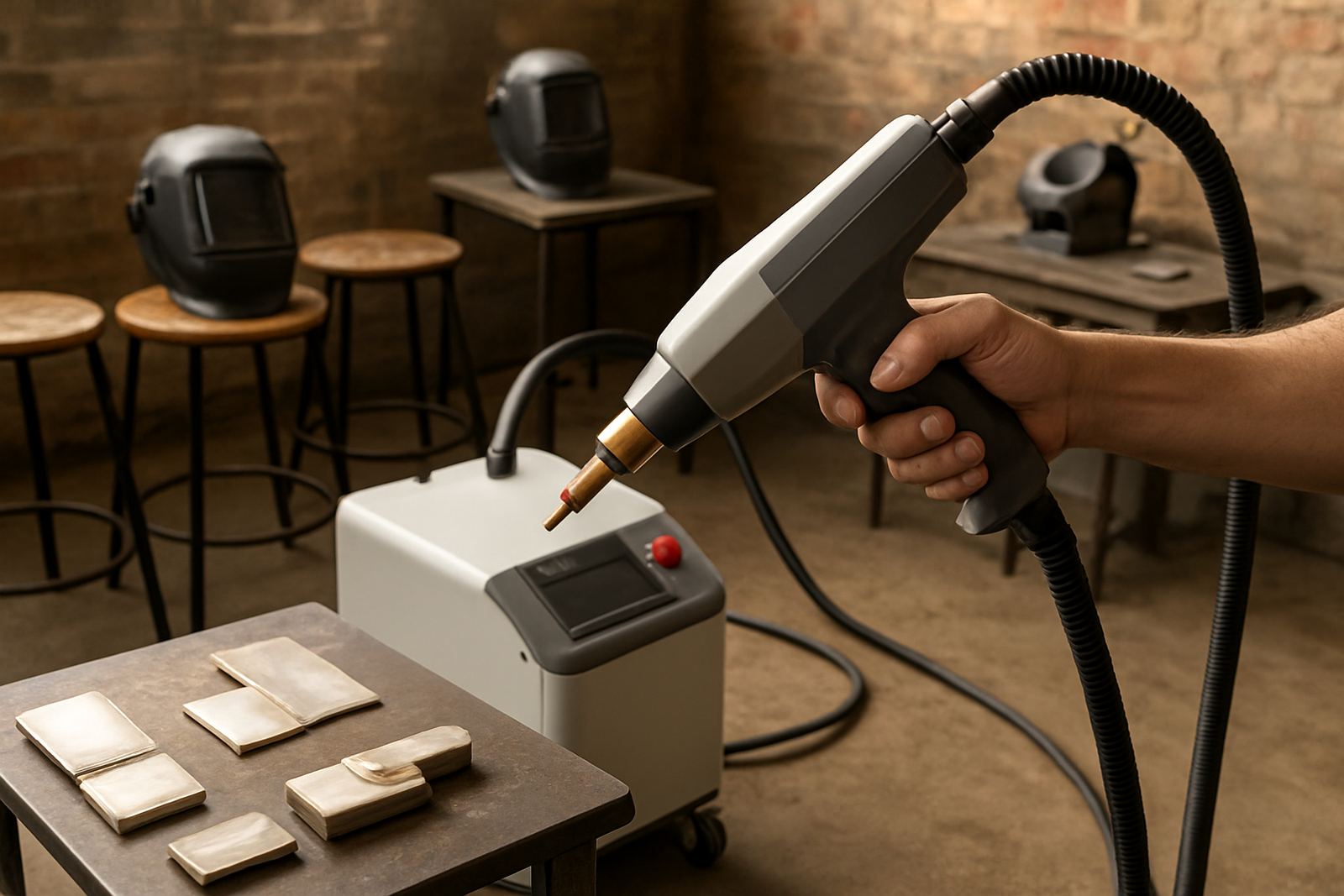
The Ducting Welder is built for stainless steel ducting, flanges, corners, elbows, plenums, cowls and other light gauge components that need neat joints and steady output. It uses a handheld fibre laser process so the operator can move quickly along seams and corners while keeping heat input tight and distortion low.
That matters on extraction work and ventilation jobs where the parts must stay square, fit together properly and keep their clean finish. Instead of spending time grinding back heavy TIG beads, the team can move on to the next job with less rework and a better-looking result.
For workshops doing custom stainless work across Ekurhuleni, Pretoria, Johannesburg and the coast, this is a practical option when the job calls for speed and repeatability not a lot of post-weld dressing.
Typical sizes, material range and available setup options
This model is suited to lighter stainless fabrication, especially common ducting thicknesses used in extraction and ventilation systems. It can be specified for different wire and beam settings depending on the material mix, joint type and production pace.
- Stainless steel sheet and light formed sections from thin gauge up to medium light fabrication work
- Seam welding on round ducting, square ducting and rectangular sections
- Tack, stitch and longer continuous runs where the part geometry allows
- Handheld torch setup for direct access on corners, short runs and awkward sections
- Training matched to your welders, from first setup through to production use
Most shops use it on 304 and 316 stainless, and in some cases on related light stainless assemblies. If your work includes mixed thicknesses or fitted assemblies, the process settings can be matched during commissioning so the weld looks consistent from job to job. That helps when a client wants a neat finish with fewer heat marks and less movement in the sheet.
Where it fits best in fabrication and installation work
This welder suits stainless ducting manufacturers, extraction system builders, HVAC fabricators and shops doing light process equipment. It is a good fit where parts are produced in batches, then assembled on site or sent out to installers who need accurate, clean joints that do not need much grinding afterwards.
It also works well for shops that handle smaller production runs alongside custom work. If your team builds a few duct sections one day and a set of extraction accessories the next, the faster handling of the handheld laser process can make changeovers easier.
- Dust extraction ducts and fittings
- Commercial kitchen extraction parts
- Ventilation housings and covers
- Light stainless enclosures and formed panels
- Custom fabrication for food, pharma and general industrial sites
In coastal areas like Durban, Gqeberha and Richards Bay, stainless work often needs careful handling because of humidity and storage conditions. A cleaner weld with less open grinding can help reduce time spent on finishing, provided the material is stored and handled properly.
Power, gas and workshop requirements before installation
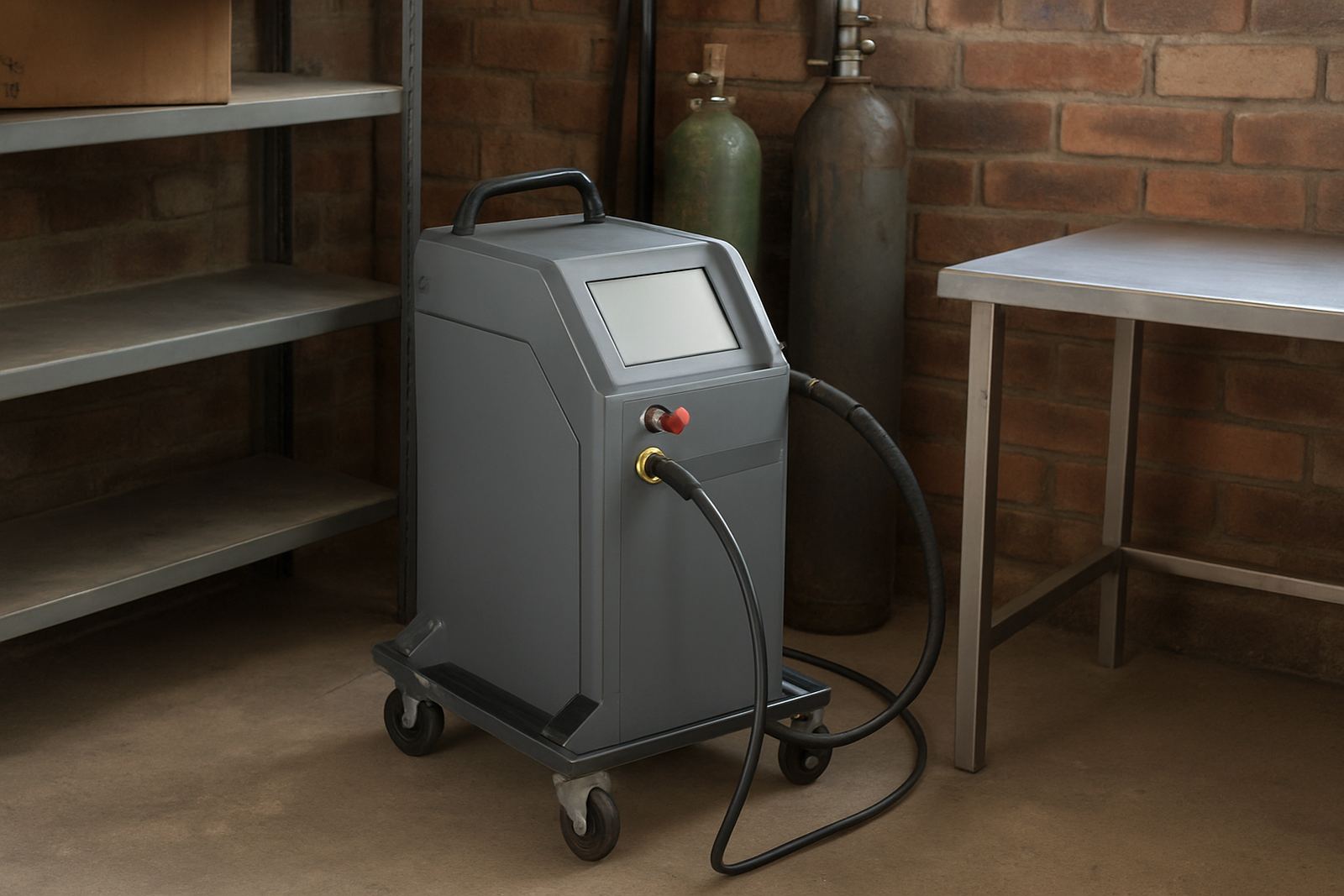
Before installation, check that your workshop can supply stable electrical power and suitable working space. Like most fibre laser equipment, this unit performs best when the supply is clean and protected against dips and spikes. In load shedding areas, a proper backup plan matters. A generator or other support supply must be sized correctly and checked by a qualified person before use.
The process also needs a suitable shielding gas supply matched to stainless work. Gas flow, hose routing and bottle placement should be planned so the operator can work safely and keep the torch movement free. The work area needs clean floor space, dry storage for consumables and enough room for the machine, gas bottles and job handling.
- Stable mains supply with protection against power fluctuation
- Correct shielding gas for stainless welding applications
- Dry, clean workshop space with safe cable and hose routing
- Basic extraction or ventilation in the welding area
- Qualified installation and handover for the specific site conditions
For plants in Spartan, Jet Park or Isando, we often find the power issue is not only capacity but also how the equipment is shared across the workshop. It helps to plan the installation around the actual production routine not the drawing on paper.
Care, servicing and daily checks that keep production moving
Like any production tool, this welder performs best when it is kept clean and checked regularly. The lens area, torch head, consumables and cable set should be inspected before each shift. Stainless dust and grinding residue should be kept away from the machine where possible.
Routine servicing helps prevent output issues, poor beam quality and unnecessary downtime. That includes checking alignment, cooling performance, gas delivery and wear on the consumable parts. If the machine is used on long shifts or in warm conditions, those checks matter even more.
We offer preventive maintenance, breakdown response, remote help and spares supply, which is useful when a line needs to keep running and you cannot wait around for a small fault to become a bigger one. A tidy machine room and a clean operator routine will save you time over the long term.
What to check when ordering the right machine for your work
Ordering the right Ducting Welder starts with the kind of jobs you handle every week. If your team mostly fabricates thin stainless ducting, the setup should be tuned for speed and consistency. If you also do formed sections, brackets or heavier fittings, that should be discussed before the machine is commissioned.
- Material grades and thicknesses you weld most often
- Type of seams, corners and joint access on your parts
- Daily output volume and whether the work is batch or custom
- Available electrical supply and backup power arrangement
- Gas supply method and bottle sizes used on site
- Operator skill level and whether refresher training is needed
It also helps to bring sample parts or drawings to the demo so the settings can be tested against your actual job. That gives a clearer picture of bead appearance, travel speed and fit-up. If you are working with tight margins and short lead times, the right setup can make a proper difference to output without pushing the crew too hard.
Key facts
| Process | Handheld fibre laser welding for stainless ducting and light formed sections |
|---|---|
| Material range | Stainless steel sheet and light fabrication sections |
| Typical use | Extraction ducting, ventilation components, flanges and fittings |
| Power requirement | Site dependent, with stable electrical supply and proper protection |
| Shielding gas | Suitable stainless welding gas supply |
| Support | Commissioning, training, maintenance, spares and remote help |