
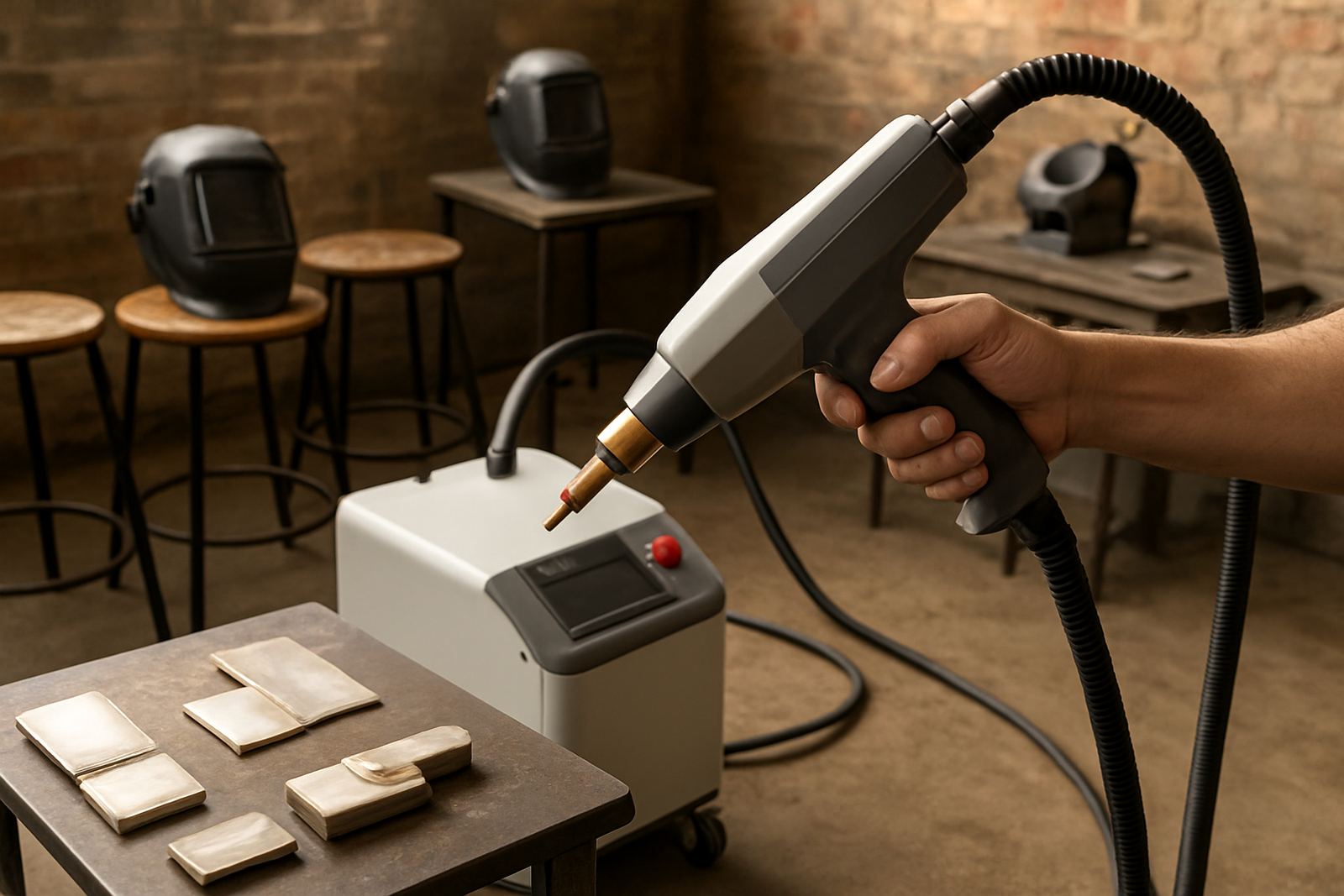
What the Training Bay Welder is built to do
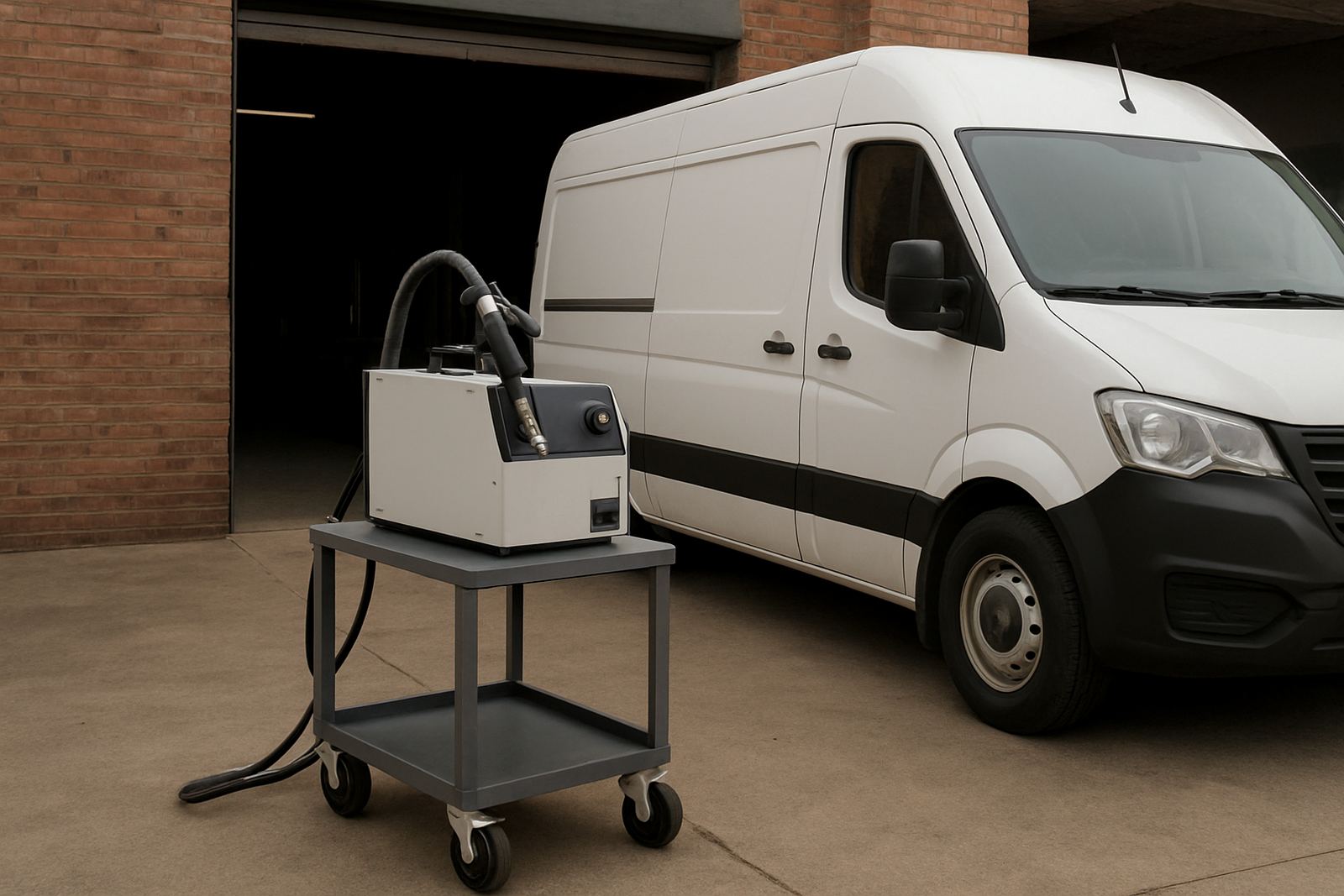
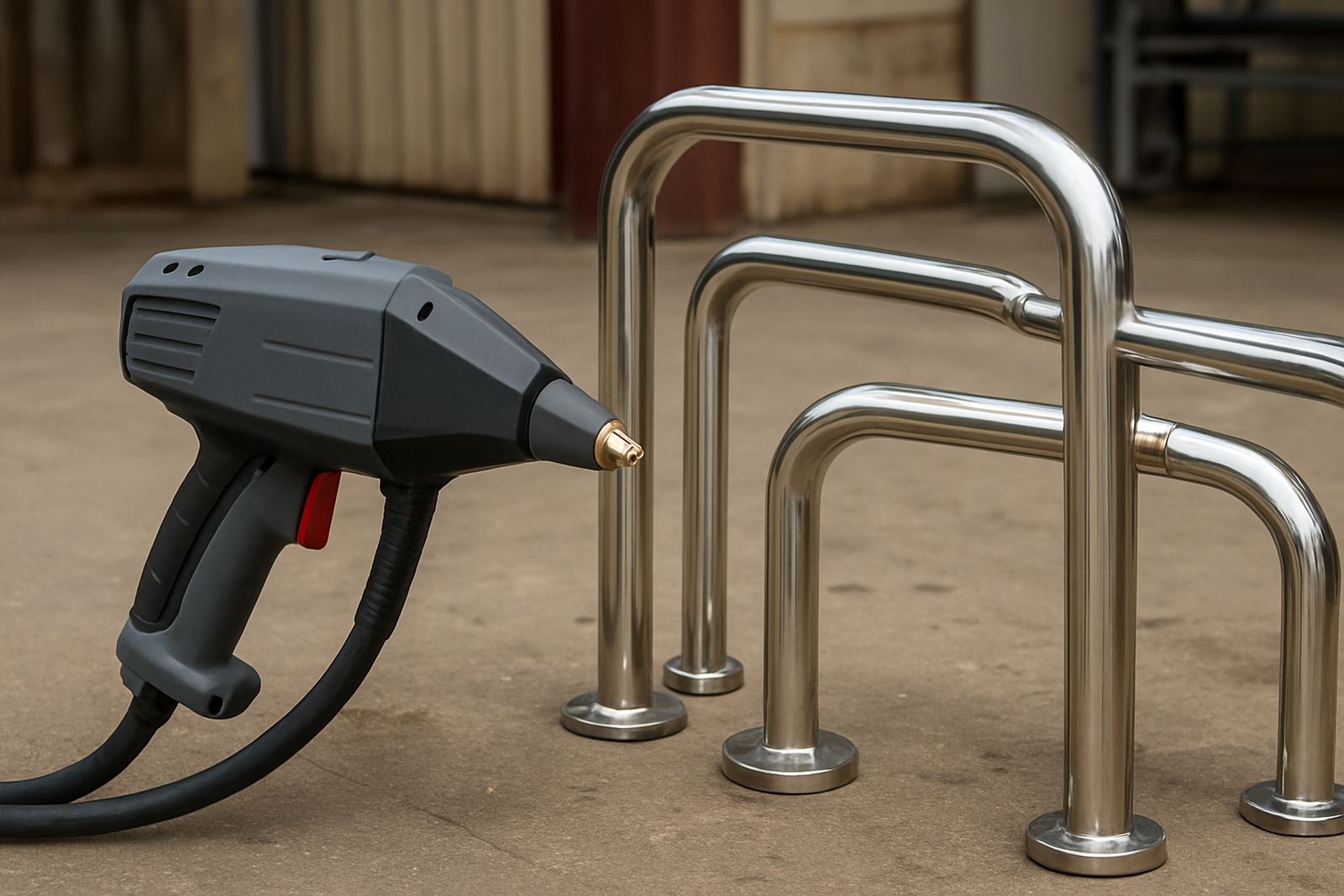
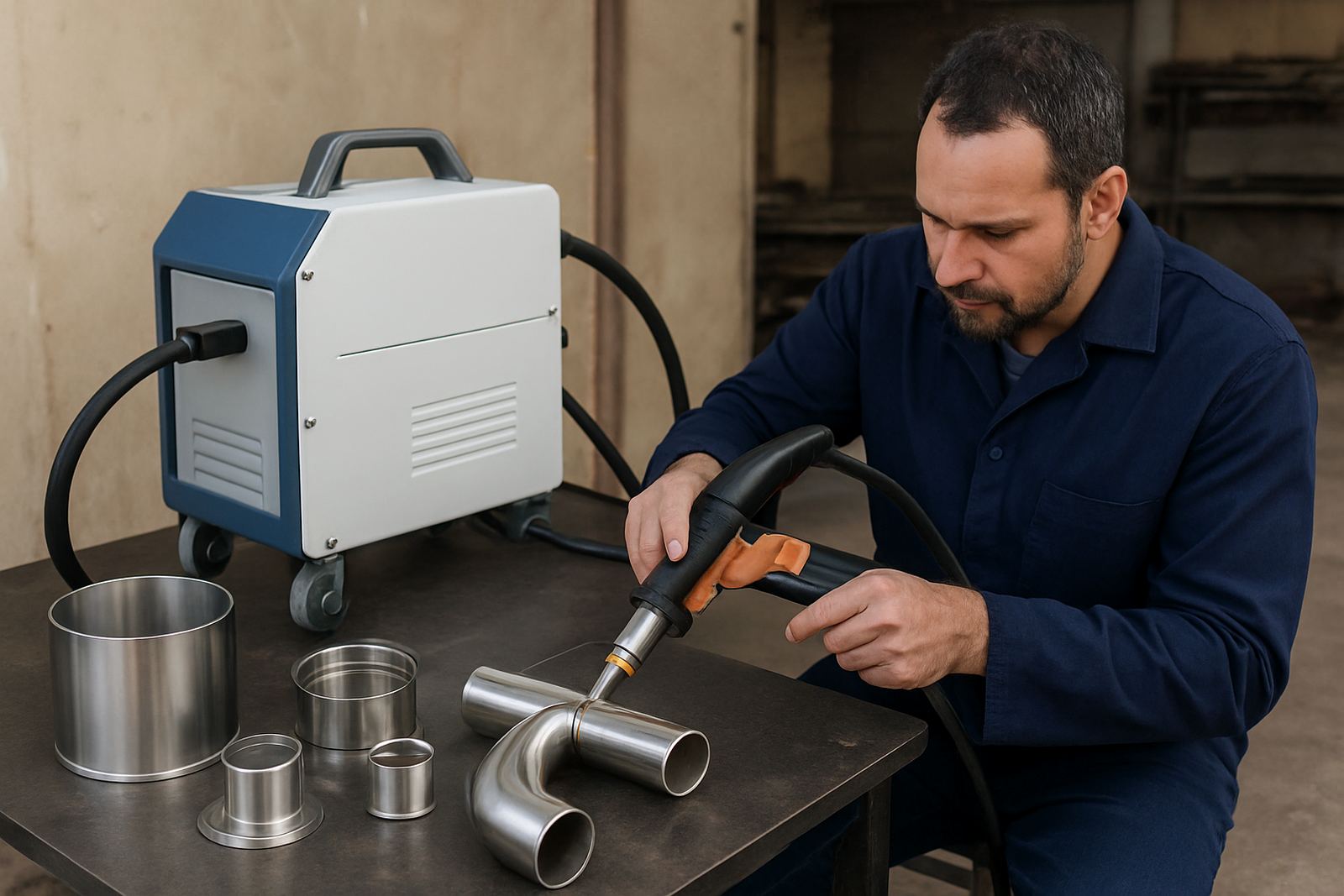
The Training Bay Welder is a dedicated learning and practice setup for handheld fibre laser welding on stainless steel. It gives operators a safe, controlled place to understand beam handling, travel speed, filler use where needed, and how to set power for different joint types. In a busy shop this matters because the learning curve is much shorter when the machine is not tied up on live production. That means fewer mistakes, less rework and better confidence for new staff.
For fabrication shops in Spartan, Kempton Park, Isando and Jet Park, it is especially useful where stainless work is common and turnaround times are tight. It also helps when training staff from branches or sites in Germiston, Boksburg, Alberton and Edenvale. The unit can be used for sample welds, demonstration sessions, and process familiarisation before a full rollout to the workshop floor.
- Operator instruction on basic and advanced settings
- Sample practice on offcuts and test coupons
- Process familiarisation for new teams or new sites
- Weld testing before production release
Sizes and build options for different workshops
Training bays are usually specified to suit the space available and the kind of parts you work with. A compact setup works well for smaller job shops and service centres, while a larger bay is better for production teams training several operators at once. The frame, work surface and safety layout can be arranged around your floor plan, available power and whether the bay will sit next to cutting, forming or polishing stations.
For shops with limited space, the unit can be fitted as a single-bench learning point with clear access from one side. For broader training needs, a wider bay can take multiple practice stations and more clamping positions. If you are running demos across multiple sites, it is also useful to keep the layout simple enough for repeat use by different teams. Small changes in setup can make a big difference, especially when the shop is already busy.
- Single-station practice bay for one operator
- Extended bay for group training or supervision
- Bench or frame mounted work area
- Configurable clamps, jigs and sample holders
Where it fits in real production environments
This setup suits stainless steel fabricators, kitchen equipment makers, tank builders, balustrade shops, ducting workshops and general sheet metal fabricators. It is also handy for teams that do contract work and need to train temporary staff without slowing the main line. Because the machine is focused on practice and instruction, it gives supervisors a clean way to standardise technique across different shifts and branches.
In South African workshops the environment can be hard on equipment. Coastal humidity around Durban or the Eastern Cape can affect stored consumables, while dust in Gauteng workshops can build up around optics and moving parts. Load-shedding also means your team needs a process that is predictable when power comes back on. A training bay helps staff learn the correct start-up checks and keeps small errors from becoming costly on production jobs.
- Stainless steel fabrication and repair work
- Training new operators before production duties
- Quality control and sample approval rooms
- Multi-shift workshops needing standardised methods
Power, shielding gas and installation checks
Installation needs to be matched to the actual workshop conditions. The machine should be placed on a stable floor area with enough ventilation, clear access around the operator, and a safe route for cables and hoses. Most training bays need a dedicated electrical supply that matches the unit rating, with proper protection and an isolator close by. If the site is affected by voltage dips or generator changeovers, it helps to plan the supply carefully so the training schedule does not keep stopping.
Shielding gas requirements depend on the material and the weld profile you are teaching, but a clean, dry gas supply is essential. Leaks, dirty lines or poor flow will affect results immediately. You also need space for cylinders or a suitable manifold, plus a secure way to store them in line with workshop safety rules. When we commission a bay, we check the gas path, power stability and working distance so the operator starts with a sensible setup rather than guessing.
- Correct electrical supply and protection
- Stable floor space with clear operator access
- Dry shielding gas supply with proper regulators
- Safe cable, torch and cylinder routing
Care, servicing and day-to-day handling
A training bay lasts longer when it is treated as a learning tool and not as a storage point for offcuts and tools. Keep the work area clean, wipe down exposed surfaces, and check the torch, lenses and hoses before each session. Dust and grinding residue can shorten service intervals, especially in workshops where stainless prep and finishing happen nearby. The unit should be switched off properly after use and stored in a dry area if it is not part of a permanent training room.
Regular servicing helps keep the beam steady and the controls responsive. This includes preventive checks, consumables replacement, alignment inspection and a review of operator settings. If weld quality starts drifting, do not wait until production is affected. A quick inspection can usually spot a blocked line, a loose connection or a handling issue before it becomes a breakdown. In our experience, many faults are small at first, then they grow fast if nobody logs them.
- Daily cleaning of the bay and surrounding area
- Routine checks on torch, optics and hoses
- Preventive maintenance on schedule
- Prompt breakdown response when faults appear
What to verify before you submit an order
Before ordering, confirm the main use case, the size of the practice area, and the type of stainless steel work your team will train on. It also helps to know how many operators will use the bay each week, whether demonstrations will happen on site, and if you need refresher training after installation. If the equipment will move between branches or be used at client premises, say so early so the setup can be planned for transport and repeat commissioning.
You should also check the available electrical supply, gas access, floor loading and the level of supervision needed. If the site has a shared workshop, the bay may need clearer markings and a stricter process for access. For customers in Ekurhuleni and beyond, we often recommend a short pre-order review so the bay matches the work being done, not just the spec sheet. That saves time later and gives your team a setup they can actually use every week.
- Primary material and weld types
- Number of operators and training frequency
- Available power, gas and floor space
- Need for demos, rollouts or refresher training
Key facts
| Product type | Handheld fibre laser welding training bay for stainless steel instruction and practice |
|---|---|
| Typical use | Operator training, sample welds, weld testing, process familiarisation and production rollout |
| Workpiece range | Stainless steel sheet, tube, brackets, frames and light fabrication samples |
| Power requirement | Site specific supply to match machine rating, with proper isolation and protection |
| Shielding gas | Dry shielding gas supply with suitable regulator and secure cylinder storage |
| Support options | Machine commissioning, training, process optimisation, maintenance, spares and remote help |