Built for stainless balustrade joints that must look good up close
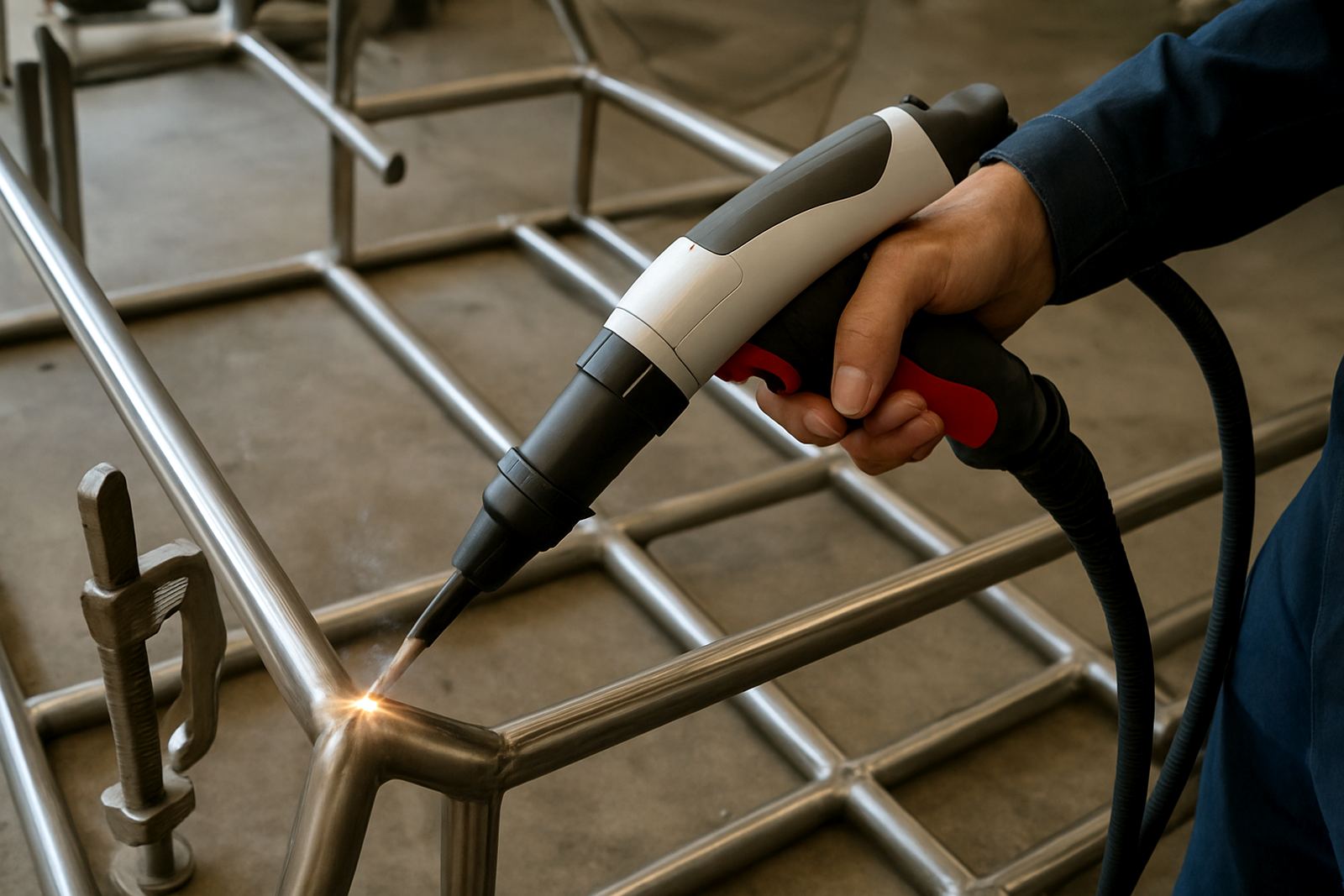
A balustrade is one of the few fabrications where every weld is on display. This unit is aimed at stainless steel handrails, posts, brackets, sleeves and decorative infill parts where the weld bead must stay neat without heavy dressing afterwards. It gives fabricators a way to join thin to medium stainless sections with a focused heat input, so the surrounding surface stays cleaner and distortion is kept under control.
It is particularly useful on jobs where hand finishing takes too long, or where grinding marks are showing through polished tube. In workshop terms that means fewer call-backs, less polishing and a better chance of matching the finished unit to the architect's or client's standard. For stainless balustrades in commercial foyers, apartment blocks, hospitals and retail sites, that matters every day.
- Suitable for 304 and 316 stainless steel balustrade parts
- Works well on visible joints that must stay tidy
- Helps reduce heat distortion on thin wall tube
- Useful for both shop work and site fabrication
Machine sizes, torch options and what the spec means in practice
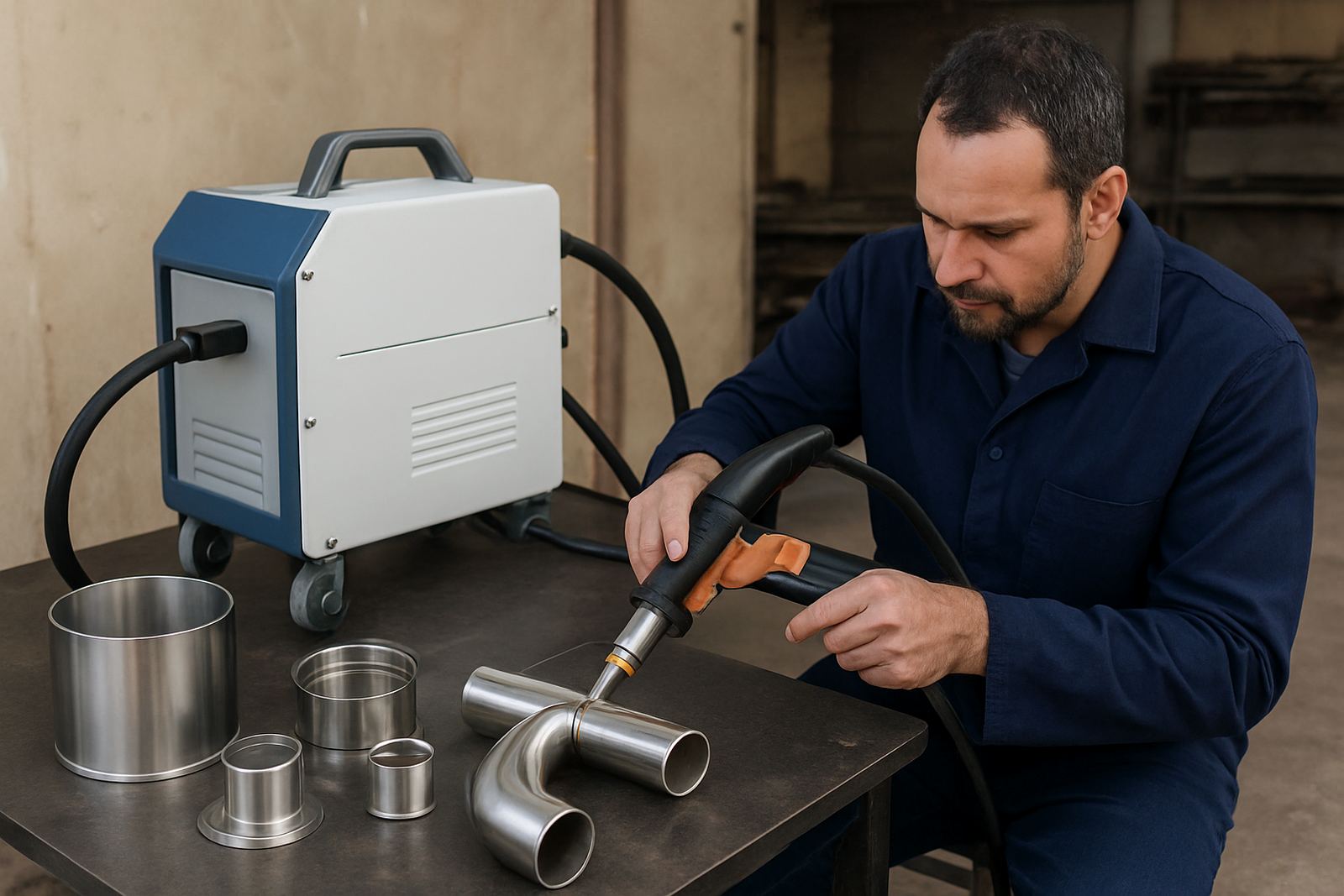
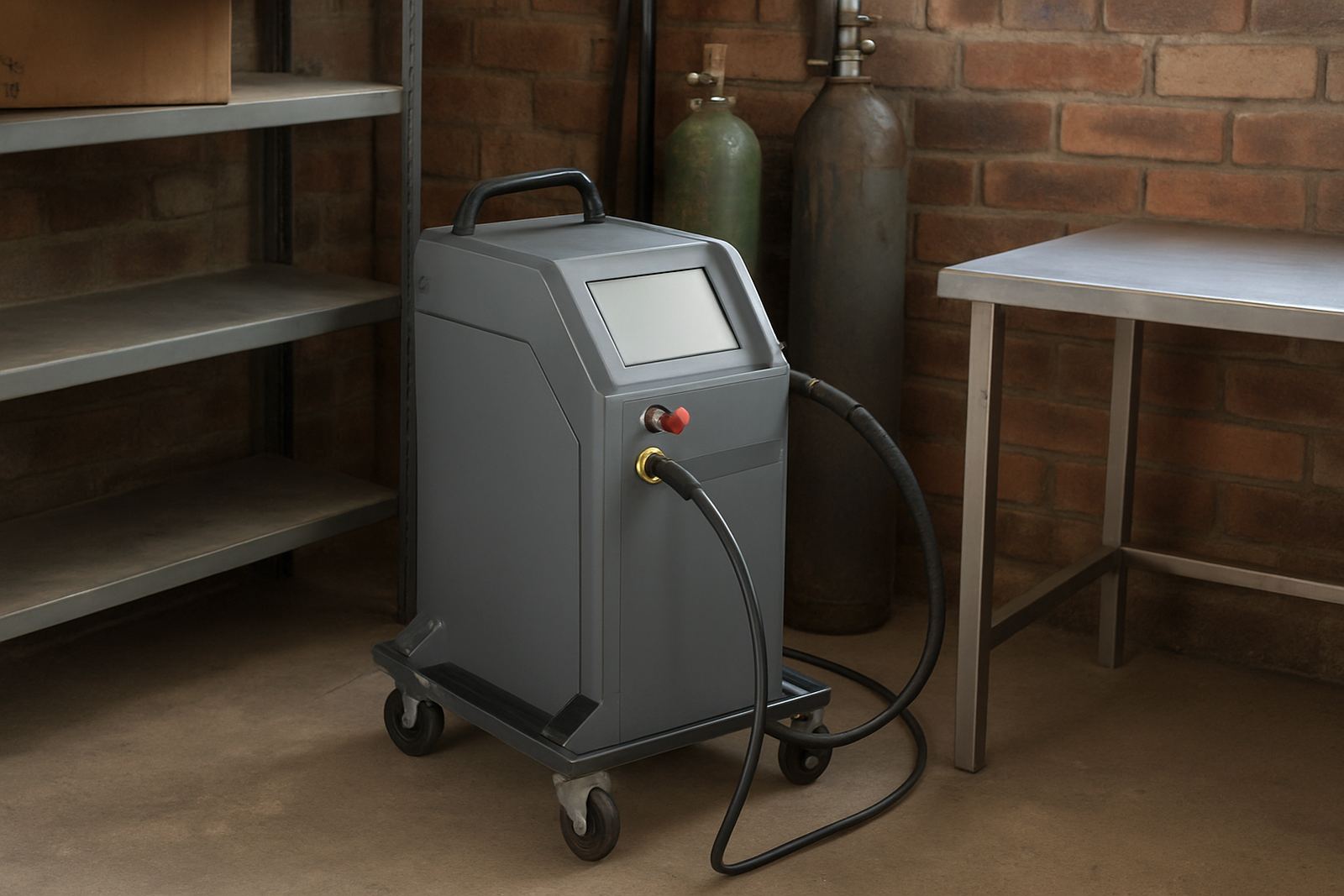
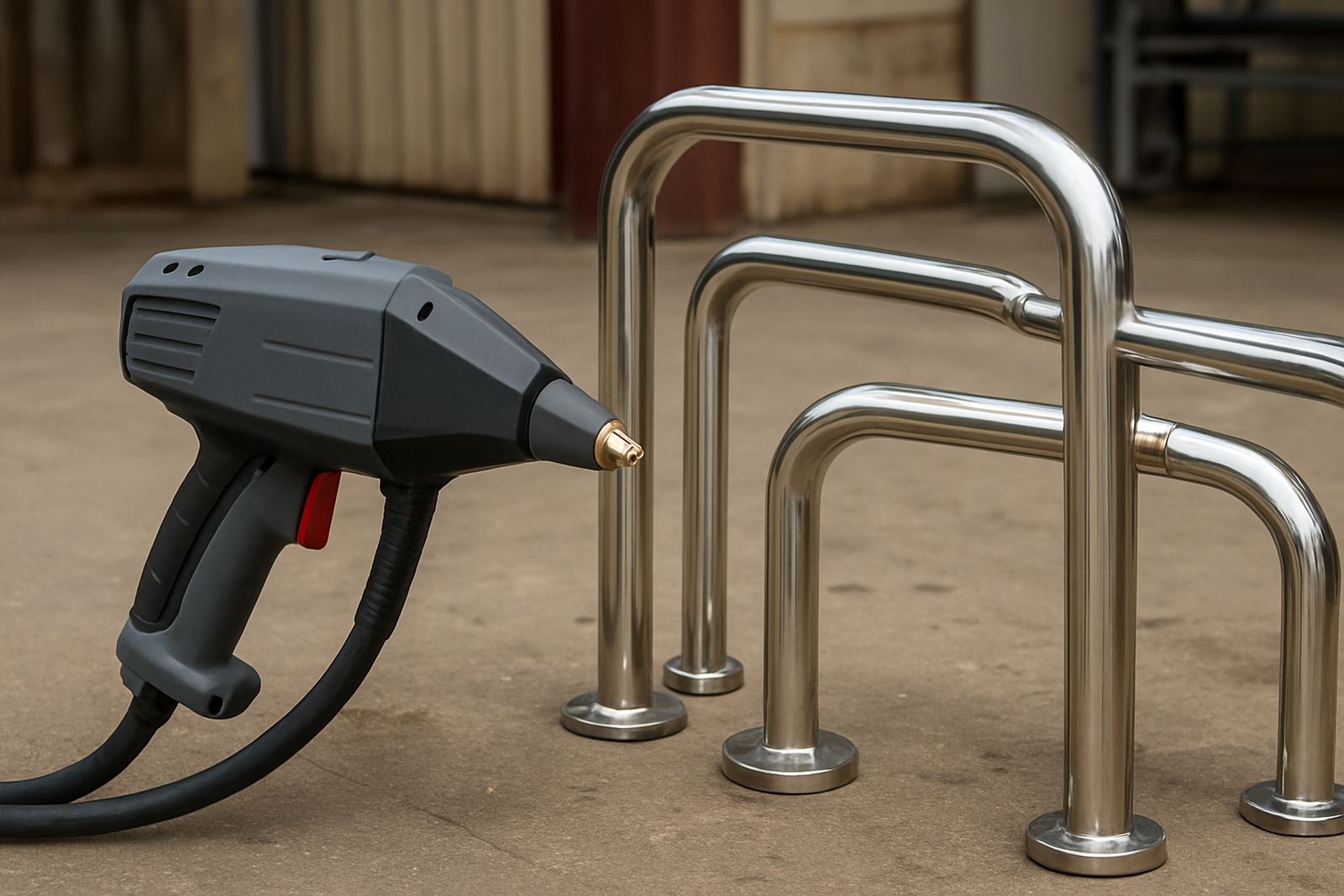
The balustrade welder is typically specified as a handheld fibre laser welding system with a compact power source, integrated wire feeder and a light torch head. For most stainless handrail work, fabricators choose output in the 1,500 W to 3,000 W range depending on joint thickness, production speed and how much site work is involved. A lower output unit is often enough for light tube and bracket work, while higher output gives more reserve for thicker sections and faster travel speeds.
Common options include different cable lengths, nozzle sets, protective lens types and wire feed controls. Some workshops prefer a shorter cable for bench work, while larger teams need more reach around long rail assemblies. If your balustrade work includes corner returns, post caps and mixed section sizes, ask for a setup that allows quick changeover between fillet, butt and lap style joints. That saves time when the team is moving from one contract to the next.
- Typical output: 1,500 W, 2,000 W or 3,000 W
- Handheld torch with safety trigger and process control
- Integrated wire feed for stainless filler where needed
- Adjustable parameters for power, speed and wire rate
Where it suits best in South African fabrication work
This machine suits small balustrade shops as well as larger stainless steel fabrication lines. In Spartan, Kempton Park, and nearby areas like Isando, Jet Park, Edenvale, Germiston, Boksburg and Alberton, it is a practical fit for busy workshops that handle stair rails, balcony rails, safety rails and architectural trim. It is also a good match for teams that need to do site touch-ups after installation, because the handheld setup is easier to move than a fixed welding station.
It works well where neat appearance is part of the job spec, such as upmarket homes, office blocks, shopping centres and hospitality work. On coastal projects, stainless balustrades also need careful welding because humidity and poor post-weld cleaning can shorten service life. A controlled weld process helps you start right, then the final clean and passivation are easier to manage. For firms working under tight deadlines, that can make the difference between finishing in one visit or returning for rework.
- Staircases and balcony handrails
- Pool areas and outdoor viewing platforms
- Retail, office and hospitality balustrades
- Custom stainless guardrails and support frames
Power, gas and workshop setup requirements
Before ordering, check your workshop supply and the type of work you do most often. These units normally need a stable electrical supply and clean shielding gas to protect the weld. For South African workshops, the usual question is whether the incoming power can support the selected output without nuisance tripping during peak use or load-shedding recovery. If your site has weak supply or you run on a generator, make sure the capacity is checked before installation.
Shielding gas selection depends on the job and the finish required, but argon is commonly used for stainless work. Gas quality matters because contamination shows quickly on visible joints. You should also plan for clean consumables, dry storage and a tidy work area around the rail assembly. If you are welding on site, allow enough room for the torch angle and operator movement. Tight corners and awkward stair landings can slow the work down if access is not considered from the start.
- Stable mains supply matched to the selected output
- Clean shielding gas supply for stainless steel welding
- Dry, contamination-free storage for consumables
- Enough space for torch access and safe operator movement
Care, servicing and keeping visible welds consistent
A balustrade welder performs best when the optics, torch and wire feed are kept clean. Dust from grinding, stainless swarf and workshop moisture can all affect the finish if the machine is not looked after. The lens area should be checked regularly and the torch kept free of spatter and contamination. In a busy shop, a short daily check is better than waiting for a fault to show up in the middle of a run.
Preventive maintenance is worth doing on these systems because balustrade work is often repetitive and quality standards are visible to the client. That means regular checks on cable condition, cooling performance, wire feed consistency and alignment of the process head. If you are running production work every day, a planned service interval helps protect the machine and keeps weld quality repeatable. It also helps the operator spot changes early instead of after a batch has already gone out.
What to verify before you submit an order
To match the right setup to your work, confirm the material grades, wall thicknesses and the kind of finish your client expects. A polished indoor handrail has different demands to a brushed outdoor rail. You should also decide whether you need mostly straight runs, mitred corners, post-to-rail joints or mixed small parts, because that affects the power range and accessory set you should choose. If your team wants to improve output quickly, training and test welding should be included at the start, not later.
It helps to share sample parts or job drawings so the machine can be set up for your standard work. For some workshops, production rollout is the goal. For others, the priority is reducing grinding and getting younger operators confident on the process. Either way, clear planning before delivery saves time and money. The right unit should fit your rail sections, your supply situation and your daily workflow, not just the brochure spec.
- Stainless grade and tube wall thickness
- Type of joints: straight, mitre, corner or post connections
- Required finish: brushed, polished or decorative visible welds
- Power availability and gas supply on site
- Training needs for operators and supervisors
Key facts
| Product type | Handheld fibre laser welder for stainless balustrade fabrication |
|---|---|
| Typical output options | 1,500 W, 2,000 W or 3,000 W |
| Materials | 304 and 316 stainless steel, plus selected mild steel and thin section work |
| Joint types | Butt, fillet, lap and mitre joints on handrail assemblies |
| Power requirement | Site dependent, matched to output and workshop supply |
| Support | Commissioning, operator training, maintenance, spares and breakdown response from Spartan, Kempton Park |