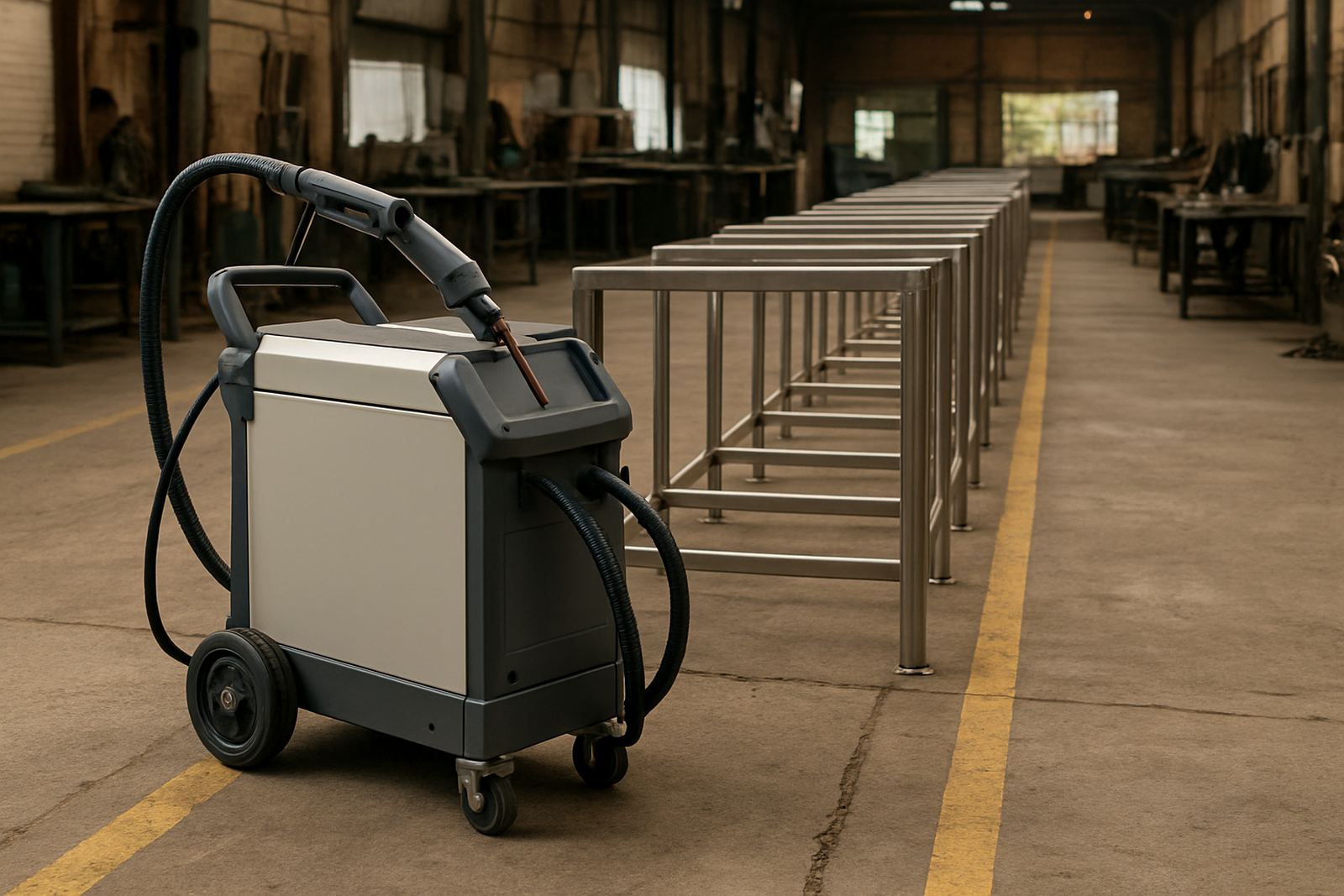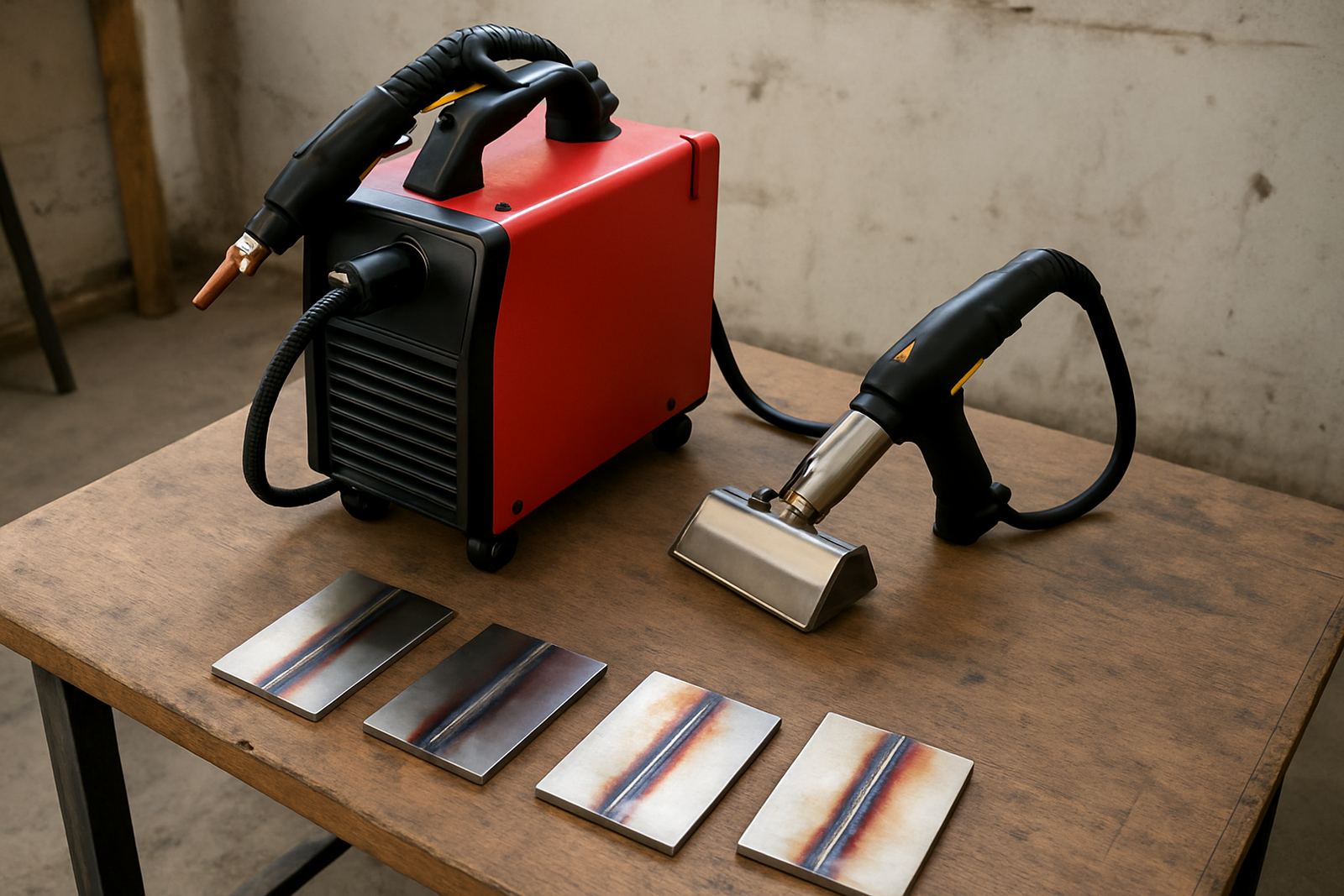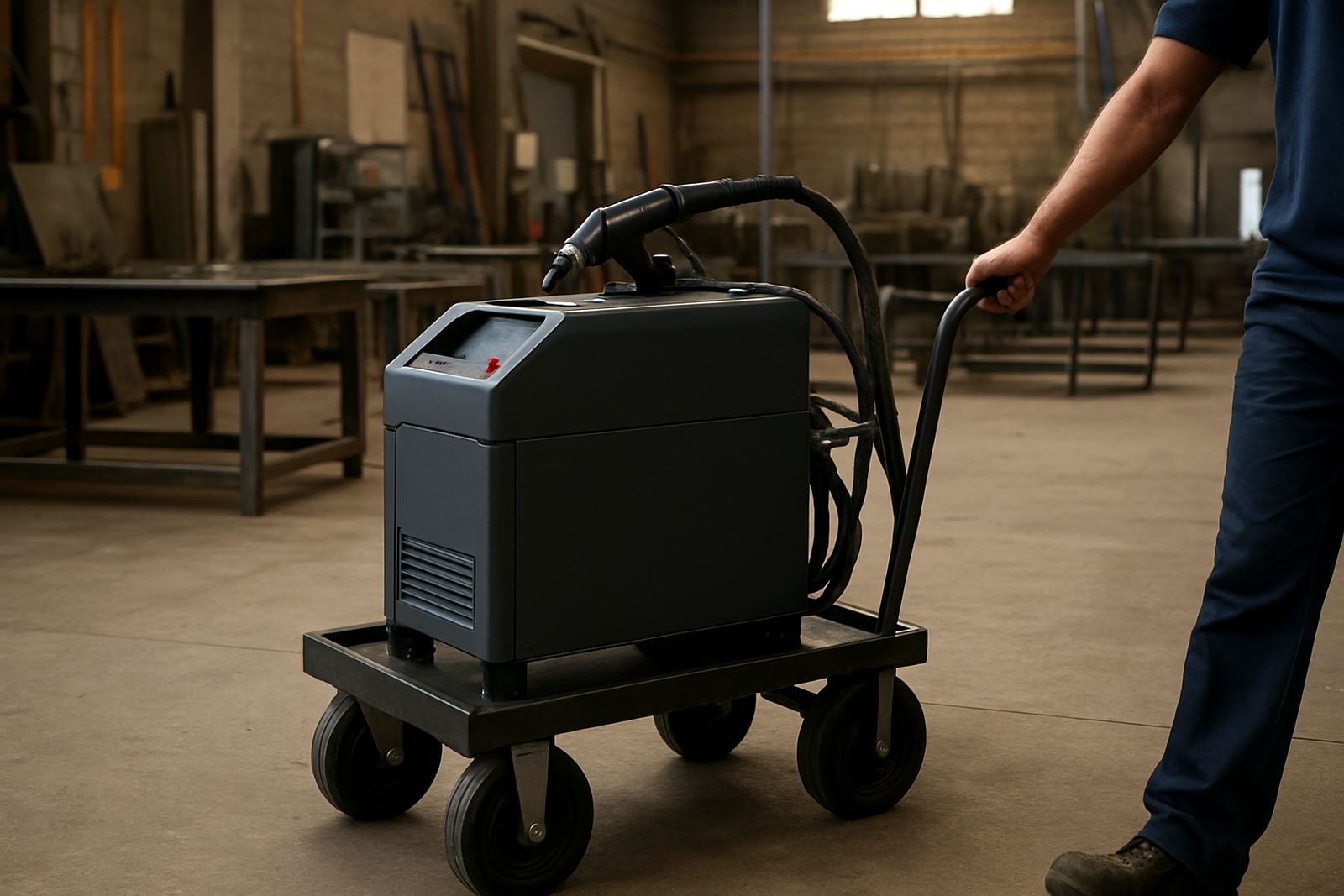

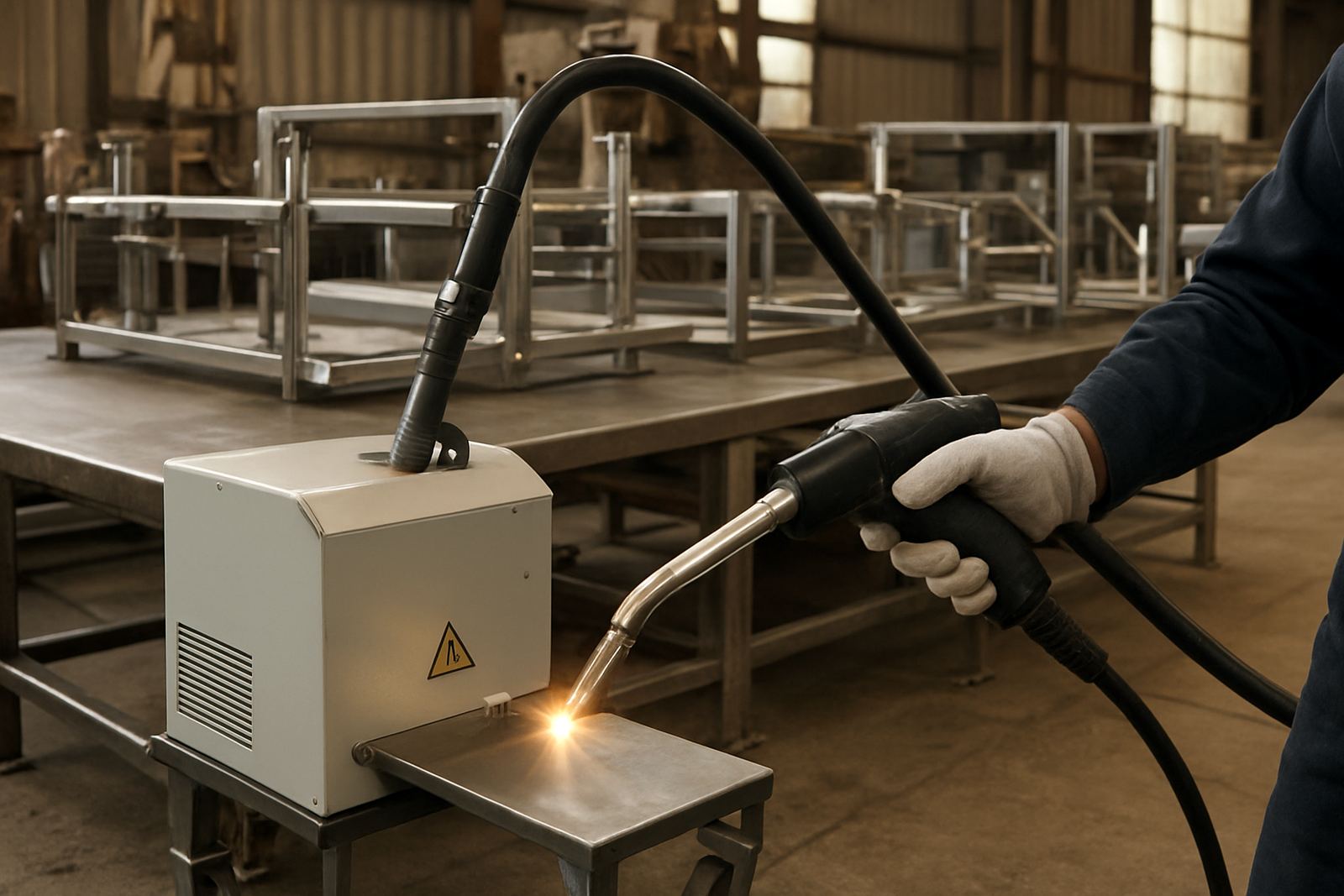
Built for repeat work on busy fabrication lines
The Production Cell Unit is a handheld fibre laser welding setup arranged for daily duty in stainless steel fabrication. It is used where teams need clean welds, less post weld finishing and predictable results from shift to shift. The system is suited to fabrication shops making sinks, cabinets, ducting, enclosures, food grade components, handrails and general stainless assemblies.
Because it is aimed at production rather than occasional repair work, the unit is set up for controlled movement, stable torch handling and quick repeat set-up. Operators can move from one job to the next with less grinding and less distortion, which helps keep jobs on schedule when customer deadlines are tight.
- Designed for continuous workshop use
- Suitable for 304 and 316 stainless steel work
- Reduces heat input compared with conventional processes
- Helps limit rework on visible seams and thin sections
Size choices and production options
The Production Cell Unit is available in practical output classes for different shop sizes. Smaller lines often choose a lighter-duty configuration for short weld cycles and moderate daily throughput. Larger operations usually choose a higher output setup with more generous duty cycle and faster recovery for longer shifts.
Options also depend on how the line is laid out. Some workshops want a compact unit for a single bay, while others need a cell that can move between fabrication areas or be tied into a dedicated production zone. If the work includes thin sheet, tubes, frames or mixed gauges, the configuration can be matched to the heaviest material in daily use so the system is not underpowered.
- Common output classes: 1.5 kW, 2 kW, 3 kW and 4 kW
- Handheld torch with fibre delivery
- Air-cooled or water-cooled arrangement depending on output
- Optional wire feed for wider joints and gap control
Where the unit fits best
This unit suits production sites that need more than a repair tool. It is a good match for stainless fabricators in Ekurhuleni, especially around Spartan, Isando, Jet Park, Boksburg, Germiston, Edenvale and Alberton where metal shops often run mixed batches and short lead times. It is also useful for contract fabricators who need a reliable process that can be taught to multiple operators.
The system works well on clean indoor floors with organised material flow, but it can also be used in practical shop conditions where dust, handling marks and changeovers are part of the day. In coastal areas, it helps to keep components dry and stored properly since moisture and salt air can affect finishes and consumables. In load-shedding conditions, shops often plan around generator or inverter support for ancillary equipment, which is worth checking before installation.
- Stainless fabrication and jobbing shops
- Food equipment and sanitary product makers
- Light manufacturing and enclosure builders
- Sites needing trainable, repeatable welding methods
Installation, power and gas requirements
Installation starts with a stable electrical supply, suitable floor space and enough room for safe access around the work cell. Most production setups need a dedicated circuit, correct earthing and proper cable routing. The final supply size depends on the output class and the workshop's available infrastructure, so it is best to confirm the site details before delivery.
For gas, the unit typically uses shielding gas suitable for stainless steel welding. Clean, dry gas is important, especially on polished work or when the client needs neat weld colour with less cleanup. In many workshops the gas bottle or manifold is placed close to the cell for convenience, but it should still be arranged so hoses are protected from traffic and sharp edges.
- Confirm site voltage and available amperage
- Allow space for the power source, torch movement and workpieces
- Use clean shielding gas with correct flow settings
- Plan storage for consumables, wire and spare lenses if fitted
Care, servicing and daily upkeep
Like any production tool, the unit performs best when it is kept clean and checked regularly. Daily upkeep is usually simple: wipe down the torch area, inspect hoses and cables, check for loose fittings and keep the lens and nozzle area free of spatter or dust. In busy shops, these small checks save time later and reduce unplanned stoppages.
Preventive maintenance is recommended for workshops that run every day. This can include cooling checks, alignment checks, filter inspection and a review of consumables before they are fully worn out. Where operators rotate between shifts, refresher training is useful because small changes in torch angle or speed can affect weld finish. A little care goes a long way, especially when the line cannot afford downtime.
- Keep the unit dry and covered when not in use
- Check cooling and airflow before long runs
- Replace worn consumables before weld quality drops
- Schedule periodic service for high-use production lines
What to check before you order
Before placing an order, it helps to define the material thicknesses, joint types and daily output target. That makes it easier to match the power level and accessories to the work you actually do. If the job mix includes both fine sheet and heavier sections, the setup should be chosen around the tougher end of the range so it can handle the full workload.
You should also check who will operate the unit, how training will be handled and whether the shop needs installation support or production rollout assistance. If your team is spread across more than one site, remote help and refresher training can keep standards consistent. We can also assist with weld testing and process optimisation before you commit the unit to full production.
- Material grade and thickness range
- Type of joints, seams and production volume
- Power supply available on site
- Gas type, storage and handling arrangements
- Operator skill level and training needs
- Space for installation, maintenance and safe movement
Key facts
| Product type | Handheld fibre laser welding production cell |
|---|---|
| Typical output classes | 1.5 kW to 4 kW |
| Main material use | Stainless steel fabrication and assembly |
| Cooling option | Air-cooled or water-cooled, depending on output |
| Work mode | Daily-duty production and repeat weld work |
| Support included | Commissioning, training, maintenance and breakdown response |