
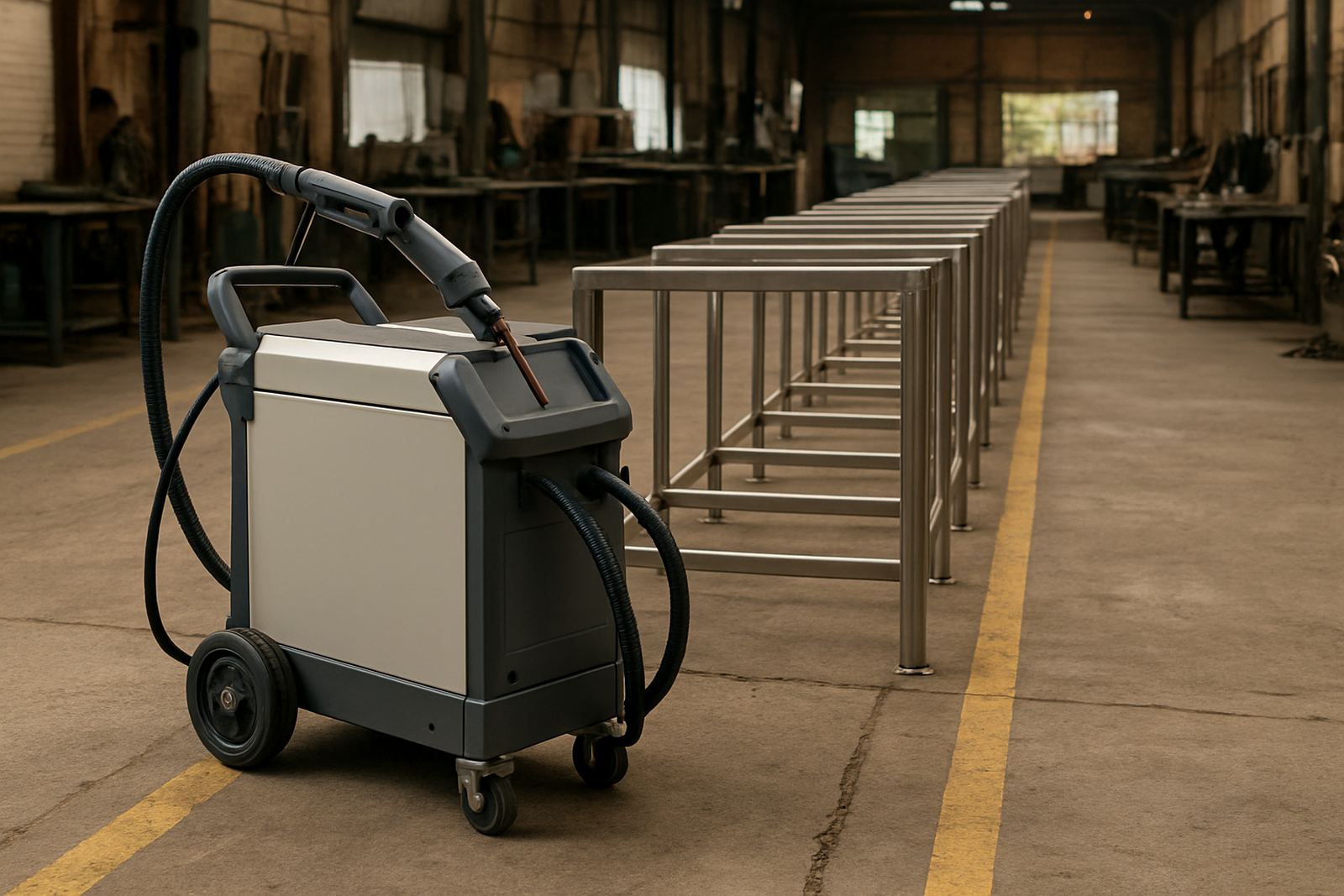
Built for repeat stainless work on the line
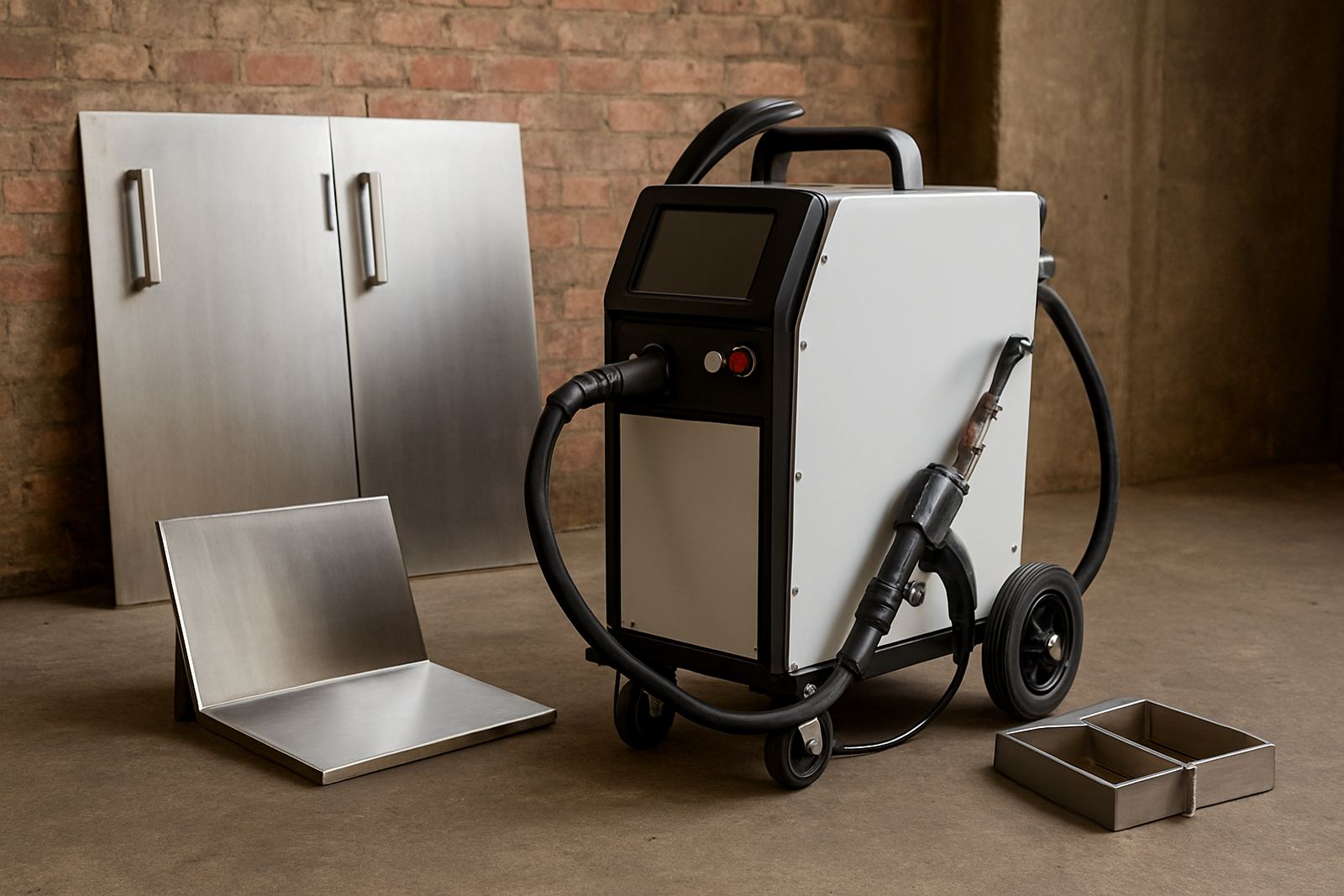
The Factory Line Welder is a handheld fibre laser welding system specified for production environments that run the same stainless assemblies repeatedly. It is used where speed, control and a neat finish matter, especially on brackets, enclosures, guards, trolleys, tanks, cabinets and fabricated frames. Compared with slower manual methods, it helps reduce distortion and keeps the heat affected zone small, which is useful on thin stainless sections that can pull or mark easily.
In a busy shop, the value is not only weld speed. It is the ability to hold the same result across a full batch, even when different operators are rotating through the bay. That is why many fabricators use it for line work, repeat jobs and final fitment stages where appearance counts as much as strength. For sites in Gauteng, the unit is also practical where load-shedding can interrupt production, because the laser process is efficient and easier to plan around than high-heat methods.
- Stable output for repeated stainless assemblies
- Clean weld bead with low finishing time
- Reduced distortion on thinner material
- Suitable for small teams and larger production lines
Specifications and size options that suit South African workshops
The Factory Line Welder is supplied in power ratings that suit both light and heavier production duty. The most common options are 1,500 W, 2,000 W and 3,000 W units, with different torch and wire-feed setups depending on the job. A 1,500 W machine is often enough for lighter stainless parts and repair work, while 2,000 W and 3,000 W models are preferred for higher throughput, thicker sections and more demanding production schedules.
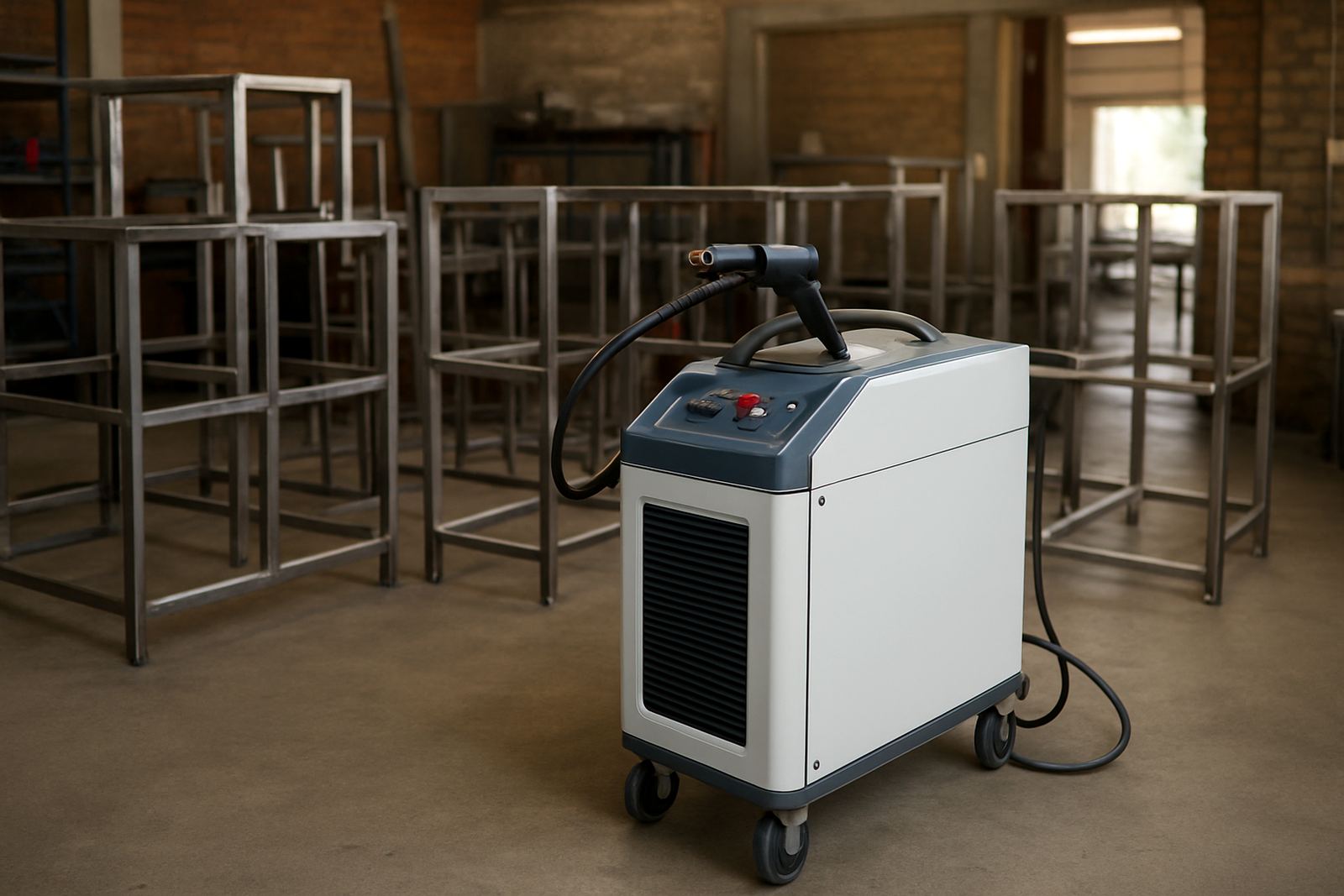
Most installations use a handheld welding head with a fibre cable and a control cabinet positioned beside the work area. The exact footprint depends on the power pack and cooling arrangement, but workshops should allow space for the cabinet, chiller, gas bottles and a safe work zone around the operator. If the line is tight, the layout can be planned to keep the torch movement clear and the cables protected from forklift traffic or sharp edges.
- Power options: 1,500 W, 2,000 W, 3,000 W
- Weld mode: handheld fibre laser welding
- Material focus: stainless steel production work
- Typical use: repeat batches, jigs and fixtures, line fabrication
Where it fits in fabrication, manufacturing and maintenance shops
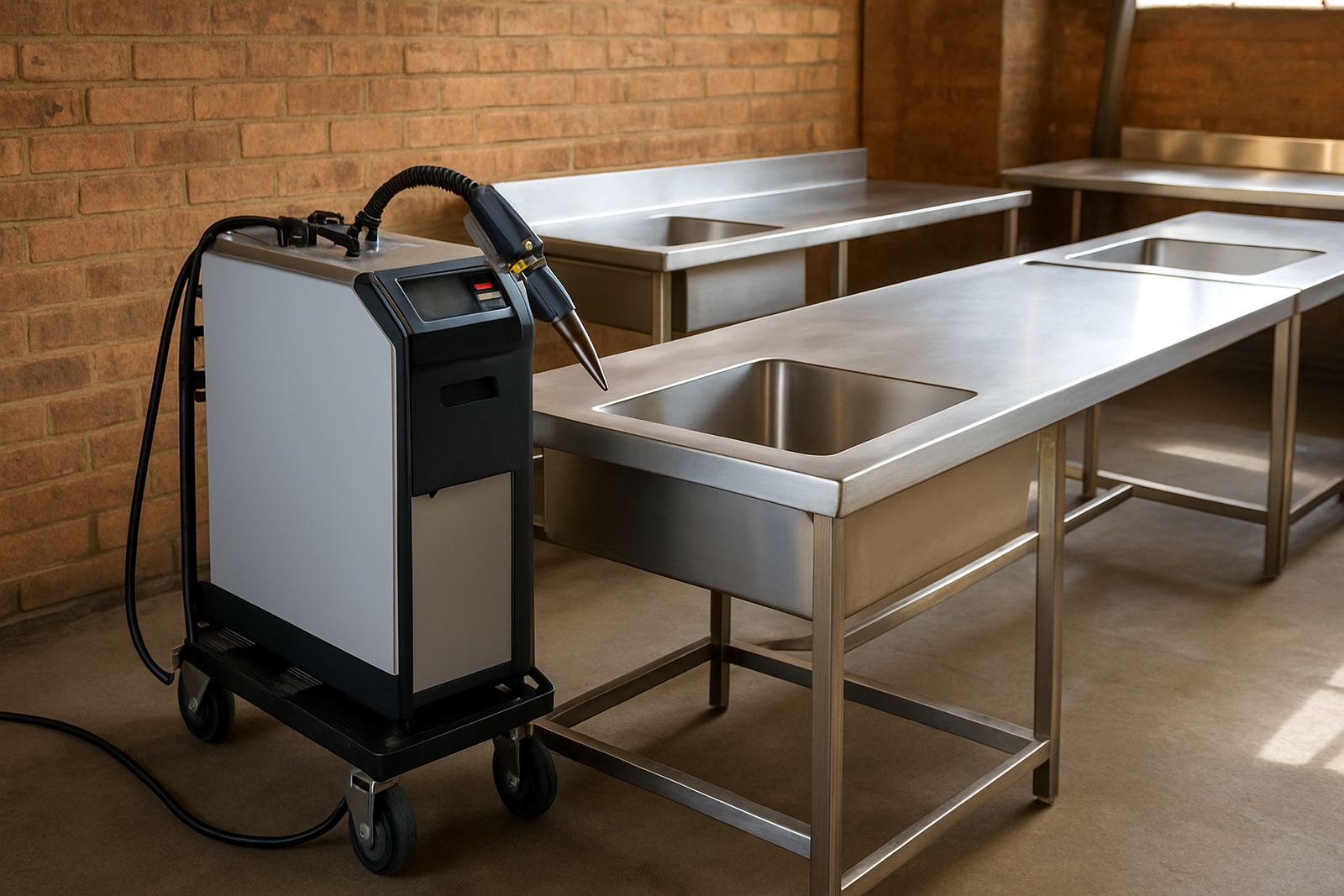
This machine suits stainless fabricators working in food equipment, medical fittings, architectural metalwork, commercial kitchens, sheet metal, general fabrication and plant maintenance. It is particularly useful where parts must look clean before delivery, or where post-weld grinding adds too much time to the job. On site, it can also help with localised repairs to stainless components that need a tidy result with minimal strip-down.
For bigger factories in Ekurhuleni, Germiston, Boksburg and Jet Park, the system can be used as part of a repeat production cell. For smaller workshops in Edenvale, Alberton or Kempton Park, it gives a practical way to take on higher-value stainless work without a long learning curve. The right training makes a big difference here, because stable technique and correct travel speed are what keeps the weld neat and consistent, not just the machine setting alone.
- Food and beverage fabrication
- Sheet metal and enclosure work
- Stainless guards, frames and housings
- Maintenance repairs and production changeovers
Installation, power supply and shielding gas needs
Installation is straightforward, but it must be planned properly. The machine needs a stable electrical supply, a suitable plug arrangement, and enough space for the cabinet and cooling unit. Most sites will want a dedicated circuit and proper earthing, especially where the line runs long hours. A clean, dry area is best, with the torch lead routed away from traffic and sharp metal offcuts. In coastal or humid conditions, storing the consumables and torch parts correctly helps prevent issues later on.
Shielding gas is required for consistent stainless weld quality, and the right gas flow must be set for the thickness and joint type. If the gas is too high or too low, the weld may show colour changes or inconsistent shielding. That is one of the points covered during commissioning and operator training, along with focus distance, travel angle and cleaning the joint properly before welding. A small slip here can cost a batch, so the setup needs attention from day one.
- Electrical supply to suit the selected power rating
- Dedicated earthing and safe cable routing
- Shielding gas setup for stainless work
- Dry storage and clean work area recommended
Care, servicing and production support that keeps output steady
Like any production tool, the Factory Line Welder works best when it is kept clean and checked regularly. The lens, nozzle and torch head must be inspected for contamination, and the cooling system should be kept within the correct operating range. Filter checks, cable inspection and torch alignment should form part of normal maintenance, not something done only when a fault appears. That approach helps avoid downtime and keeps weld quality predictable.
Laser-Welder supports machine commissioning, preventive maintenance, breakdown response, spares supply and remote help from Spartan, Kempton Park. Training can be done at fabrication shops nationwide, with refresher sessions available when new staff join or a process changes. If a machine starts behaving differently, it is better to check the settings, gas flow and optics early rather than letting a small issue run through a full shift.
- Preventive maintenance for steady output
- Breakdown response and remote help available
- Consumables and spares support
- Refresher training for operators and supervisors
What to confirm before placing an order
Before ordering, it helps to confirm the stainless grades you work with, the thickness range, the daily output target and whether the machine will run on a single station or across more than one line. The joint type matters too. Butt joints, lap joints and corner welds do not all call for the same setup, and the choice of power level should match the heaviest regular job, not only the easiest one. If your team works across multiple shifts, make sure operator training is included so the handover stays consistent.
You should also check the available power supply, the workspace size, bottle storage, extraction needs and whether the machine will be used for production only or for occasional repair work as well. If you are comparing options, ask for a weld test on your own material so you can judge the finish, speed and heat input on the parts you actually make. That gives a clearer picture than relying on a sample bead alone, and it helps avoid a wrong purchase.
- Stainless grade and thickness range
- Daily output and shift pattern
- Available power and workspace layout
- Need for training, testing and rollout support
Key facts
| Product type | Handheld fibre laser welder for stainless production |
|---|---|
| Power options | 1,500 W, 2,000 W, 3,000 W |
| Primary material | Stainless steel |
| Typical applications | Repeat assemblies, frames, enclosures, guards, tanks |
| Support services | Commissioning, training, maintenance, spares, remote help |
| Base area | Spartan, Kempton Park with nationwide demos and training |