
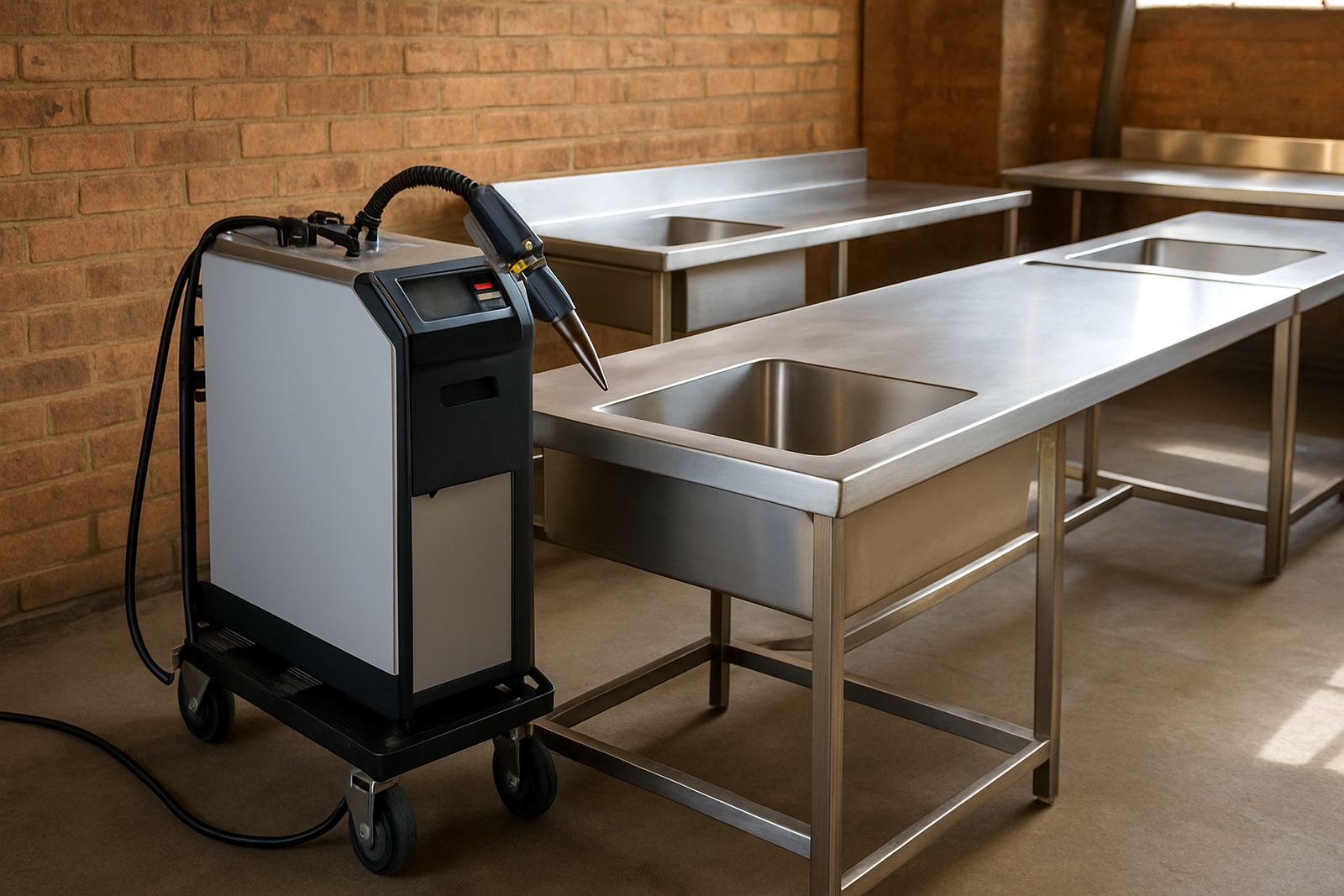
Fine seam control for stainless counter fabrication
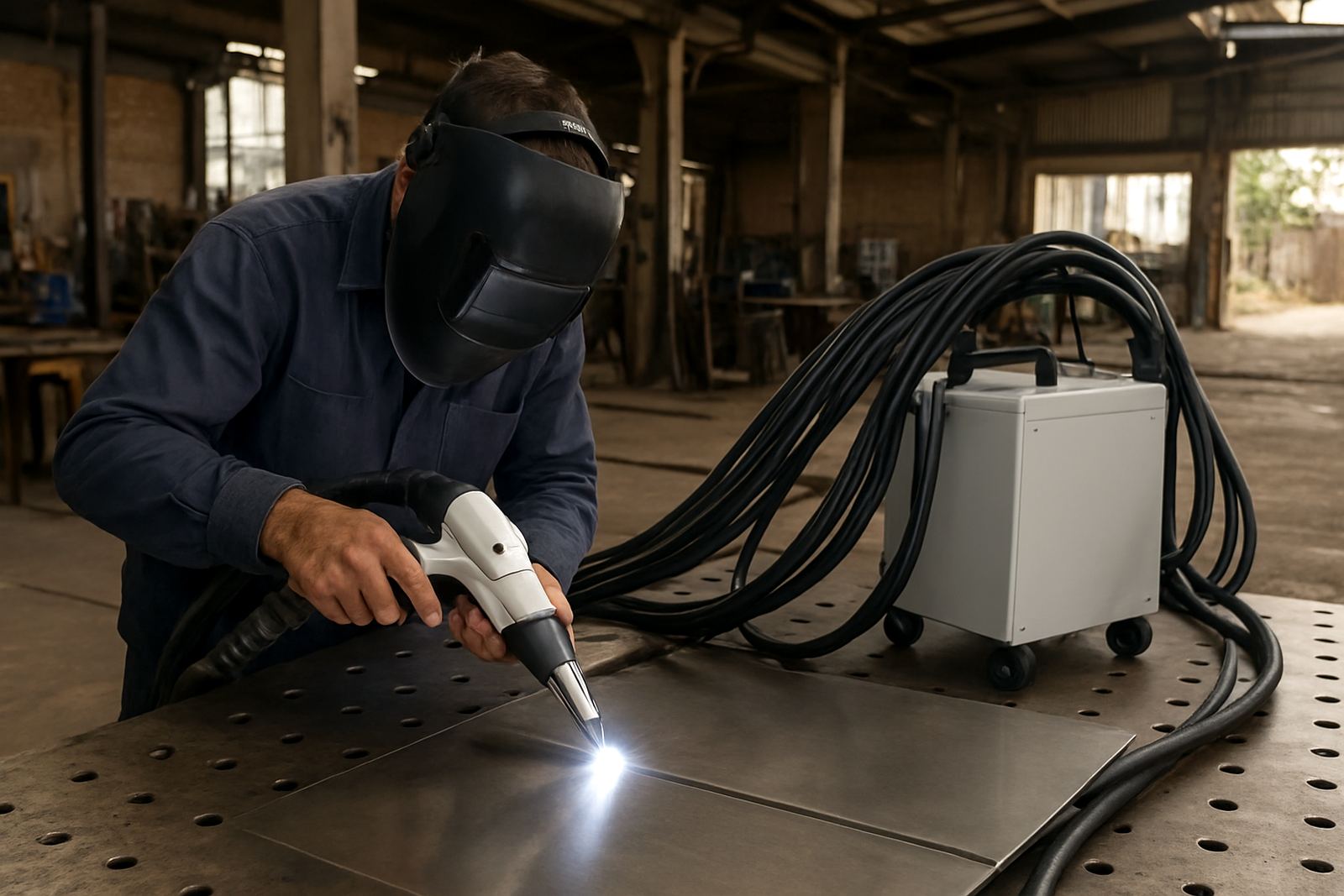
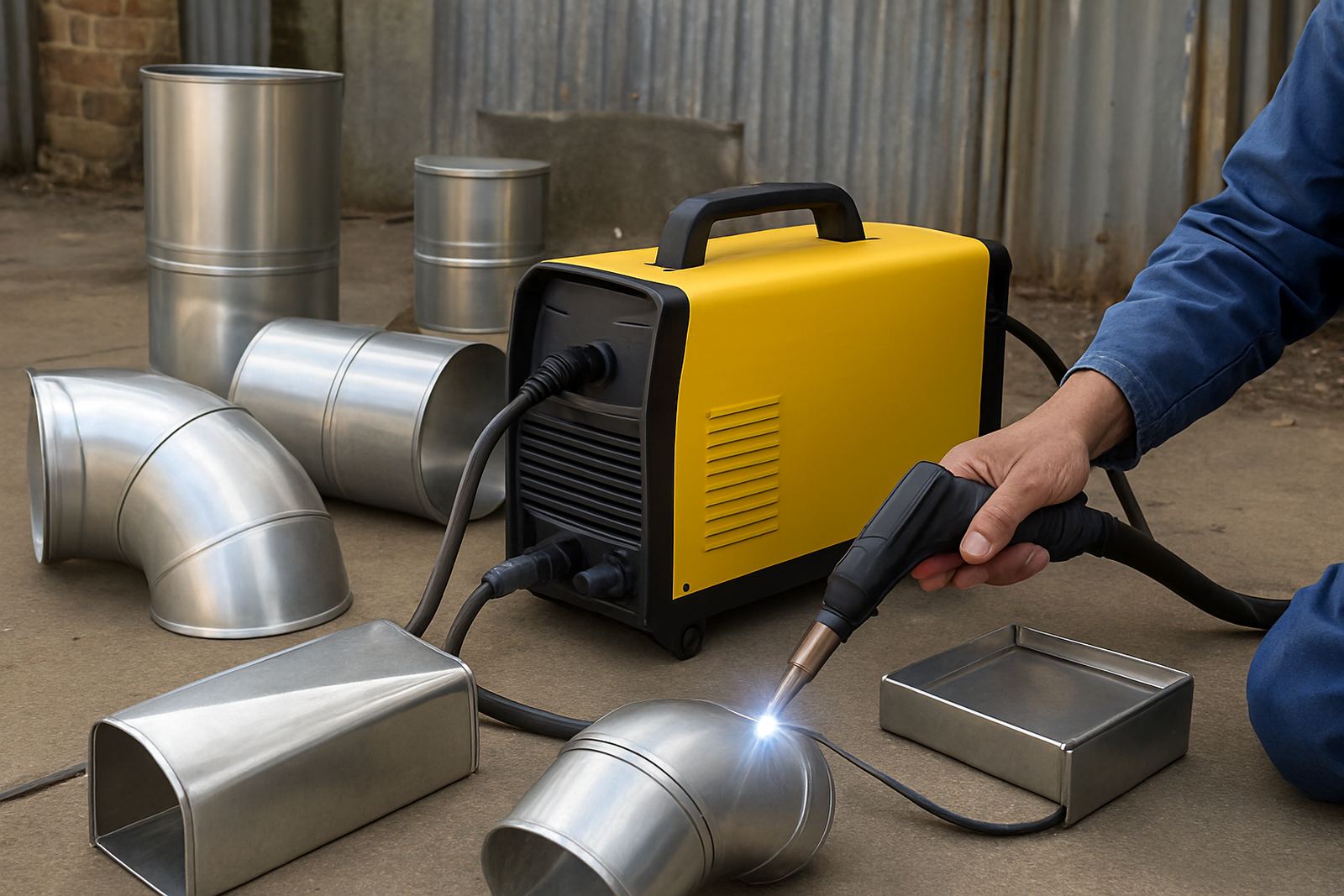
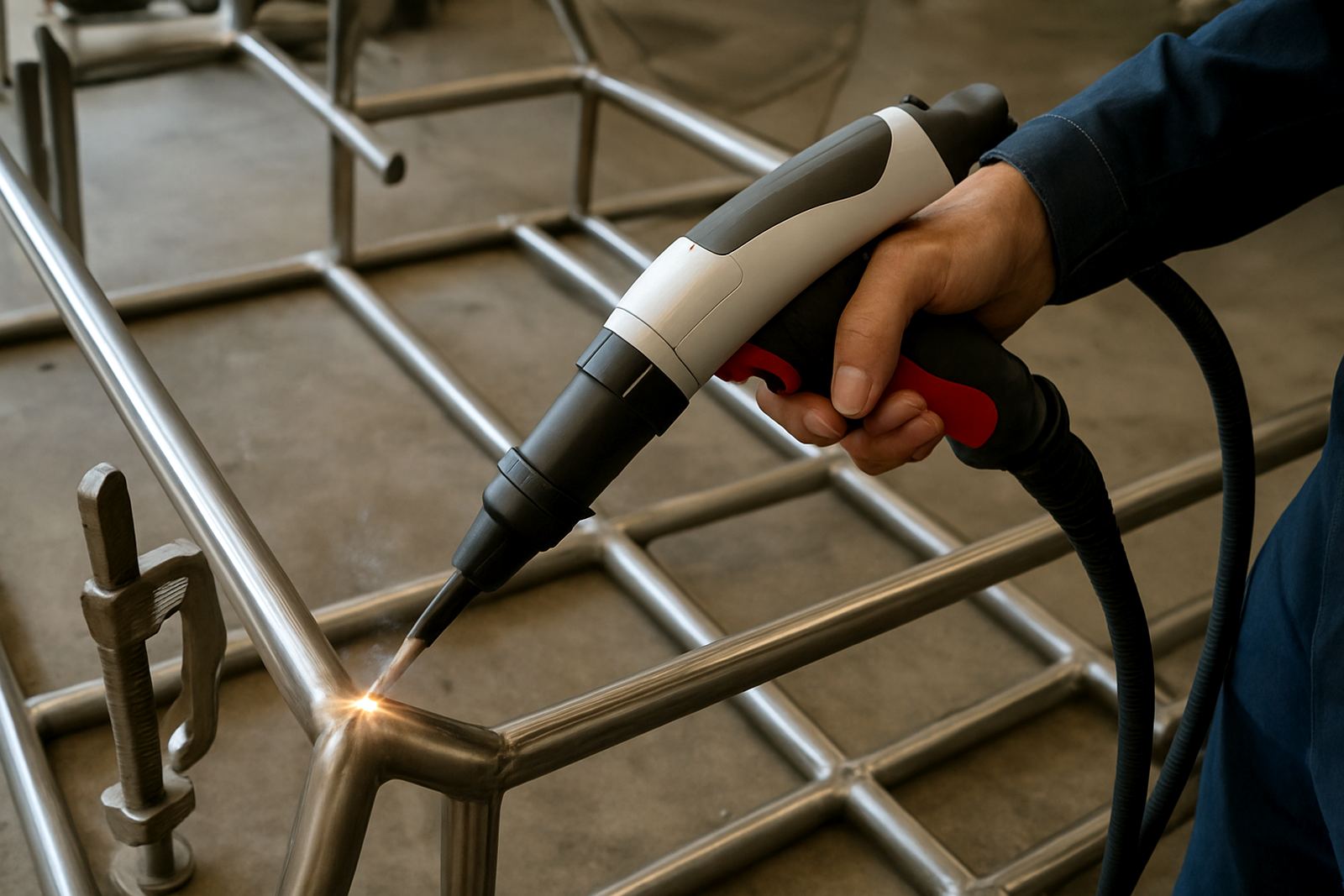
A countertop welder is a handheld fibre laser welding system used for thin to medium stainless steel work where appearance matters. It suits counters, prep tables, splashbacks, service hatches, sink surrounds and food-safe installations where a clean line and limited heat distortion are important. On brushed or polished stainless, the narrow heat affected zone helps keep panels flatter, so there is less grinding and less chance of marking the finish.
For shops in Spartan, Kempton Park, Isando and Jet Park, this matters when you are turning around retail counters, bakery benches and catering counters in the same week. The process is also useful where access is awkward, because the handheld torch can get into corners and around returns more easily than many conventional welding setups. If you are doing regular stainless work, it gives a more controlled finish and saves a lot of dressing time.
Available output levels and practical options
We supply countertop welding systems in output classes suited to light fabrication through to higher duty production work. Common options are 1 kW, 1.5 kW, 2 kW and 3 kW units, with settings matched to thin stainless sheet, folded sections and assembly work. The right power level depends on material thickness, joint type and how much speed you need on the floor.
- 1 kW to 1.5 kW for fine seam work on thin stainless and small runs
- 2 kW for general workshop fabrication and mixed counter jobs
- 3 kW for higher throughput, thicker joins and larger production batches
- Air or gas assisted torch setup for cleaner weld appearance on visible joints
Most fabricators order the unit with a set of nozzles, wire feed guidance and torch accessories to suit their usual work. If you are mainly doing catering installations, ask for the setup most suited to visible seams and corner finishing. It is better to choose the right configuration upfront than to add bits later and slow down production.
Where a countertop welder earns its keep
This machine suits stainless fabricators working on kitchen counters, restaurant fit-outs, hospital catering areas, laboratory benches and commercial food preparation lines. It is especially useful where clients expect tidy visible welds and smooth wipe-down surfaces. In coastal areas like Durban, East London and Gqeberha, stainless work also needs good corrosion control and careful finishing, so keeping the weld neat helps reduce post-work clean-up.
It is a practical choice for small workshops that need one machine to handle varied jobs and for larger plants that want faster hand-finishing on repetitive parts. The system can also support repair work, modifications and rework on installed counters. For municipal or site-based projects, the ability to work cleanly with less smoke and less stray spatter can make jobsite management easier, especially in occupied kitchens or retail spaces where downtime is tight.
- Commercial kitchens and catering counters
- Splashbacks, skirting and return folds
- Prep benches, sinks and support frames
- Lab and medical stainless fixtures
Installation, power and gas requirements
These machines are normally installed on a stable floor with enough space for the source unit, cable run and work area. Most workshops will need a dedicated power supply sized to the machine rating, with correct circuit protection and earthing. On-site voltage stability matters in South Africa, especially during load-shedding or when a factory has other high draw equipment running at the same time. A cleaner power supply means better consistency and fewer nuisance trips.
Gas assist is used for certain applications to improve bead appearance and shielding, while cooling arrangements and correct consumables help keep the torch performing properly. Before installation, check your workshop access, door width and whether the unit must move between bays or remain in one place. For shops in Germiston, Boksburg or Alberton where floor space is often shared with shearing, bending and assembly, planning the layout saves time later. We can help with commissioning, operator training and process setup at your premises or during a demonstration at our Spartan base.
Care, maintenance and keeping output consistent
Like any production tool, the welder needs regular care to stay dependable. Keep lenses, nozzles and torch parts clean, follow the duty cycle guidance, and inspect cable connections for wear. Stainless dust, oil and shop grit can affect weld quality if they build up, so a simple daily wipe-down is worth doing. If you are running multiple shifts, set a routine for visual checks at the start of each day and after break periods.
Preventive maintenance helps avoid breakdowns and keeps the machine ready for client deadlines. If a fault does appear, service response, remote help and spares supply can reduce lost time. Our team also offers process optimisation and refresher training so your operators can keep settings consistent when material thickness changes or a new batch of counters comes through. On busy floors, a bit of discipline with care saves a lot of rework later, that much is certain.
- Clean optics and torch parts regularly
- Check gas flow, cables and connections
- Keep the work area free of moisture and grinding dust
- Book scheduled servicing before peak production periods
What to verify before you submit an order
Before ordering, make sure the machine suits your material range, joint type and expected daily output. The most important details are stainless thickness, whether you are welding visible seams or hidden joints, and whether the machine will be used mainly in one workshop or moved between sites. If you do catering installations, tell us if you need tight corner access, polished finishes or a particular bead profile.
It also helps to confirm your power supply, floor space, and whether you need operator training for one person or a full team. If you are comparing models, ask about beam control, wire feed setup, cooling method and what consumables are included. Our national demos and training are available in Spartan, Kempton Park, Isando, Jet Park, Edenvale, Germiston, Boksburg and Alberton, with shop demonstrations available nationwide. The right setup should suit your actual work, not just the spec sheet.
- Material thickness and stainless grade used most often
- Daily production volume and shift pattern
- Power supply and site access
- Need for training, commissioning or production rollout
Key facts
| Technology | Handheld fibre laser welding system |
|---|---|
| Typical output options | 1 kW, 1.5 kW, 2 kW, 3 kW |
| Best suited to | Stainless steel counters, splashbacks, catering fit-outs and fine seam work |
| Typical material range | Thin to medium stainless fabrication, depending on joint design |
| Installation needs | Stable floor space, suitable electrical supply, earthing and workshop ventilation |
| Support available | Machine commissioning, operator training, preventive maintenance and breakdown response |