
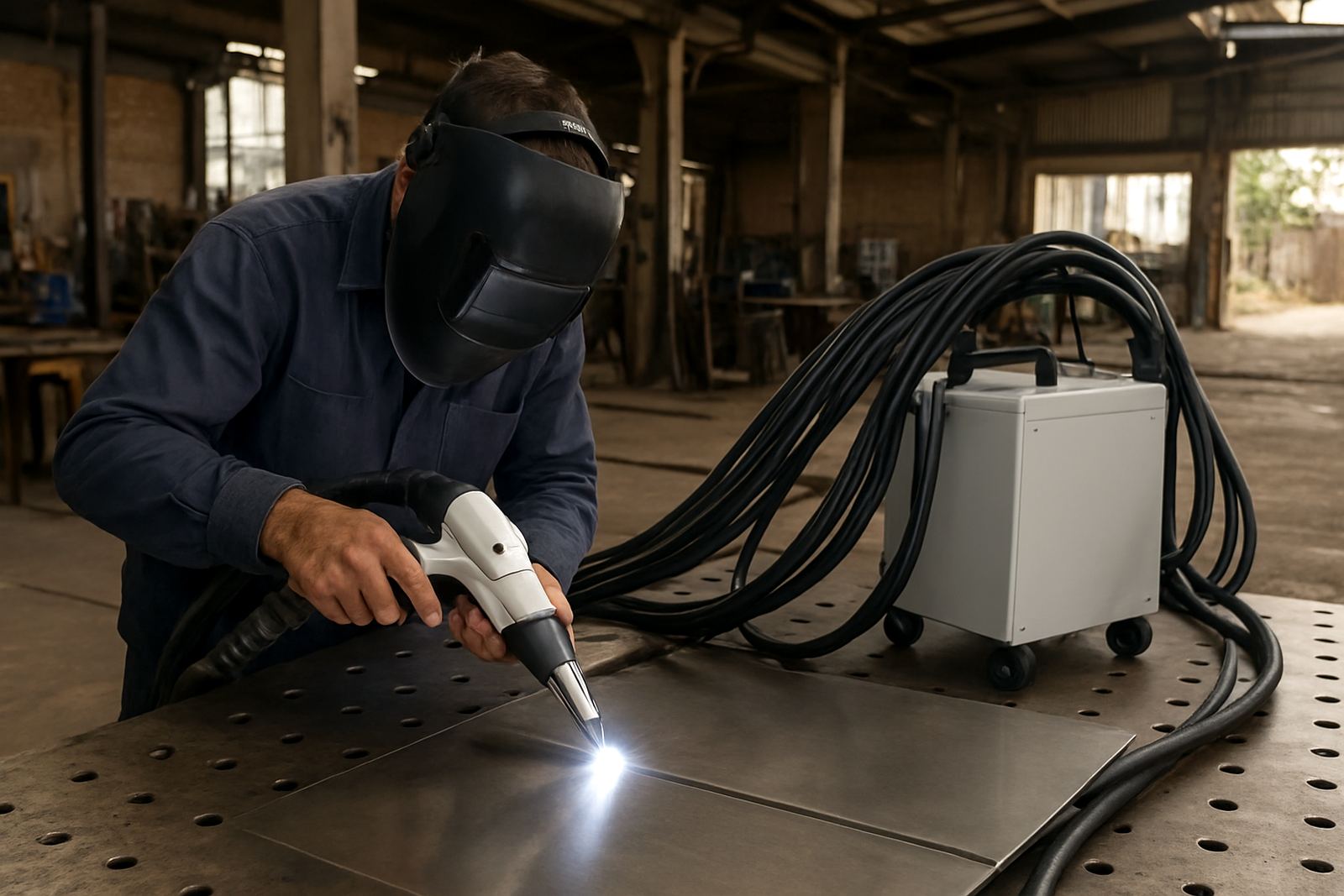
What the Extended Cable Package does on the shop floor
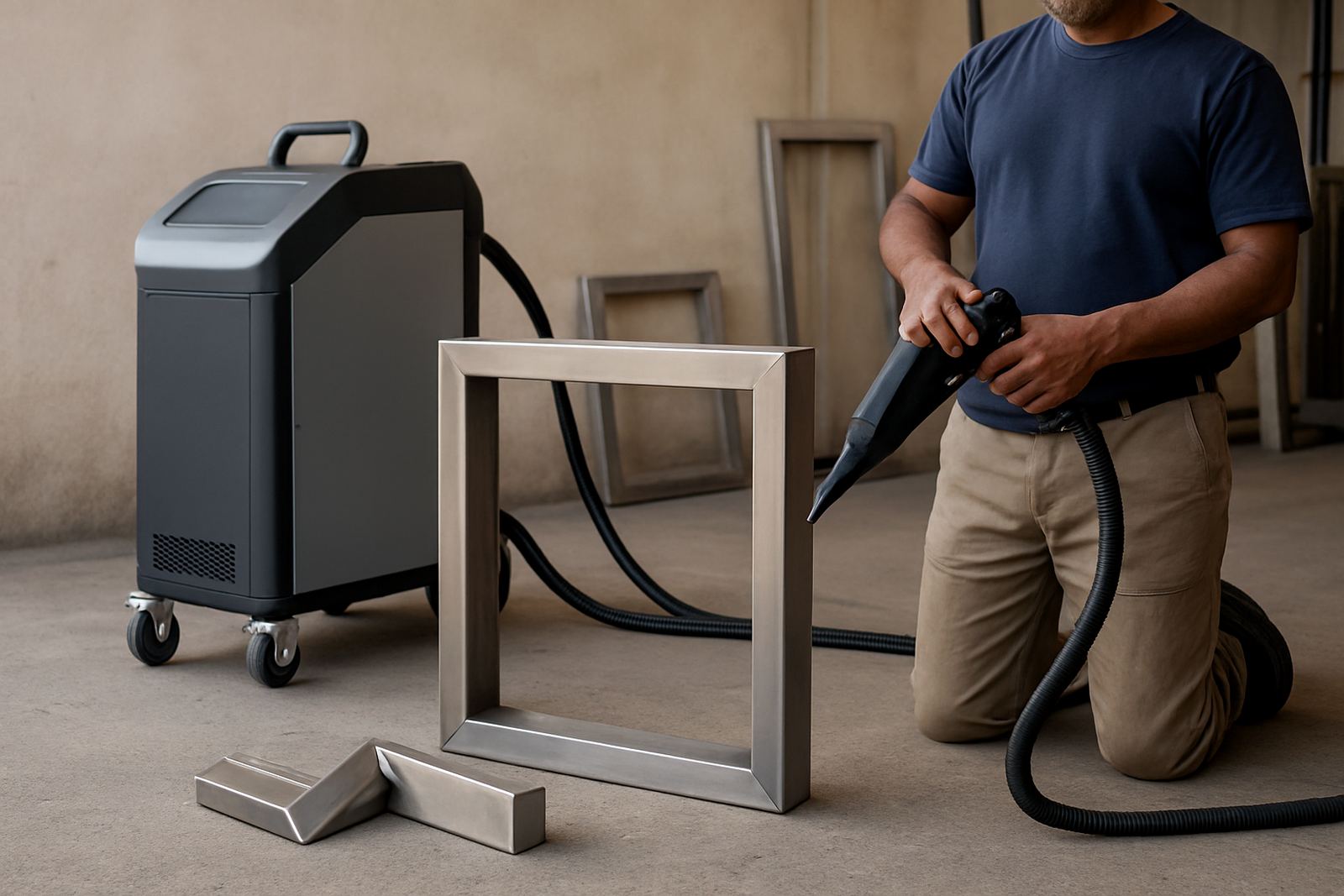
This package adds a longer service run between the handheld welding head and the main unit, which is useful when the workpiece is too big to bring close to the machine. On a busy floor in Spartan, Kempton Park or Isando, that extra reach can save a lot of lifting and trolley movement through the day. It also helps when the welding bay is crowded and you need to keep the power unit parked away from foot traffic.
The main benefit is simple. The operator gets more freedom of movement, while still keeping the same laser weld quality, wire feed control and shielding arrangement set for the job. For stainless steel work, that matters because fit-up, bead appearance and heat control must stay consistent from one end of a long panel to the other.
It is a practical add-on for shops that work on tanks, cabinets, ducts, frames, kitchen equipment, balustrades and custom fabrication. Some teams use it to handle larger assemblies in one setup, rather than breaking the job into smaller sections and spending more time lining things up again.
Cable lengths and package options for different bays
The right length depends on your bay size, how your team moves around the job, and whether the machine sits on a fixed floor position or a trolley. Longer runs improve reach, but they must be matched correctly to the machine model and the way you work. Too little length means constant repositioning, while too much can make handling awkward if the route is not planned properly.
Common options are set out below for shop planning and ordering:
- 3 metre extension for compact welding stations and smaller fabrication benches
- 5 metre extension for medium bays and mixed production work
- 7.5 metre extension for larger fabrication areas and awkward access points
- Custom routing for workshops that need a specific cable path, subject to the machine setup
For stainless steel fabricators in Ekurhuleni, the 5 metre and 7.5 metre options are often the best fit when the machine sits outside the main work lane. That said, the correct choice still depends on the job layout, not just the floor size. If the weld head must travel around corners, jig tables or screened bays, measure the full route rather than a straight line.
Where it suits best in South African fabrication
This package suits workshops that do repeated production on larger fabrications and need the operator to move freely without dragging the full unit every few minutes. It is particularly useful where a job stays in one position for longer periods, such as long seams, large panels or assemblies that need tack, check and finish from different sides.
Typical applications include:
- Stainless steel sinks, counters and kitchen lines
- Pressure vessels, tanks and processing equipment
- Balustrades, frames and architectural stainless work
- Sheet metal fabrications with long continuous joints
- Repair work on items that are too large for a compact bay
It also helps when load-shedding forces you to organise work carefully around generator supply or shared power schedules. If the machine stays in one safe position, the crew can keep the route tidy, reduce cable handling and avoid moving the setup every time the job changes side. In humid coastal areas, and in busy inland workshops too, that smaller amount of handling can also help keep the cable set in better condition.
Installation, power and shielding gas requirements
Fitting the package should be done as part of the machine commissioning process, with the cable route checked before production starts. The aim is to avoid tight bends, pinch points and trip hazards. A good installation keeps the line clear of hot metal, cutting sparks, moving stock and sharp edges on tables or guards.
Power needs remain linked to the main fibre laser unit, so the cable package itself does not change your supply spec, but it does affect how the machine is placed in the workshop. Make sure the power feed, earthing and working space are all planned together. If the machine is on a trolley, allow enough room for the unit to be serviced without disconnecting the entire setup. Shielding gas must also be routed so the line does not snag when the operator walks around a large fabricaton.
For most shops, installation checks should include:
- Correct cable length for the real walking route
- Safe clearance from traffic areas and forklift paths
- No sharp twists where the cable exits the machine
- Gas line protection from heat, oil and weld spatter
- Enough space for maintenance access and daily cleaning
If the workshop uses both day shift and night shift teams, mark the storage position and the working route clearly. That reduces strain on the cable set and helps keep the setup repeatable from one shift to the next.
Care, servicing and what to watch for over time
An extended cable package is still a wear item, so the condition of the outer jacket, connectors and hose routing should be checked regularly. In a stainless steel shop, the cable gets moved, pulled and coiled many times a day. Even when the system is handled well, small damage can build up if the route is too tight or the unit is dragged across rough concrete.
Good care is straightforward. Keep the cable off hot offcuts, wipe down dust and oil after use, and avoid tight wraps when storing it overnight. If the machine is moved between bays, make sure the cable is lifted rather than yanked along the floor. A tidy route also makes a difference to operator comfort and weld consistency.
During scheduled maintenance, check for:
- Crushing or flattening near the machine end
- Loose connectors or worn seals
- Heat marks from nearby welding and grinding
- Damage from trolley wheels or repeated foot traffic
- Any change in handling feel that may point to internal wear
When a cable set starts to feel stiff or the routing becomes difficult, it is worth calling for a service check before the issue grows. Preventive maintenance is usually cheaper than a breakdown on a packed production day, especially when a customer pickup is due and the line cannot sit idle.
What to verify before you submit an order
Ordering the right package starts with a few practical checks. Measure the farthest point the operator must reach, then add a little working allowance for bends, corners and comfortable movement around the part. Also note where the machine will stand, whether it will remain fixed, and whether the team needs to move around one side only or both sides of the job.
Before ordering, please confirm:
- The machine model and current configuration
- The required reach in metres, measured from the parked machine position
- Whether the route is straight or has turns and obstructions
- Workshop voltage and outlet arrangement at the planned station
- Type of shielding gas in use and how the hose will run
- Whether the shop needs commissioning, operator training or refresher support
For fabrication shops in Kempton Park, Jet Park, Germiston, Boksburg and beyond, the best setup is the one matched to the real job flow, not just the floor plan on paper. If you are unsure, a shop demonstration or weld test can help confirm the right length before production begins. That usually saves time later, and it gives operators a clean setup they can use confidently from day one.
Key facts
| Package type | Extended cable set for handheld fibre laser welding systems |
|---|---|
| Available lengths | 3 m, 5 m, 7.5 m, custom routing subject to machine setup |
| Main use | Long-reach welding on larger stainless steel fabrications |
| Recommended environments | Small workshops, production bays, fabrication lines and repair areas |
| Installation support | Commissioning, route check and operator handover available |
| Maintenance focus | Connector checks, jacket inspection, routing and cleaning |