What the Bloemfontein shop needed
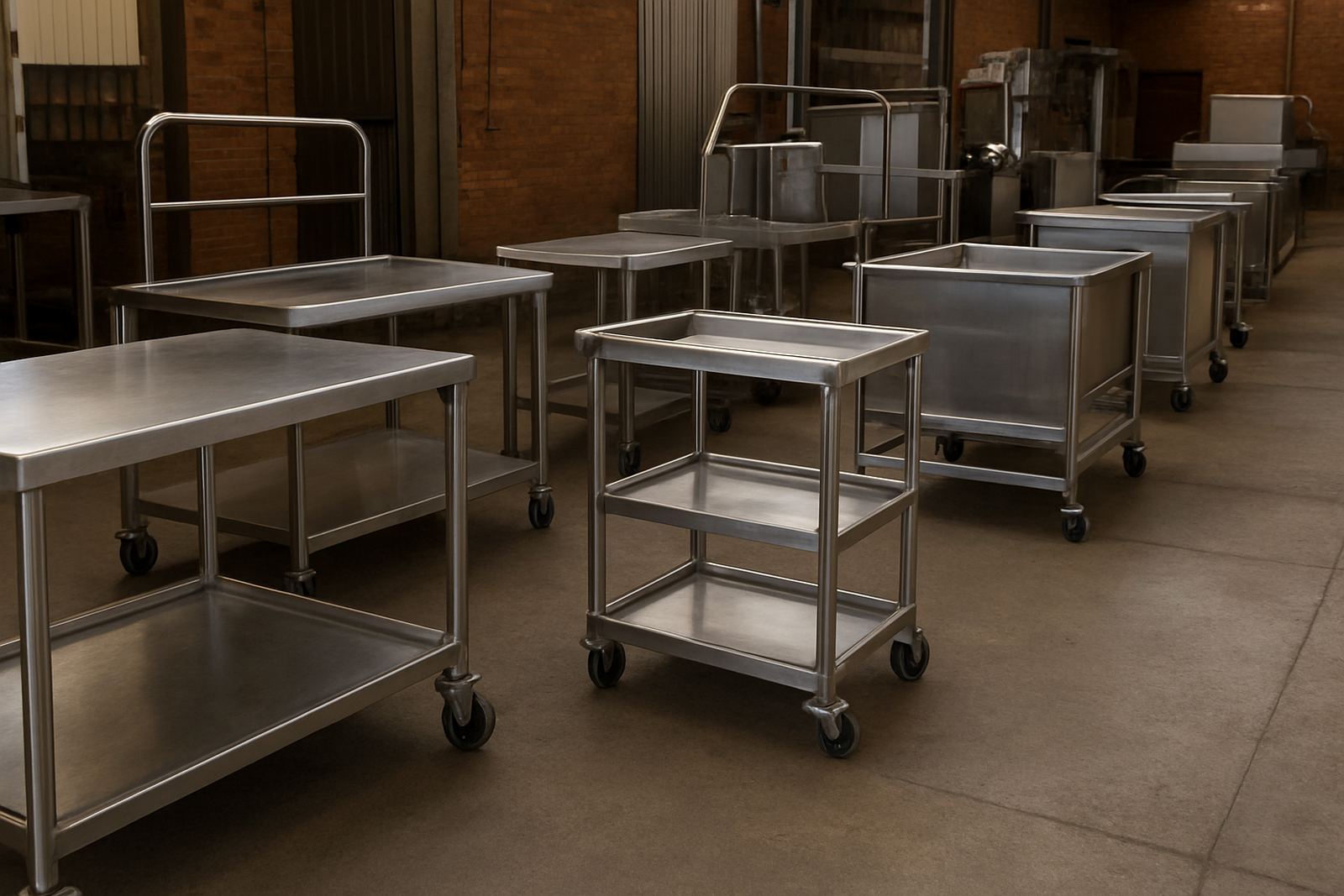
The client was a stainless steel fabrication shop in Bloemfontein making utility trolleys, light frames and service carts for local food handling and workshop use. Their team was doing neat work, but they were spending too many hours on grinding, dressing and rework after conventional welding. The brief was simple enough: produce cleaner welds, reduce heat distortion, and train the operators so the process could be repeated without fuss.
Because the trolleys had visible joints and thin sections, the shop needed a method that could handle 0.8 mm to 2.0 mm stainless without burning through. They also wanted a process that would suit a busy floor where one person might be welding in the morning and assembling or packing later that same day. The final product had to look presentable straight off the table, not after a long finishing cycle.
- Material range: 304 stainless steel, 0.8 mm to 2.0 mm
- Product range: utility trolleys, small frames, shelves and tray supports
- Finish goal: low distortion, clean seams, minimal grinding
- Output target: quicker turnaround on repeat jobs
Why laser welding suited the trolley build
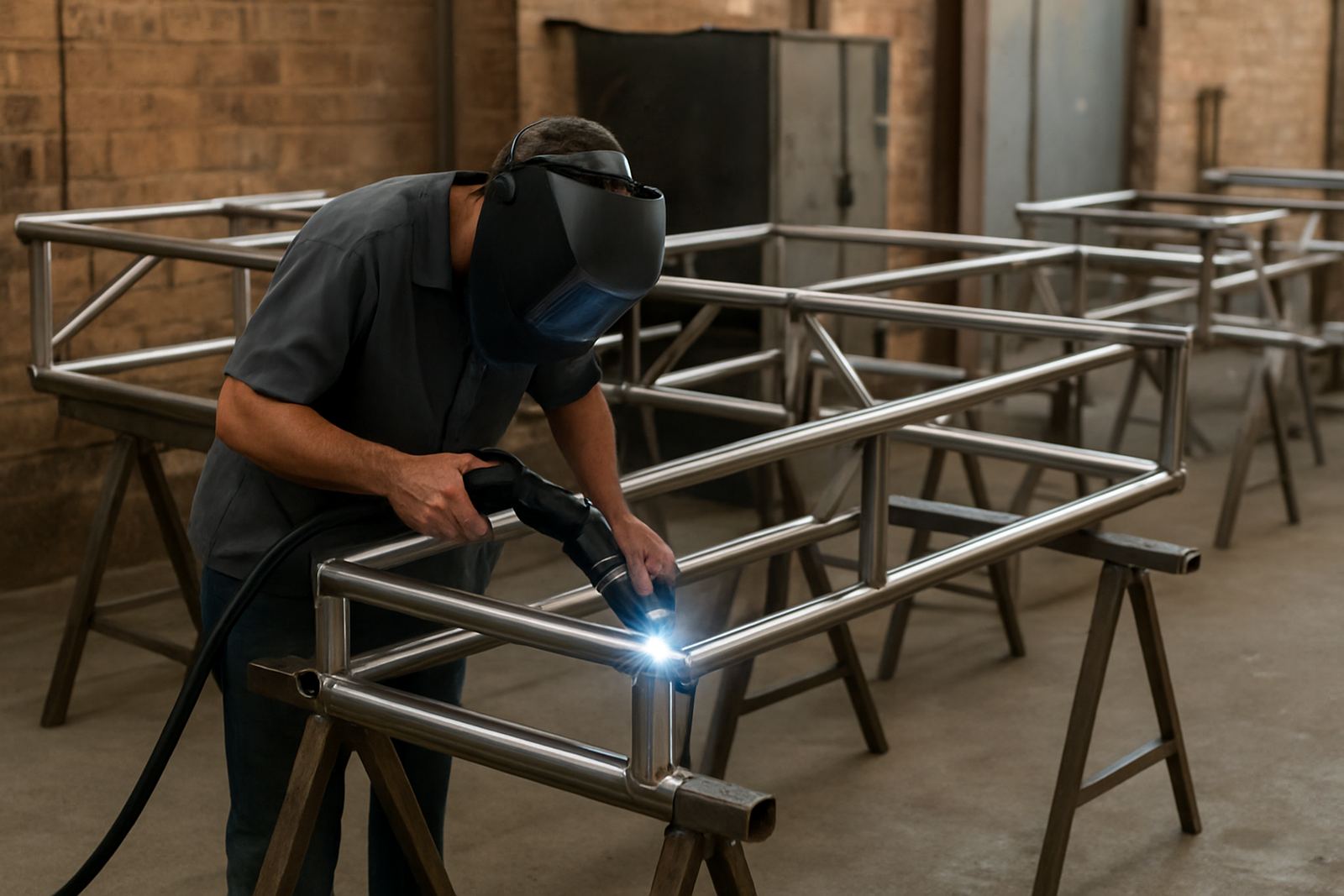
This trolley work suited handheld fibre laser welding because it involved long straight runs, small brackets and frequent corner joints. On that kind of work the heat affected zone needs to stay tight, otherwise the frame pulls and the castor mounting points end up out of line. With the laser process, the team could make narrow beads with better control and far less post weld clean-up.
Bloemfontein winters can be dry and cold in the mornings, then warm up quickly later in the day. That change in temperature is not a problem for the machine itself, but it can affect workshop routine and material handling. We set the process up to suit the shop conditions, including clean material prep, stable fixture clamping and a simple work sequence that kept the joints consistent from one trolley to the next.
- Fast tack and seam work on small assemblies
- Cleaner weld appearance on visible stainless parts
- Less heat input than traditional arc welding
- Better repeatability for batch production
What we supplied and set up
We supplied a handheld fibre laser welder package with a water-cooled source, integrated wire feed support and a welding head suitable for stainless fabrication. The shop also needed practical support around commissioning, so we handled setup, operator guidance, and weld testing on sample trolley parts before full production started. The aim was not just to switch on a machine, but to make the process workable for the team on day one.
During commissioning we tested joint types used in the trolley build, including square tube corners, sheet-to-frame fixings and small lug attachments. We also covered shielding gas flow, focus settings, travel speed and basic cleaning steps before welding. One point that mattered was keeping the joint faces clean, because on stainless even light contamination can show up in the final bead.
- Commissioning and first weld trials on client material
- Operator training for 3 staff members
- Process settings for thin stainless fabrication
- Sample weld testing for production approval
Workshop constraints we worked around
The shop was not a large production plant. It was a practical fabrication space with limited room, a busy cutting table and more than one job running at once. That meant the laser welder had to fit into an everyday workshop without disrupting the rest of the flow. We kept the set-up straightforward and made sure the crew could move from prep to welding to assembly without wasting time hunting for tools or settings.
Power stability was another point. Like many workshops around South Africa, they needed to plan around load-shedding and occasional voltage variation. We discussed operating windows, safe shut down steps and how to organise weld work so that the machine could be used efficiently when power was available. There was also a practical dust and fume control aspect because stainless work in a fabrication shop needs decent extraction and housekeeping.
- Limited floor space for machine placement
- Mixed production environment with other jobs on the go
- Power planning around load-shedding
- Need for simple changeover between jobs
Timeline from first demo to production use
The full project ran over 4 weeks. Week 1 was the shop demonstration and assessment of the trolley drawings and sample pieces. Week 2 covered machine commissioning, joint trials and setting the preferred travel speeds for the team. Week 3 focused on operator training and production practice, while Week 4 was used for process optimisation and the first proper batch of trolleys.
That short timeline worked because the client already had a disciplined fabrication team and clear part drawings. They did not need a long learning curve, just a process that matched the work they already knew how to do. By the end of the fourth week the crew was producing cleaner assemblies with less touch-up, and the welding cycle was easier to repeat across multiple units.
- Week 1: demo, assessment and part review
- Week 2: commissioning and test welds
- Week 3: operator training and practice runs
- Week 4: production rollout and final tuning
Results on the finished trolleys
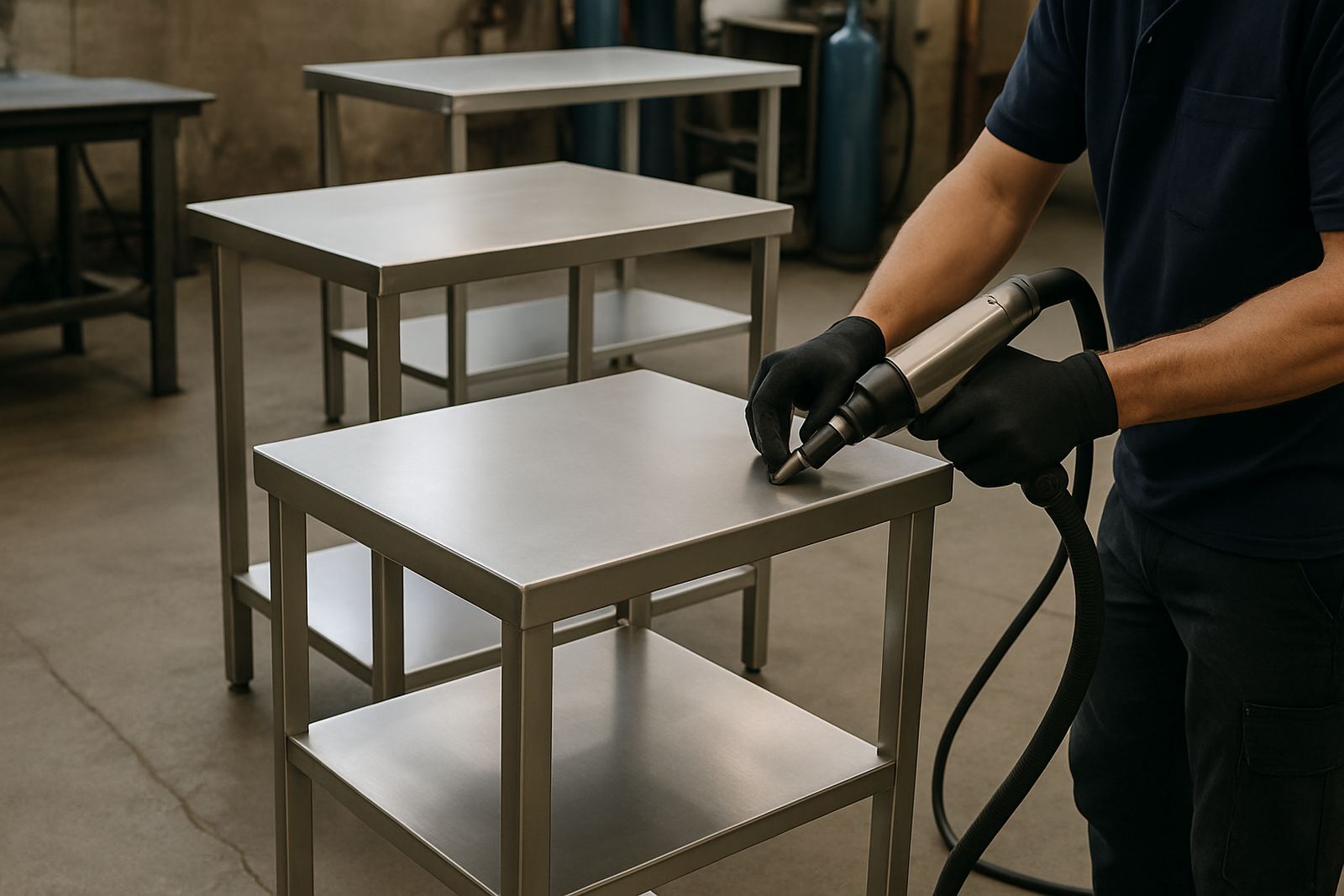
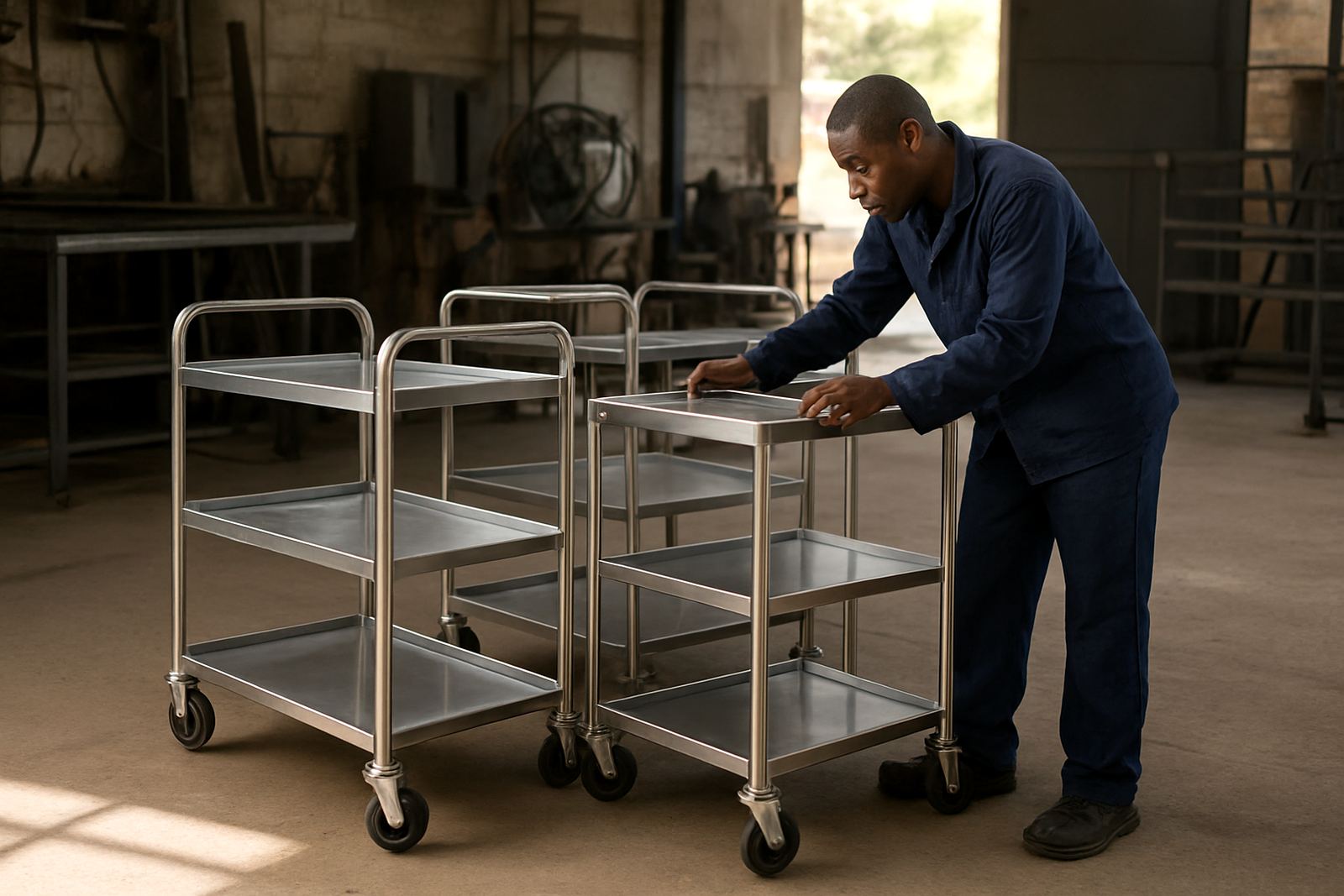
The biggest change was in finish quality. The welds came off cleaner and the team reduced the amount of grinding needed on visible seams. That saved time on each trolley and improved the look of the final product, which mattered because the units were going into customer-facing service areas as well as back-of-house spaces. The frames also stayed straighter, which made assembly easier and cut down on minor corrections at the castor stage.
For repeat work, consistency was the real gain. Once the team had the right settings and a steady hand movement pattern, they could keep weld appearance and penetration close from one unit to the next. That is important when a shop is building small batches and cannot afford variation between jobs. The process also helped the client take on more stainless utility work without adding extra finishing labour.
- Less post-weld dressing and polishing
- Improved frame alignment on small assemblies
- Better consistency across repeated trolley batches
- Shorter turnaround on stainless fabrication jobs
What made this Bloemfontein trolley rollout work
If we were doing the same type of rollout again, we would keep the same structure: first assess the parts, then test on the actual material, then train the operators on the exact joints they will weld every day. That approach avoids guesswork and helps the team settle into production faster. It also makes it easier to spot whether the problem is the settings, the joint prep or the way the parts are being clamped.
We would also keep a close eye on fixtures and prep standards from the start. Laser welding gives the best result when the gap is controlled and the surface is clean. On a trolley build that means straight tube cuts, tidy fit-up and a clear sequence for tack-up before final welds. With those basics in place, the process holds up well in a busy shop and the finished product looks right without too much extra labour.
If a fabrication shop in Bloemfontein, Kimberley or the wider Free State is working on stainless trolleys, rails or light frames, this is the kind of setup that can make a real difference. The welder itself solves only part of the job. The rest is matching the process to the job and training the team properly.
- Start with the actual job parts, not generic test coupons
- Control fit-up and clamp positions before welding
- Train for repeat work, not only one-off samples
- Keep the first production run short and measurable
Key facts
| Project location | Bloemfontein, Free State |
|---|---|
| Client type | Stainless steel fabrication shop |
| Main products | Utility trolleys, small frames and service carts |
| Material range | 304 stainless steel, 0.8 mm to 2.0 mm |
| Project timeline | 4 weeks from demo to production rollout |
| Services used | Commissioning, operator training, process optimisation and production rollout |