Nelspruit Stainless Frame Shop Requirements
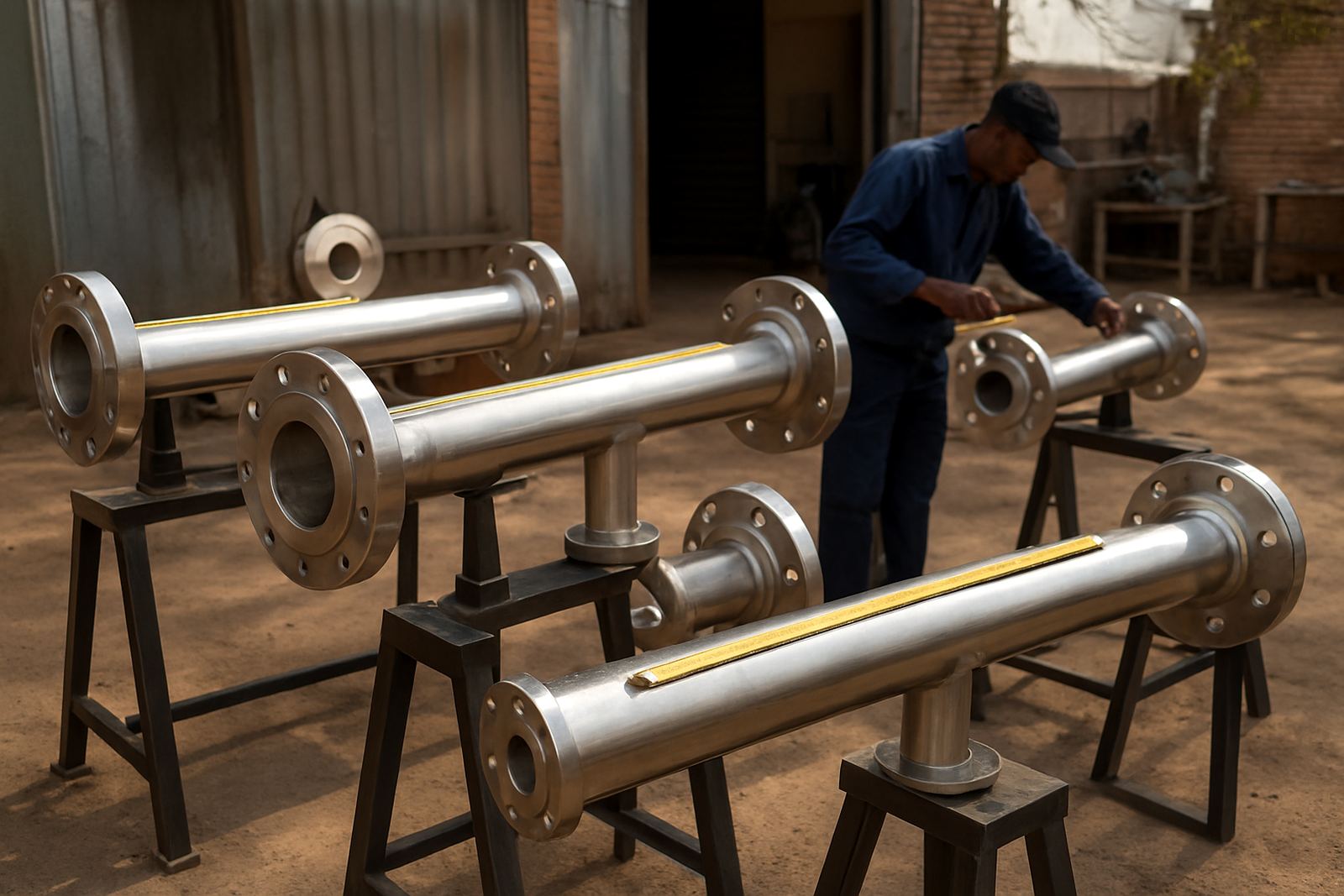
The client is a stainless frame shop in Nelspruit that builds tubular assemblies for local industry, agricultural handling equipment and custom fabrication work. Their main concern was simple: could a handheld fibre laser welder cut down cycle time without compromising fit-up, bead quality or repeatability on thin stainless sections?
They were already managing a busy mix of one-off jobs and repeat orders, so the brief was not about theory. It was about proving practical output on real material, with real operators, in a workshop where production cannot stop for long. The team wanted to compare weld speed, finishing time and heat distortion against their existing method on small and medium tubular frames.
We arranged the visit through the enquiry form and set up a working demo at their premises in Nelspruit. The aim was to show exactly how the system behaves on stainless tube, flat bar and frame corners, then measure whether the shop could move faster without adding a lot of rework.
What had to work on site
Nelspruit brings its own practical issues. The shop runs in warm conditions, with dust from nearby fabrication and the usual power interruptions that many businesses in the region know too well. The machine also had to suit a team that changes between jobs through the day, so the controls had to be clear and the torch handling needed to feel natural within a few minutes of training.
The client needed a welding solution that could handle stainless without excessive grinding afterwards. They also wanted a process that would be easier to standardise for different operators, because one or two experienced welders were carrying most of the production load. That made operator consistency a big part of the test.
- Material focus: stainless tubular assemblies and light frame work
- Workshop environment: mixed production space, limited downtime, variable power supply
- Goal: faster weld completion with less heat input and less post-weld finishing
- Operator need: a process that could be learned quickly by more than one welder
We also kept an eye on practical matters like cable routing, gas flow, torch comfort and how easy it would be for the team to move between benches. Those details matter in a busy shop, and they often decide whether a machine gets used properly or ends up standing in the corner.
The demo setup and the equipment used
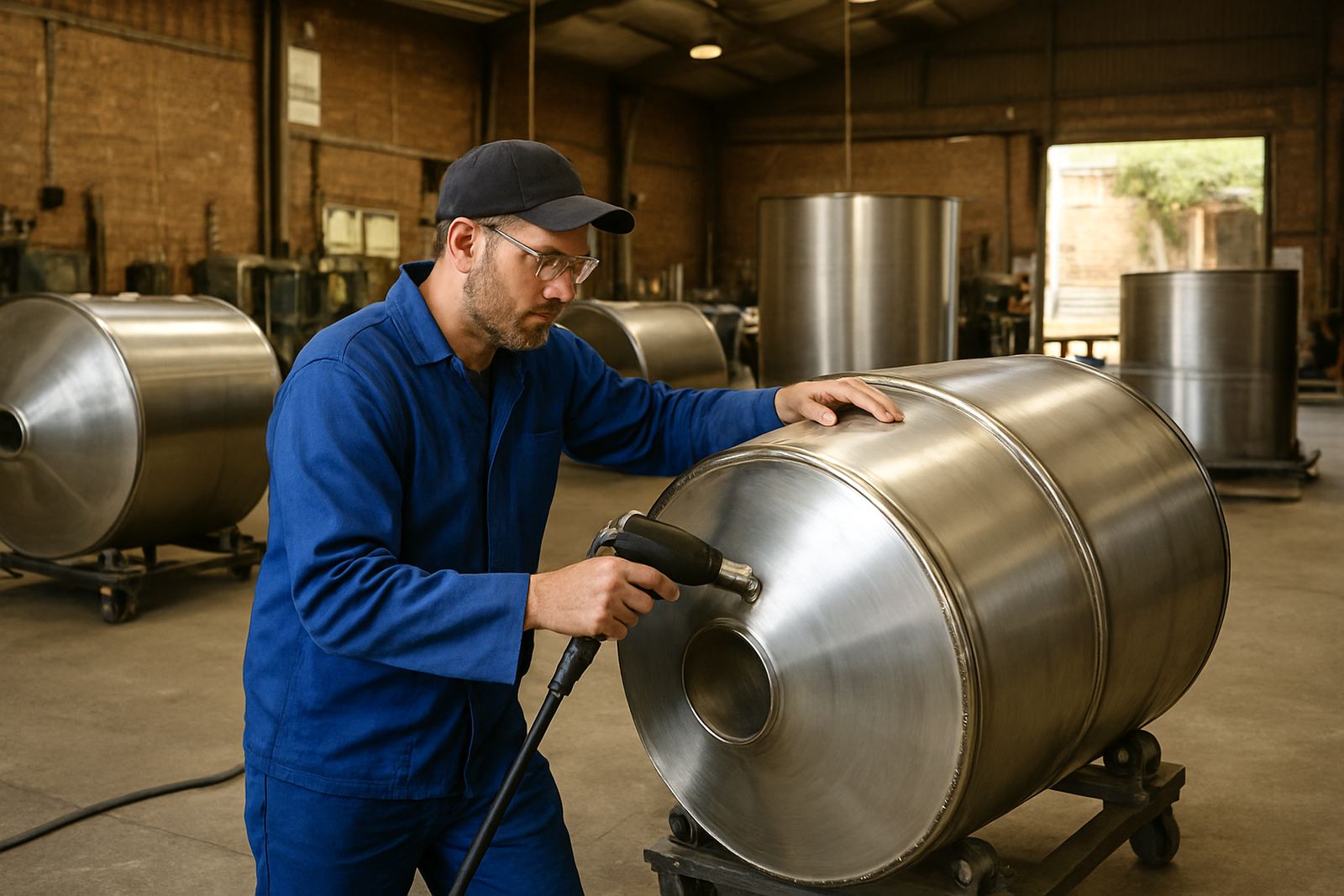
For this job we brought in a handheld fibre laser welding system suited to stainless fabrication work, with a compact source, handheld welding head and controls set up for fast changeover between material thicknesses. The unit was specified for production use on thin to medium stainless sections, which is where the shop does most of its frame work.
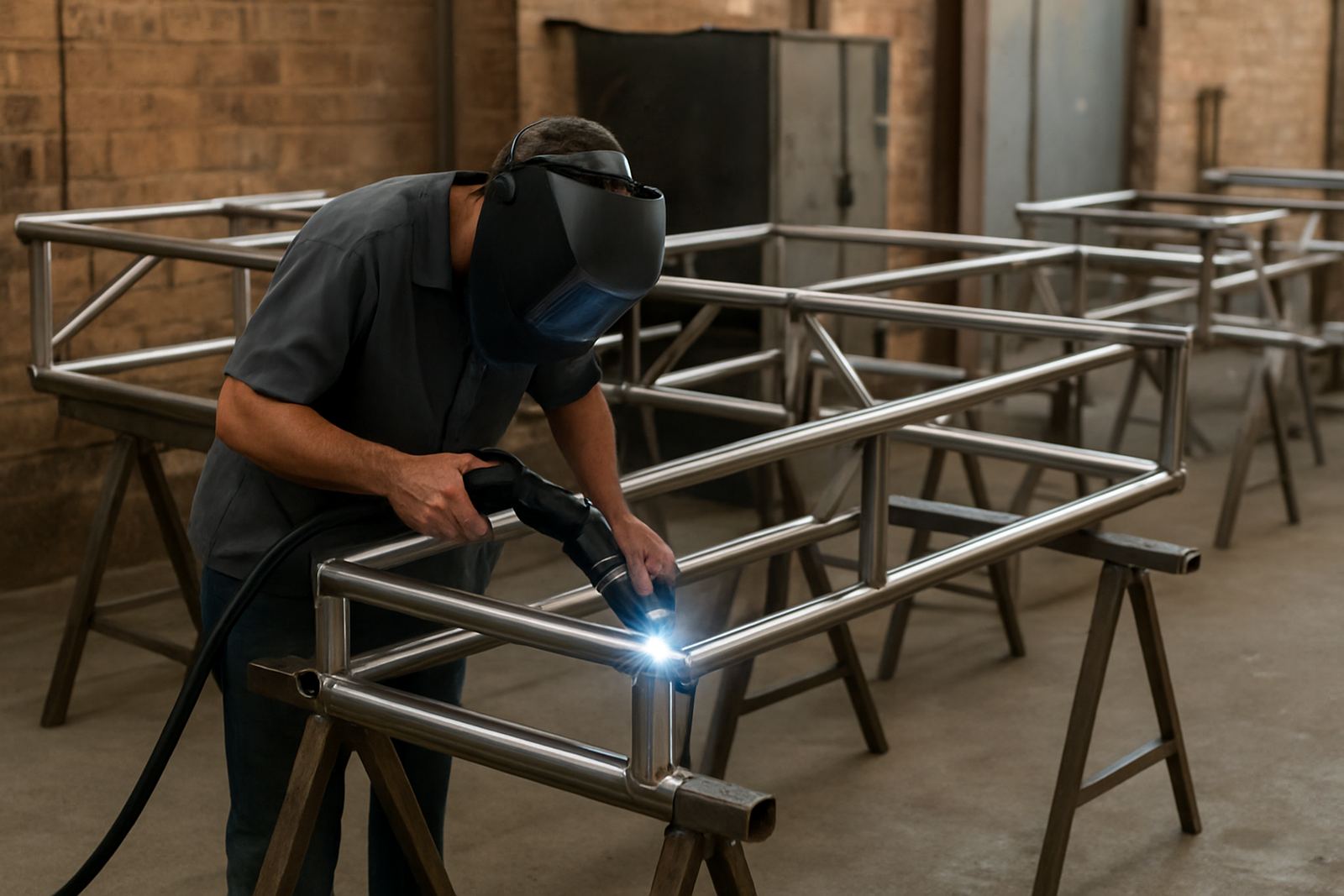
We set up the demo around their own tubular assemblies so the comparison would be fair. The test pieces included mitred tube corners, short seam runs and small bracket attachments on stainless frames. That let us review travel speed, edge fusion, colour on the weld zone and how much clean-up was needed after each pass.
- Handheld fibre laser welder for stainless fabrication
- Demo focus on tubular assemblies, corners and short seam welds
- Operator guidance on parameter setting, joint prep and torch movement
- Onsite weld testing using the client’s own parts and production sequence
The team found the system straightforward to handle after a short run through. Once the weld sequence was set, the operator could repeat the same motion with less variation between joints. That mattered most on frame work, where visible consistency and tight alignment are both important.
Training the team while production kept moving
Training was built into the visit, not left for later. Our National Training Lead and Technical Sales Manager worked with the client’s welders and workshop supervisor to cover machine setup, safe handling, nozzle cleaning, lens care, torch movement and basic troubleshooting. The intention was to leave the workshop able to run the system without relying on outside help for every small adjustment.
Because the shop could not shut down for long, we split the session into practical blocks. One group watched the first runs, then each operator stepped in to weld under supervision. That approach worked well because the team saw the difference between a quick test weld and a repeatable production weld. It also helped them compare joint prep standards, which turned out to be an important part of getting the best result.
We covered refills, consumables checks and the kind of housekeeping that keeps a laser welding station working properly in a busy environment. The site team also asked about service intervals and what to do if output dropped during a production run. Those questions are normal, and they matter when a shop is trying to keep delivery dates on track.
Measured results on tubular frames
Over the course of the demo, the client compared production speed on a selection of tubular assemblies. The biggest gain was not only faster travel speed, but less time spent on clean-up. On stainless frame joints, the welds were neat enough that the team could reduce grinding and rework on several test pieces. That alone changes the workflow for a small frame shop.
They also noticed less visible heat spread on the stainless, which helped keep parts straighter after welding. On thin frame sections, that meant less correction later and a more predictable fit when assemblies moved to the next stage. The operators commented that the torch felt manageable and that the learning curve was shorter than they expected.
- Faster production on short stainless seams and frame corners
- Less post-weld grinding on selected test pieces
- Improved consistency between operators after basic training
- Reduced heat distortion on thinner tubular sections
The client used the results to review how they schedule smaller frame jobs. Instead of treating every order as a manual welding and finishing exercise, they could now split work more intelligently between prep, welding and final assembly. That kind of shift can make a real difference in a workshop where deadlines stack up quickly.
What counted on this Nelspruit frame shop project
If we were doing this job again for another stainless frame shop in Nelspruit or a similar town, we would start with the client’s own parts and weld sequence, just as we did here. That is the most honest way to judge speed and quality because it shows how the machine behaves on the work that actually pays the bills.
We would also keep the first training session hands-on and short enough for operators to stay focused. A machine like this works best when the team sees the same settings used repeatedly on real joints, then builds confidence from there. In a workshop with load-shedding, warm conditions and changing daily jobs, that practical approach is usually the one that sticks.
For this Nelspruit frame job, the combination of onsite demos, production testing and operator training gave the client a clear answer. They did not need guesses. They had measured output, a better understanding of setup requirements, and a realistic view of how handheld fibre laser welding could fit into their stainless work. The result was a cleaner route to higher output without changing the whole workshop around one machine.
Key facts
| Project location | Nelspruit, Mpumalanga |
|---|---|
| Client type | Stainless frame and tubular assembly workshop |
| Primary material | Stainless steel |
| Demo method | Onsite comparison using the client’s own parts |
| Timeline | 2 weeks from first enquiry to final demo and training |
| Services used | Shop Demonstrations, Operator Training, Weld Testing, Process Optimisation, Refresher Training |