Why the Centurion job needed a different welding approach
The client makes stainless laboratory bench frames and service panels for a demanding environment where fit-up has to be right the first time. Their team was dealing with visible heat marks on thin sheet, slight pull on corners, and extra grinding before final fitment. That added time on every unit and made repeat work harder, especially on panels that needed a neat face after welding.
The brief was straightforward: improve weld quality on 1.2 mm to 2.0 mm stainless sections, keep the finish clean enough for visible surfaces, and reduce distortion on long runs and small bracket details. They also wanted a process that could be picked up quickly by operators already used to TIG and spot work, but that would not slow production down.
- Client type: stainless fabricator serving the laboratory and light industrial market
- Town: Centurion
- Materials: 304 stainless steel sheet, tube and support frames
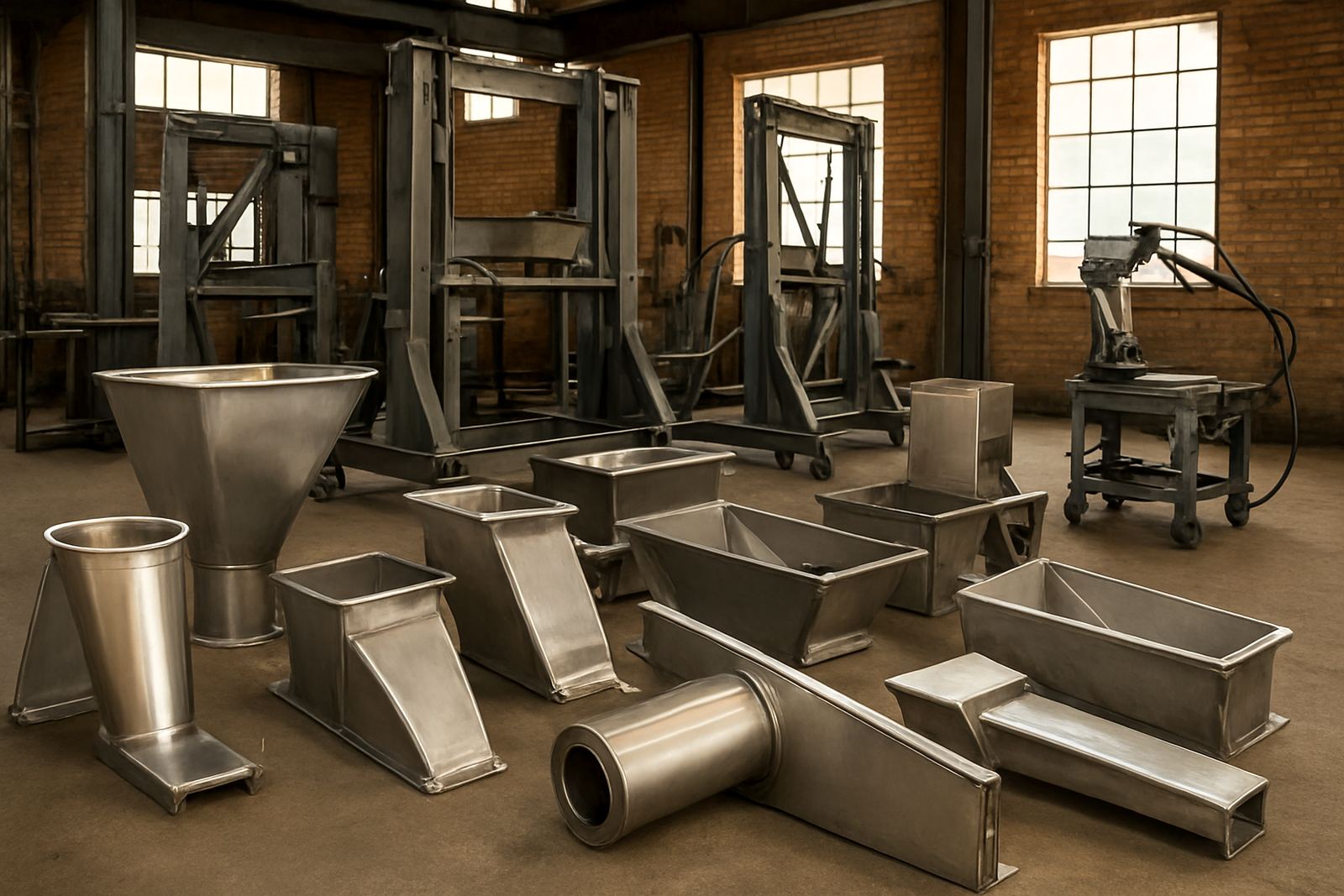
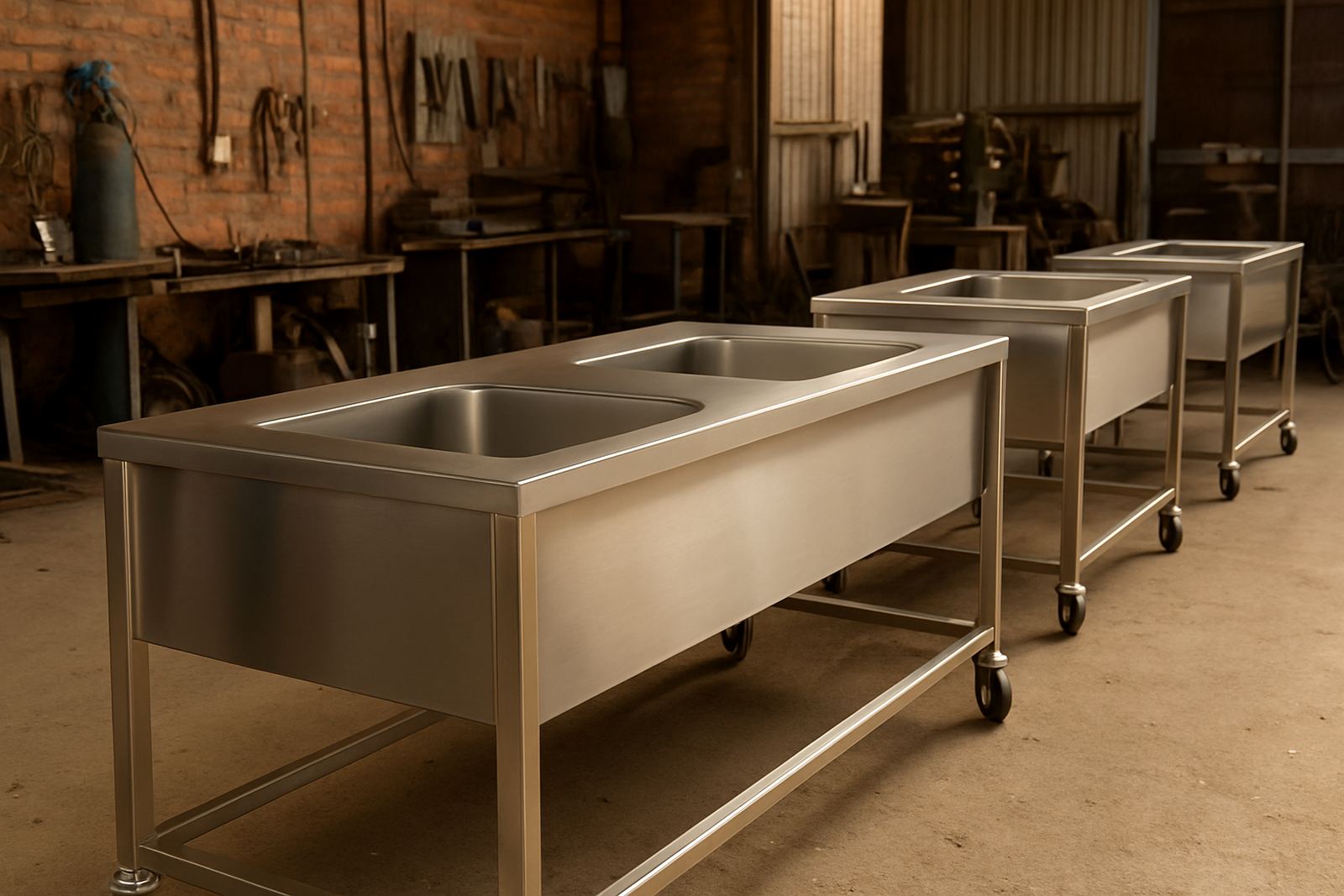
- Typical components: bench carcasses, leg sets, service panels and under-bench support parts
Workshop constraints we had to work around
This was not a greenfield setup. The shop had production to keep moving, limited floor space around the welding bays, and an existing power supply that had to cope with load-shedding interruptions. Like many Gauteng workshops they also needed a process that would not be upset by the daily stop-start rhythm of normal fabrication work.
Another issue was finish consistency. The benches are used in environments where appearance matters, so the weld bead could not be bulky or heavily dressed. The client also wanted fewer clamping points because excessive clamping was marking parts and slowing assembly. We had to keep the process practical for day-to-day use not just a one-off trial.
- Space constraint: compact welding bays with shared prep tables
- Power constraint: planning for site interruptions and generator-backed periods
- Quality constraint: low heat input for visible stainless surfaces
- Training constraint: operators had mixed welding backgrounds and needed a clear method
What was supplied and how it was commissioned on site
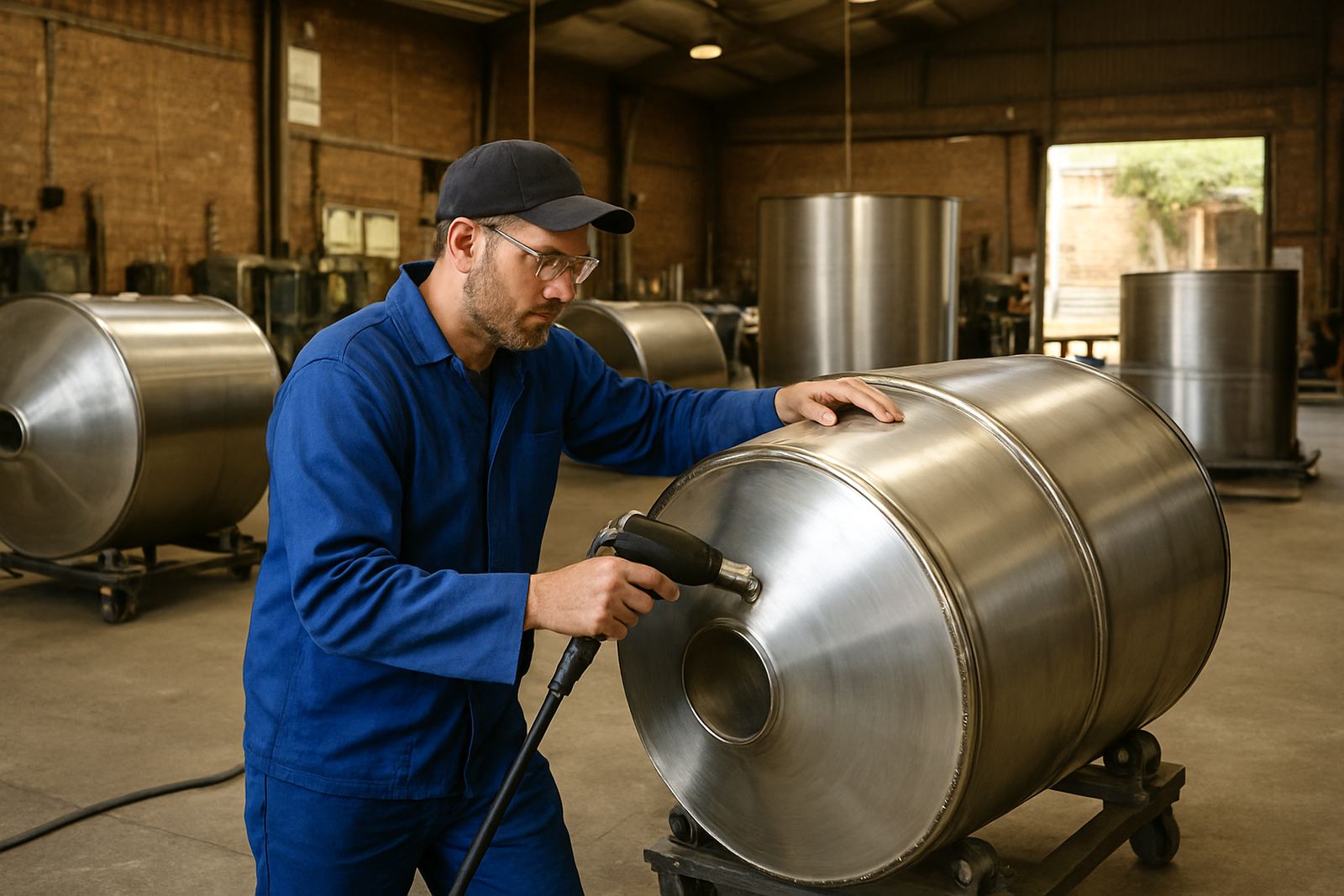
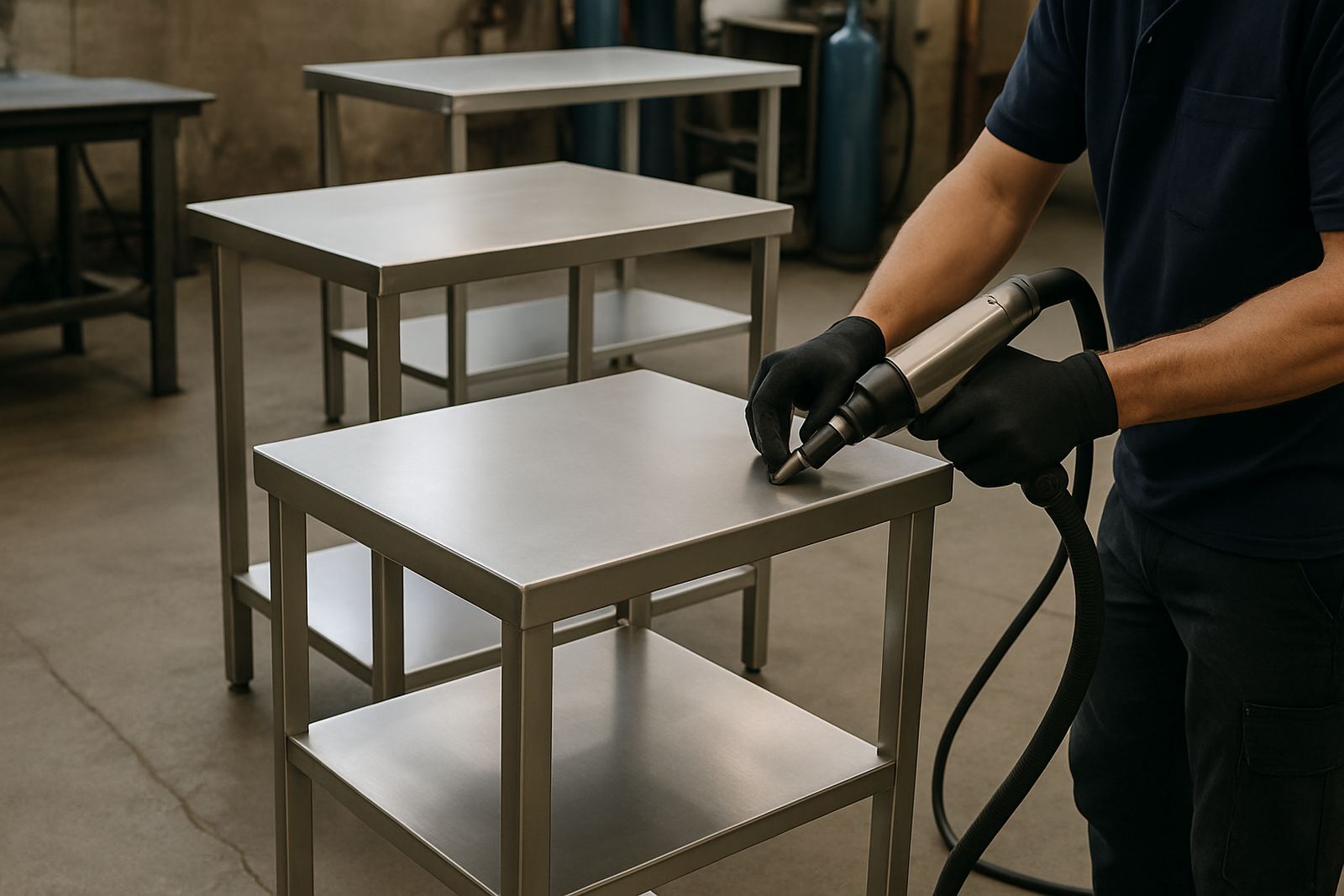
We supplied a handheld fibre laser welding machine set up for stainless fabrication work, together with the practical accessories needed for safe and repeatable use. That included torch handling support, process setup for thin-gauge stainless, and guidance on shielding gas selection and nozzle control. We also carried out machine commissioning on site so the team could start with the right settings instead of guessing their way in.
The initial setup was tuned around the bench parts they make most often. We focused on corner joints, fillet joints, seam starts and stop points, plus short continuous welds on service panels. The aim was clean fusion with less heat spread, so the parts stayed flatter and needed far less dressing afterwards.
- Recommended material range: 1.2 mm to 3.0 mm stainless steel
- Typical joint types: lap, corner, fillet and short seam welds
- Key setup focus: fit-up, torch angle, travel speed and gas coverage
- Output goal: cleaner welds with minimal post-weld grinding
Training, commissioning and shop-floor testing
The first week was spent on commissioning and live testing with the client team. We covered safe start-up, parameter selection, cleaning requirements before welding, and how to adjust technique for thinner and thicker sections. Because this was a working shop, we trained around their actual parts instead of using generic coupons only, which made the lessons stick faster.
We also ran weld tests on frame corners and panel seams, then checked appearance, penetration and distortion after cooling. Small adjustments were made to speed and wire handling where needed. One of the main gains was that operators picked up the process quickly once they saw how little heat was needed, and how much less grinding followed it.
- Week 1: commissioning, safety briefing and first test welds
- Week 2: operator training on real bench parts
- Week 3: process optimisation for repeat frame and panel work
- Week 4: production rollout and refresher support on the floor
Results on the bench frames and service panels
By the end of the rollout the client had a cleaner, faster method for the parts that had been giving them the most trouble. Welds on the visible faces needed much less dressing, which saved time and reduced the risk of scratching the stainless during finishing. The bench frames stayed flatter after welding, so fitting up the panels and secondary parts was easier.
The team also reported better consistency between operators. Once the settings were standardised, they could move between jobs without having to re-learn the process every time. That mattered on a mixed production floor where small batch work sits next to repeat orders. The job simply ran with less fuss and fewer corrections, and it showed up in the final assembly stage.
- Less distortion on long bench frame members
- Reduced grinding and polishing on visible welds
- Faster fit-up of service panels and access sections
- More repeatable results across different operators
Support after the rollout
Once the production process was settled, we stayed involved with remote help, refresher training and preventive maintenance planning. That matters in a workshop where uptime is linked to delivery dates and where a small fault can hold up a batch. If an operator wants to fine-tune settings for a different panel thickness or a new bracket detail, we can guide that without stopping the whole line.
We would do this kind of project the same way again: start with the real parts, train on the actual workflow, and only then lock in the production settings. For Centurion work especially, that approach suits fabricators who need neat stainless finishes, predictable cycle times and a process that can be used by more than one operator with confidence.
- Aftercare included remote support and refresher guidance
- Maintenance planning focused on keeping the unit ready for daily use
- Best fit for repeat stainless fabrication with visible finish requirements
- Useful where quick changeovers and reliable output matter
A practical outcome for a demanding stainless job
In under a month, the Centurion fabricator moved from slow, correction-heavy welding to a cleaner process that matched their production needs. The result was not just better-looking bench frames, but a calmer workshop flow with fewer bottlenecks between welding, cleaning and final assembly. That is exactly where handheld fibre laser welding earns its keep.
For stainless laboratory bench work, the main value is precision that does not punish the rest of the job. It keeps the heat where it belongs, gives the fitter more control, and helps the team finish on time. For this project, that was the difference between a job that needed constant attention and one that could move through the shop with confidence.
Key facts
| Project location | Centurion, Gauteng |
|---|---|
| Client type | Stainless steel fabricator |
| Main materials | 304 stainless steel sheet and tube |
| Part sizes | Thin-gauge frames and service panels from 1.2 mm to 3.0 mm |
| Project duration | 4 weeks |
| Services used | Machine commissioning, operator training, process optimisation, weld testing and rollout support |