What the Pretoria workshop needed from day one
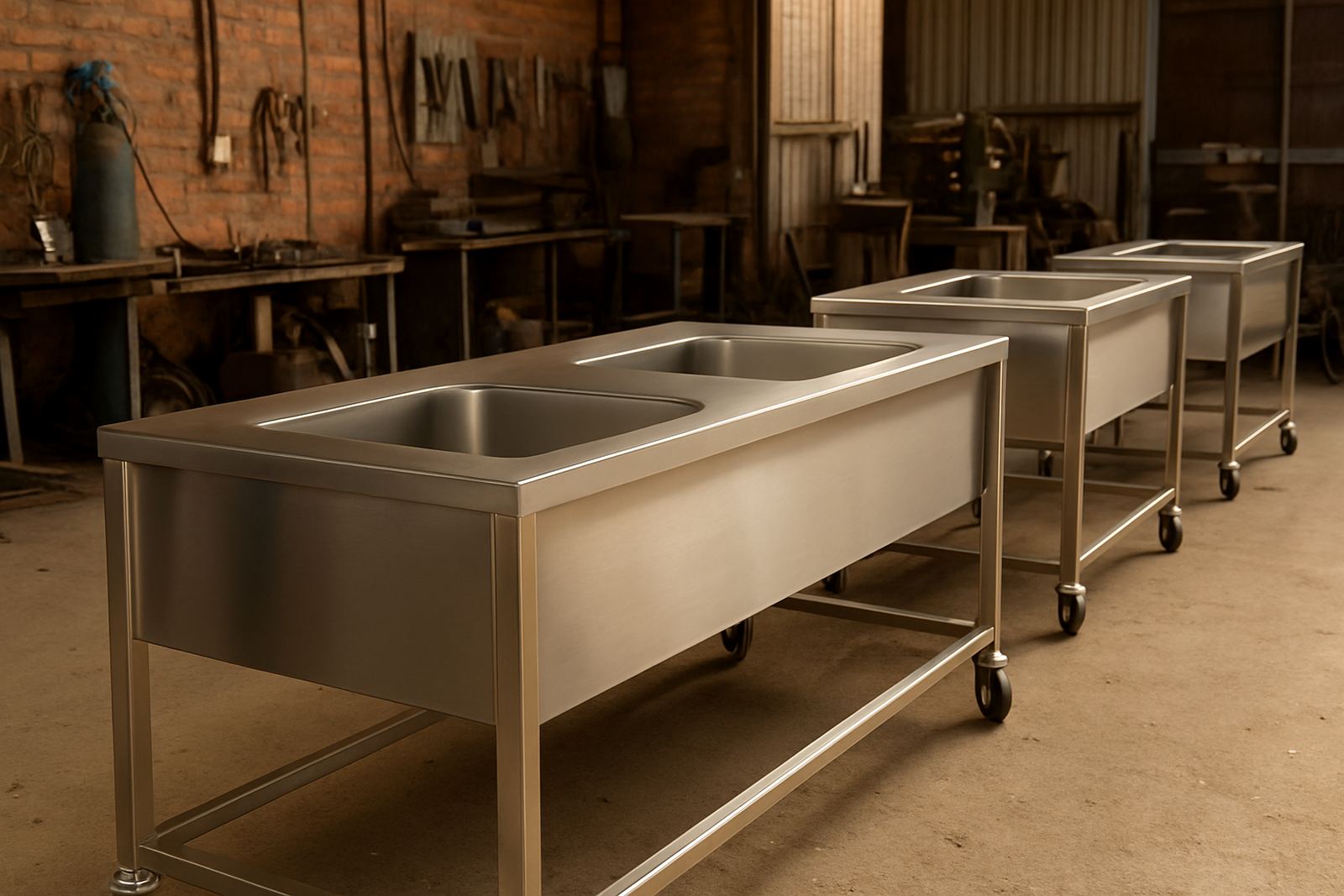
The client is a stainless steel fabricator in Pretoria working on serving counters for food service, retail and reception fitouts. Their old process was giving acceptable strength, but the visible seams still needed a lot of grinding, blending and rework before delivery. On a job with brushed stainless finishes, every extra minute at the linisher or flap wheel showed up in labour cost and in the final appearance.
The brief was simple enough on paper: produce neater welds on visible seams, reduce post weld dressing, and keep the workflow practical for a busy shop. They wanted equipment that could be used by trained operators without turning the whole bay upside down, and it had to suit a workshop where staff move between cutting, fitting, welding and assembly every day.
The other constraint was time. The counters were part of a steady production run, not a one off art piece, so the solution had to fit normal workshop pace. They also needed something that could be used in Pretoria’s dry winter air and during power interruptions, so the team wanted a process that was predictable and quick once the machine was up and running.
The setup we supplied and how it was used
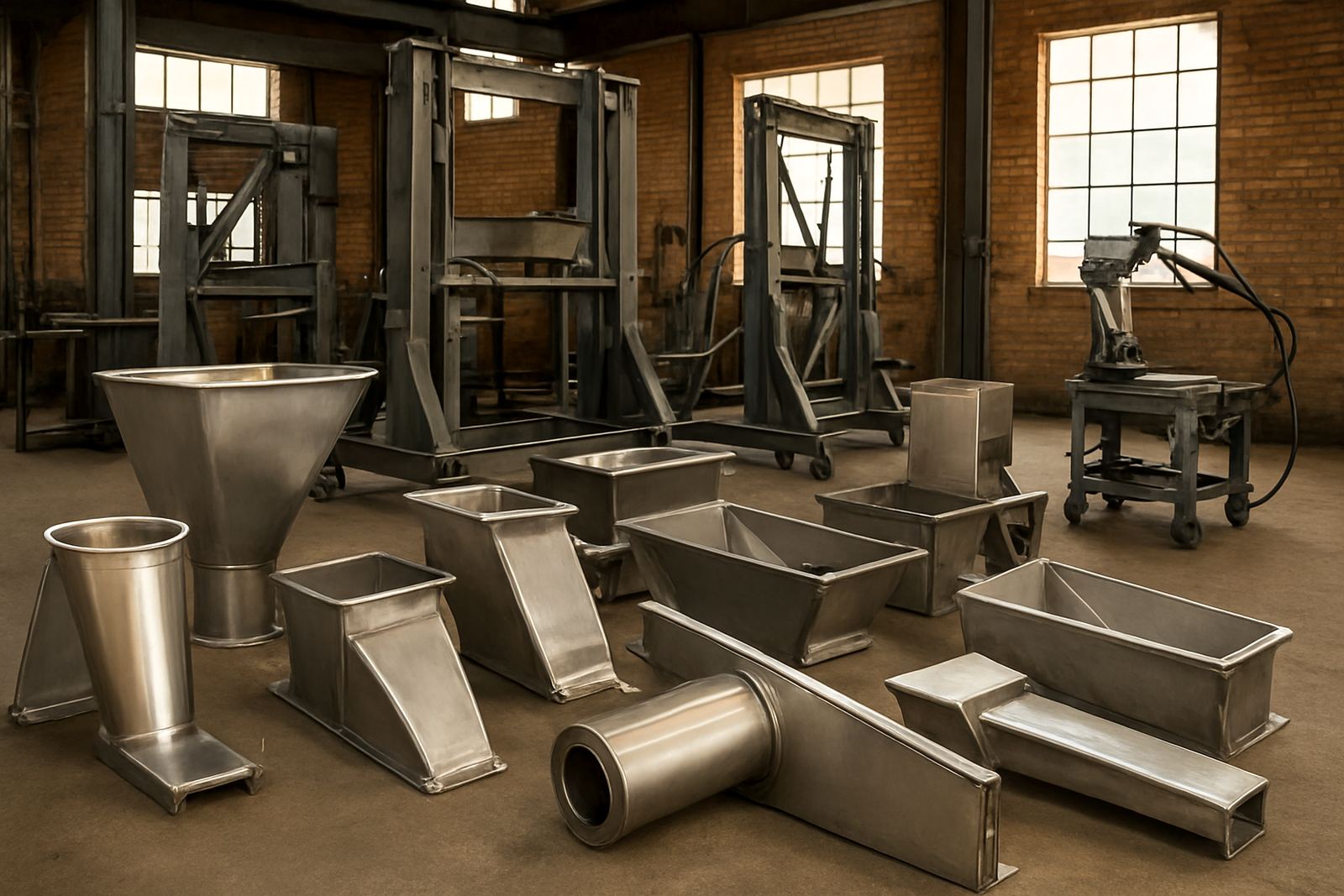
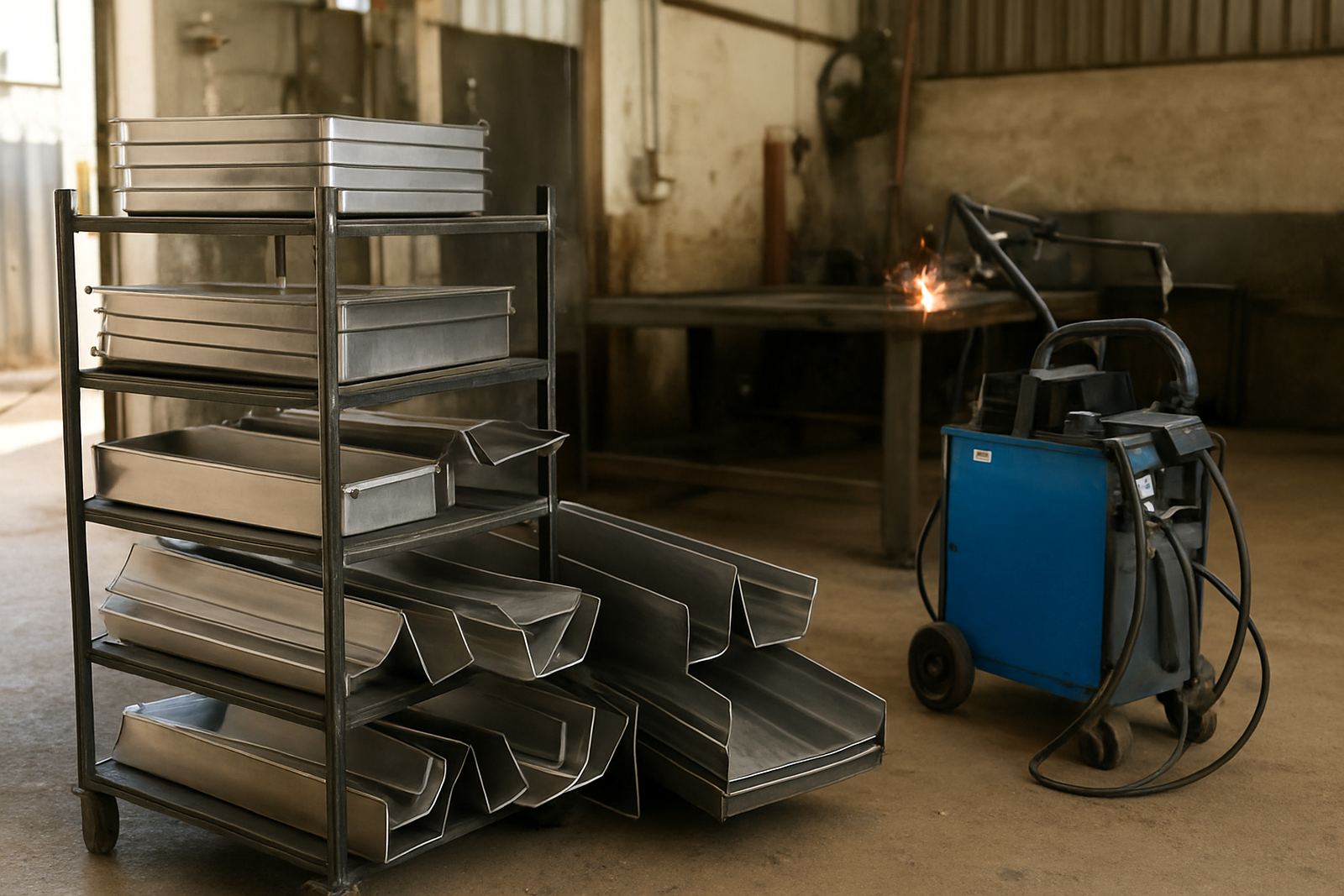
We supplied a handheld fibre laser welder set up for stainless steel fabrication. The system was used on 1.0 mm to 2.0 mm stainless sheet and box sections commonly found in counter bodies, trims and support frames. For this job the focus was on clean seam fusion with a narrow heat affected zone, especially where the welded line would remain visible after finishing.
We also spent time on parameter setting and hand technique so the team could work safely and repeatably. The welding head was used for straight seams, corner joints and short repair sections where TIG had been slowing the line down. Because the process is highly controlled, the operators could keep bead shape consistent and reduce the amount of metal they had to remove afterwards.
- Handheld fibre laser welding for visible stainless seams
- Suitable for 1.0 mm to 2.0 mm stainless sheet and light section work
- Cleaner bead profile, less grinding and less heat distortion
- Practical for small workshop bays as well as production lines
Training the Pretoria team without stopping production
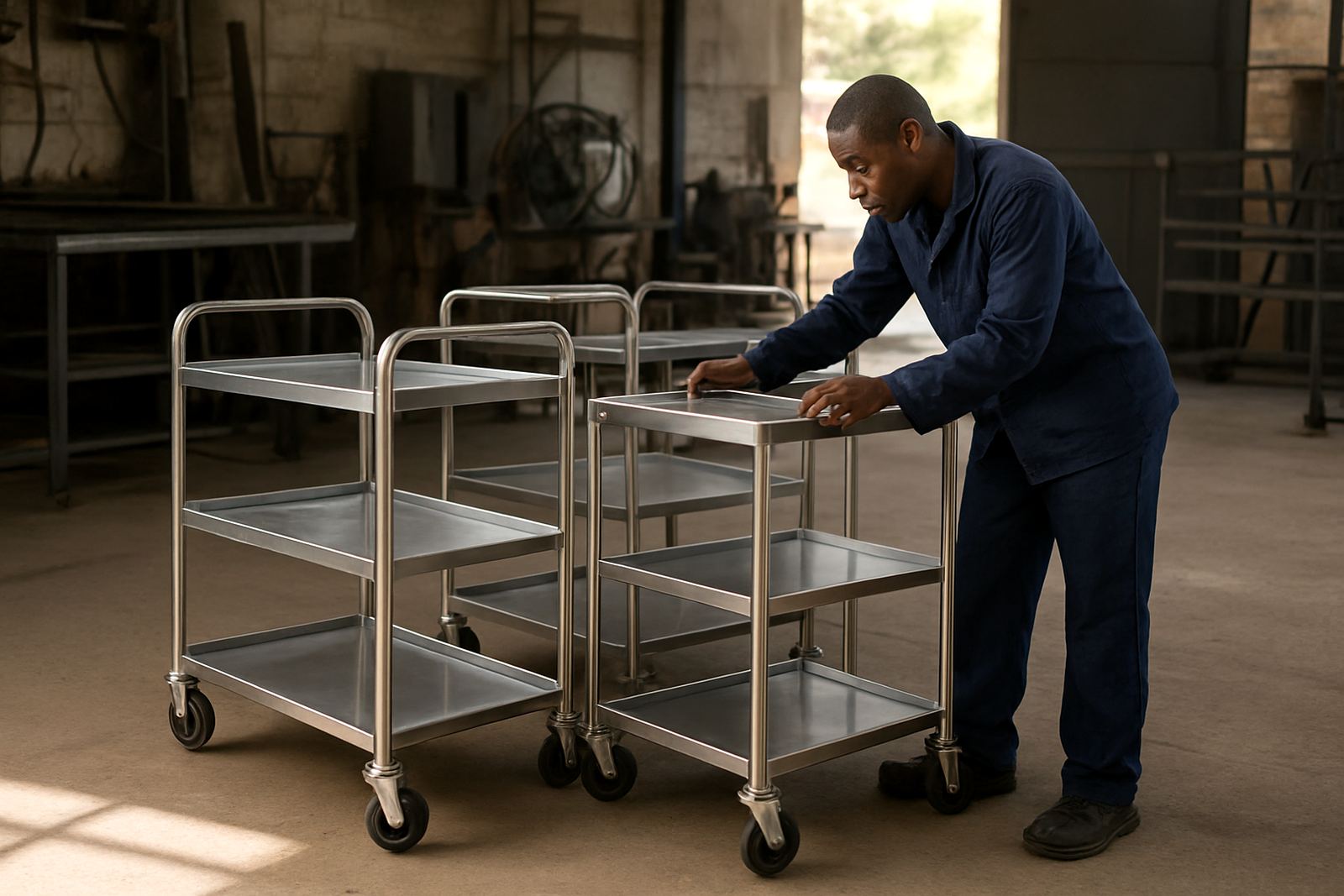
The workshop did not have time for a long shutdown, so we ran the handover in stages over two weeks. Day one covered safe setup, material prep, joint fit-up and basic operation. After that we worked through real counter parts from the production floor so the operators could see how the weld behaved on their actual material, not just on offcuts.
By week two the team was welding production components under supervision, with attention to torch angle, travel speed, seam alignment and cleaning between passes. We also covered maintenance checks, lens care, gas flow, and what to watch for when stainless starts showing contamination or slight surface discolouration. A small thing, but it saves grief later.
- Week 1: setup, safety, operator orientation and sample welds
- Week 2: live production welds, adjustments and finishing checks
- Refresher guidance for supervisors and nominated operators
- Support for remote questions once production moved ahead
Why the result mattered on serving counters
The main gain was in visible seam finish. The shop reduced dressing time on the finished counters because the welds needed less grinding before brushing and final presentation. That meant fewer marks to remove, less heat distortion to correct and more consistent alignment on the front faces and customer side panels.
In practical terms, the workshop could move assemblies through faster and keep more work on the welding bench rather than on finishing tables. On a stainless counter with exposed edges, this matters a lot because the customer sees every line. The cleaner weld profile also helped with repeat work where matching older units had previously been slow.
There was also a training benefit. Once the team understood how the process behaved, they were less dependent on one experienced welder for every visible seam. That spread the workload better and gave the shop more control when deadlines tightened.
Key facts from the project
This was not a showpiece job. It was a working fabrication project for a Pretoria shop that needed better output, less rework, and a process the team could keep using every week. The success came from matching the machine to the application and spending enough time on operator training, not from overcomplicating the setup.
- Client type: stainless steel workshop making serving counters
- Town: Pretoria
- Material focus: visible stainless seams on counters and frames
- Project duration: 2 weeks from setup to supervised production use
- Primary gain: reduced dressing time and cleaner finished seams
- Support delivered: commissioning, training, process optimisation and follow-up help
What mattered most on this Boksburg kitchen shop job
If we had to do the same kind of job again, we would follow the same approach. Start with the actual production parts, not test coupons only. Set the machine for the material thickness the workshop uses most often. Train the operators on fit-up and finish from the start, because a laser weld will only look as good as the joint prep around it.
We would also keep the rollout staged. That lets the shop keep working while the team builds confidence. For a Pretoria fabricator handling counters, cabinets or display units, that balance is usually the difference between a nice demonstration and a process that gets used every day.
Laser welding is a good fit where appearance matters and time on finishing is eating into margin. For stainless fabrication in South Africa, especially in workshops that deal with load-shedding, tight delivery dates and mixed job sizes, it gives the team a cleaner way to move from welded assembly to final delivery.
Support for Pretoria and other fabrication shops
We are based in Spartan, Kempton Park and work with fabrication shops across Gauteng and nationwide. That includes demos, machine commissioning, operator training, process optimisation, preventive maintenance, breakdown response, spares supply, consumables support and remote help. For Pretoria clients, we can arrange shop demonstrations and practical weld testing around the kind of stainless work they do every day.
If your workshop is making counters, kitchen units, display frames or other visible stainless products, the aim is the same: better weld quality, less dressing time and a process that fits the way your team already works. Clients reach us through the enquiry form on our contact page, and we use that first conversation to match the machine and training to the job at hand.
Key facts
| Project location | Pretoria |
|---|---|
| Client type | Stainless steel fabrication workshop |
| Application | Serving counters with visible stainless seams |
| Material range | 1.0 mm to 2.0 mm stainless steel |
| Timeline | 2 weeks |
| Main outcome | Less grinding and shorter dressing time |