The Germiston brief: polished stainless railings with cleaner joints
The client is a railing fabricator in Germiston making balustrades, handrails and custom architectural parts for residential and light commercial sites across Ekurhuleni. Their work included polished stainless components where every join is on show, so the old process was creating too much grinding and rework. They wanted a cleaner weld line, less heat distortion and a method that could be picked up quickly by their team.
The main brief was simple enough on paper, but exacting in practice. The fabricator needed a welding method that would hold up on 1.2 mm to 2.0 mm stainless tube and flat bar, with tidy seams on visible faces and fewer marks to remove before final polishing. They were also working against mixed job sizes, from one-off stair rails to repeated production runs, so the process had to be flexible, not just neat.
Another factor was throughput. Their finishing team was spending too much time dressing welds, which pushed up labour hours and created a bottleneck. The new method had to reduce heat input, keep distortion down on long runs and still give a strong structural joint. In short, they wanted better looking welds and better workshop flow at the same time.
Workshop constraints that mattered on site
We met the team at their Germiston shop and checked the working conditions before recommending a setup. The fabrication area had normal industrial power supply, but like many Gauteng workshops they still plan around load-shedding and generator use. That meant the machine had to be practical to run, easy to restart after interruptions and simple for operators to keep consistent through a shift.
The shop also had the usual challenges of stainless railing work: polished surfaces that show every blemish, tight corners, thin wall sections and a need to avoid excess heat tint. Because the railings were often fitted into finished spaces, the client could not afford excessive spatter or long clean-up times. A small slip in prep can cost an entire section, so repeatability mattered more than raw power alone.
Humidity was another local concern. Germiston and the wider Ekurhuleni area can swing between dry and damp conditions, and stainless material handling needs care if you want to avoid contamination. We discussed storage, cable routing, nozzle care and clean filler handling so the team could keep the weld area tidy day after day.
- Visible joints on polished stainless steel
- Thin wall sections from 1.2 mm upwards
- Production work and one-off custom railings
- Limited tolerance for distortion and rework
- Need for backup planning during load-shedding
What was supplied and how the Germiston install was carried out
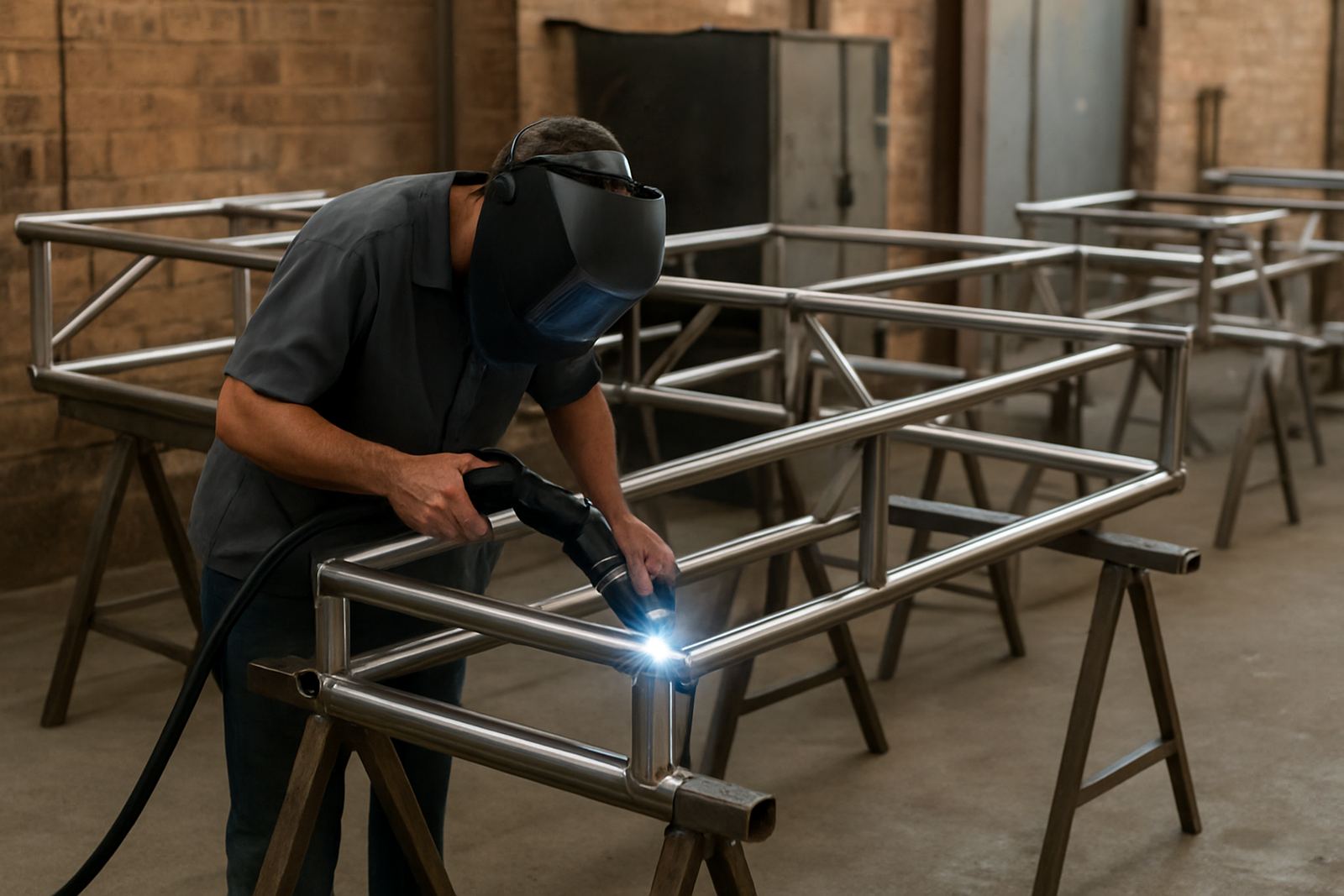
We supplied a handheld fibre laser welding package suited to stainless fabrication, along with setup assistance, operator training and a practical commissioning visit at the Germiston workshop. The system used a handheld welding head, air or water-cooled configuration depending on the application, and settings that could be adjusted for sheet thickness, travel speed and joint type. For this job, the key requirement was fine control rather than brute force.
Our team spent time on fit-up, parameter selection and weld sequence so the fabricators could use the machine on real parts, not just sample coupons. We covered corner joints, lap joints, butt joints and visible finish work on tube and flat bar. The training was hands-on and the operators worked through actual railing sections that were due for dispatch, which made the learning useful immediately.
The handover was handled over two weeks. Week one focused on machine setup, safe operation and first welds. Week two covered production repeatability, housekeeping, and how to hold a steady finish across longer runs. By the end of the second week the team was already using the system on live work, not just test pieces.
- Handheld fibre laser welding system for stainless steel
- Operator training for several shop staff
- Application support for railing joints and visible seams
- Commissioning at the Germiston workshop
- Practical settings for thin gauge stainless fabrication
Results after the first production run
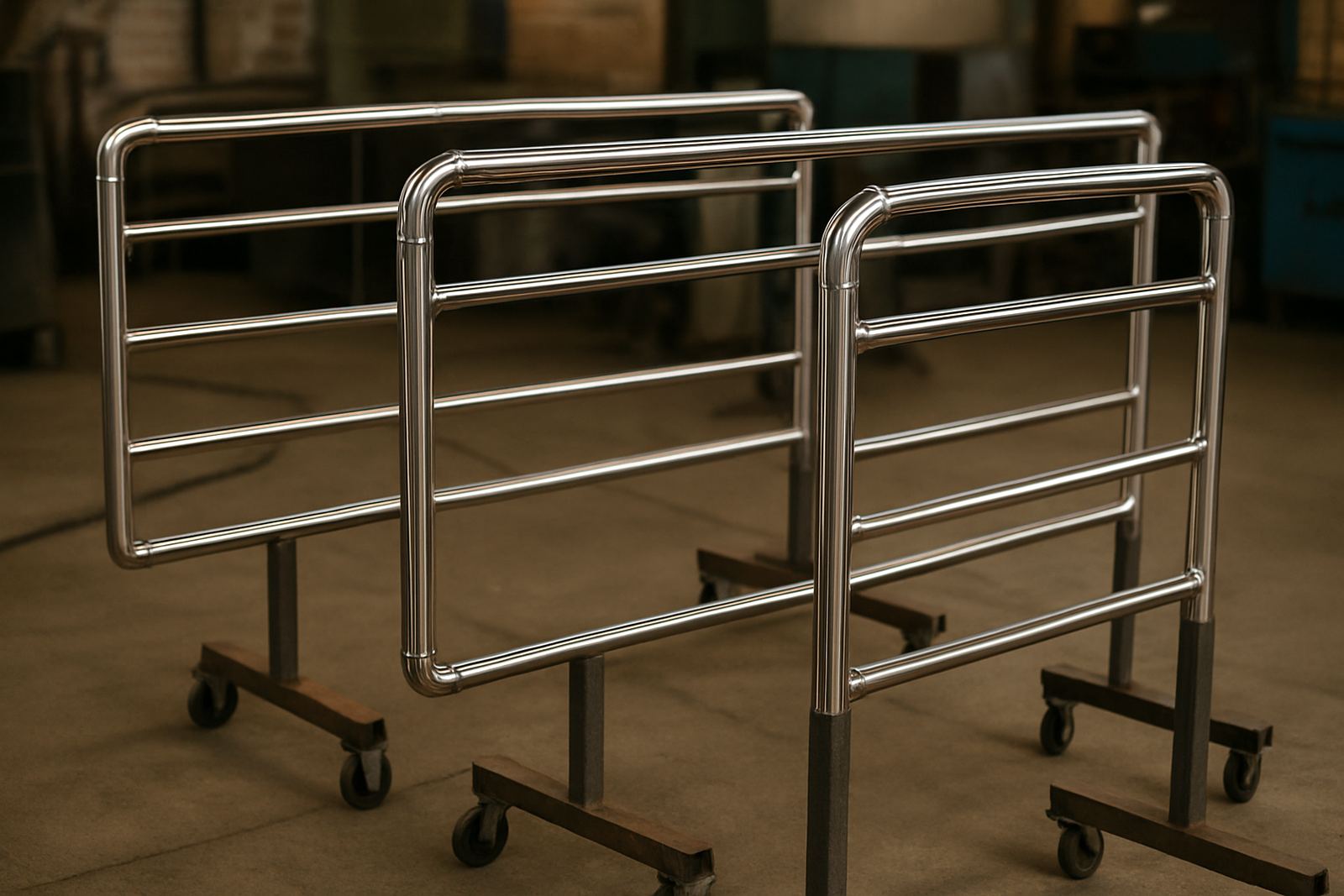
The first clear result was appearance. The fabricator reported much cleaner visible joints on polished stainless railings, with less grinding and less post-weld dressing before final finishing. That alone saved time on the bench and improved the look of the finished product. For a railing shop, that matters because the weld line is often right at eye level and the customer sees it straight away.
They also saw less heat distortion on longer sections. That meant fewer alignment corrections after welding and less risk of twisting slim components out of shape. On repeated runs the team found the process more predictable, which helped when cutting batches of similar parts for sites in Germiston, Boksburg and Alberton.
Productivity improved because the welds moved faster and the cleanup time dropped. The shop was able to push more work through the same floor space without adding more finishing hours. The operators said the method was easier to repeat once the basic technique was understood, which is often the difference between a promising machine and one that actually earns its keep.
- Cleaner visible joints on polished stainless parts
- Less grinding and dressing after welding
- Reduced distortion on thin railing sections
- Better repeatability across small and medium runs
- Shorter turnaround on finished railings
Support, maintenance and training that kept the job moving
After commissioning, we stayed involved with process optimisation and refresher training. That included checking settings when the shop switched from tube to flat bar, and helping the team adjust approach when a joint was more open than expected. For stainless work, small changes in travel speed and torch angle can make a noticeable difference, so quick support is useful.
We also talked through preventive maintenance. Keeping the optics clean, checking consumables and watching cable wear all help the machine stay consistent. On a busy workshop floor, these are simple habits, but they save a lot of trouble later. The client also appreciated remote help for quick questions, because not every issue needs a full site visit.
Spare parts and consumables support were part of the package as well. That gave the shop a clearer plan for ongoing production and less downtime when something routine needed replacing. Their team now has a cleaner path from quoting to fabrication, and it shows in the finish.
What we would do again on a similar Germiston railing job
For another railing project like this in Germiston, we would start the same way: start with the actual rail profiles, weld samples and finish requirements, then tune the machine around the real job. On polished stainless railing work, there is no point in setting up for a textbook joint if the shop spends most of its week on odd corners, mitres and hand-finished sections.
We would also keep the training practical and short enough to fit around production. A railing workshop cannot stop for long, so the best rollout is one where the operators learn on their own parts and can see the savings immediately. That builds confidence faster than theory alone, and it usually leads to better buy-in from the rest of the team.
For fabricators in Germiston and the surrounding Ekurhuleni area, the key lesson from this project is that handheld laser welding can be a sensible fit for visible stainless work when the goal is clean finish, less rework and steadier output. The welder itself solves only part of the job. The real gain comes from matching the process to the workshop and staying involved after the first week or two.
Key facts
| Client type | Railing fabricator |
|---|---|
| Project town | Germiston, Ekurhuleni |
| Material | Polished stainless steel |
| Thickness range | 1.2 mm to 2.0 mm |
| Rollout time | 2 weeks |
| Key outcome | Cleaner visible joints with less grinding |