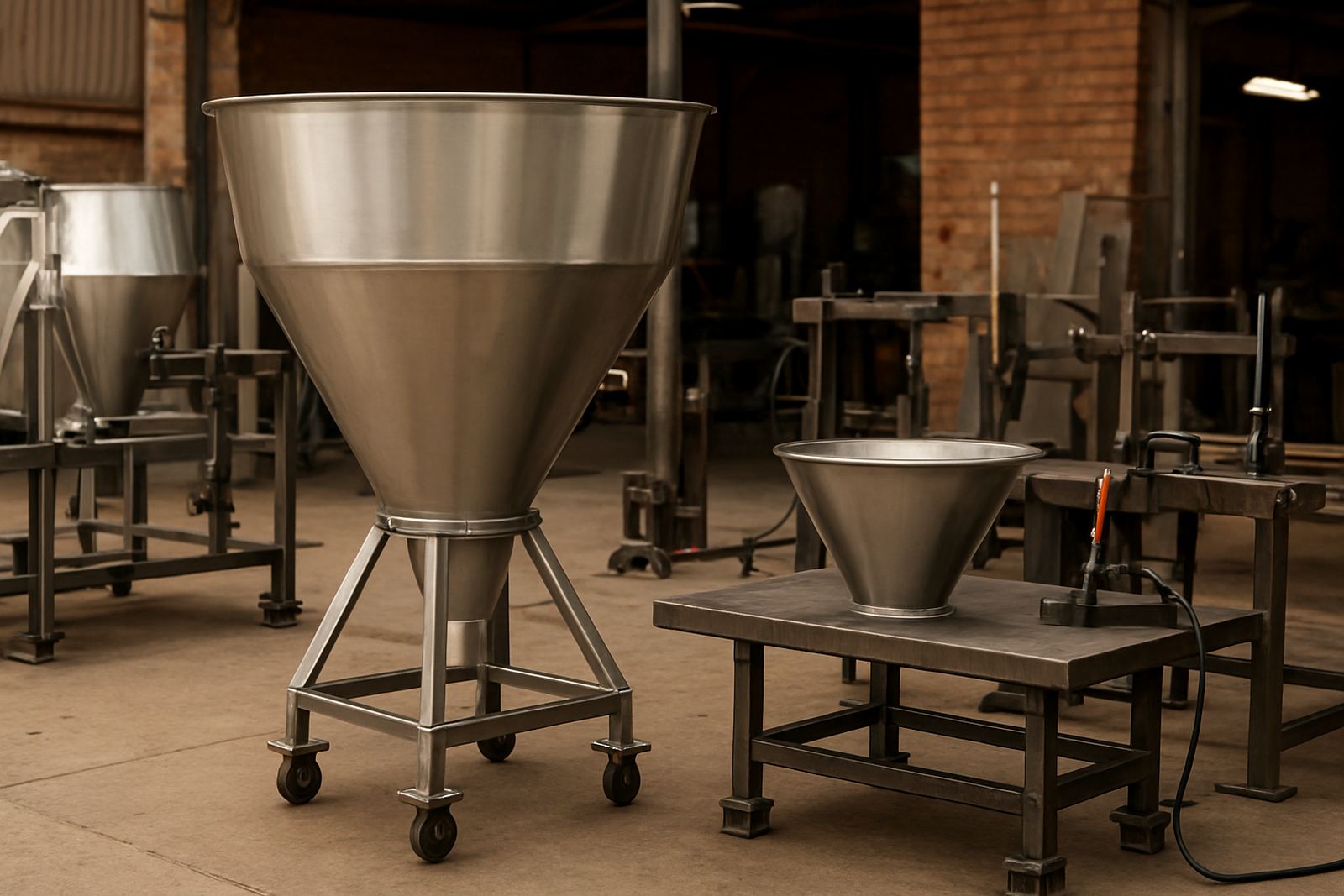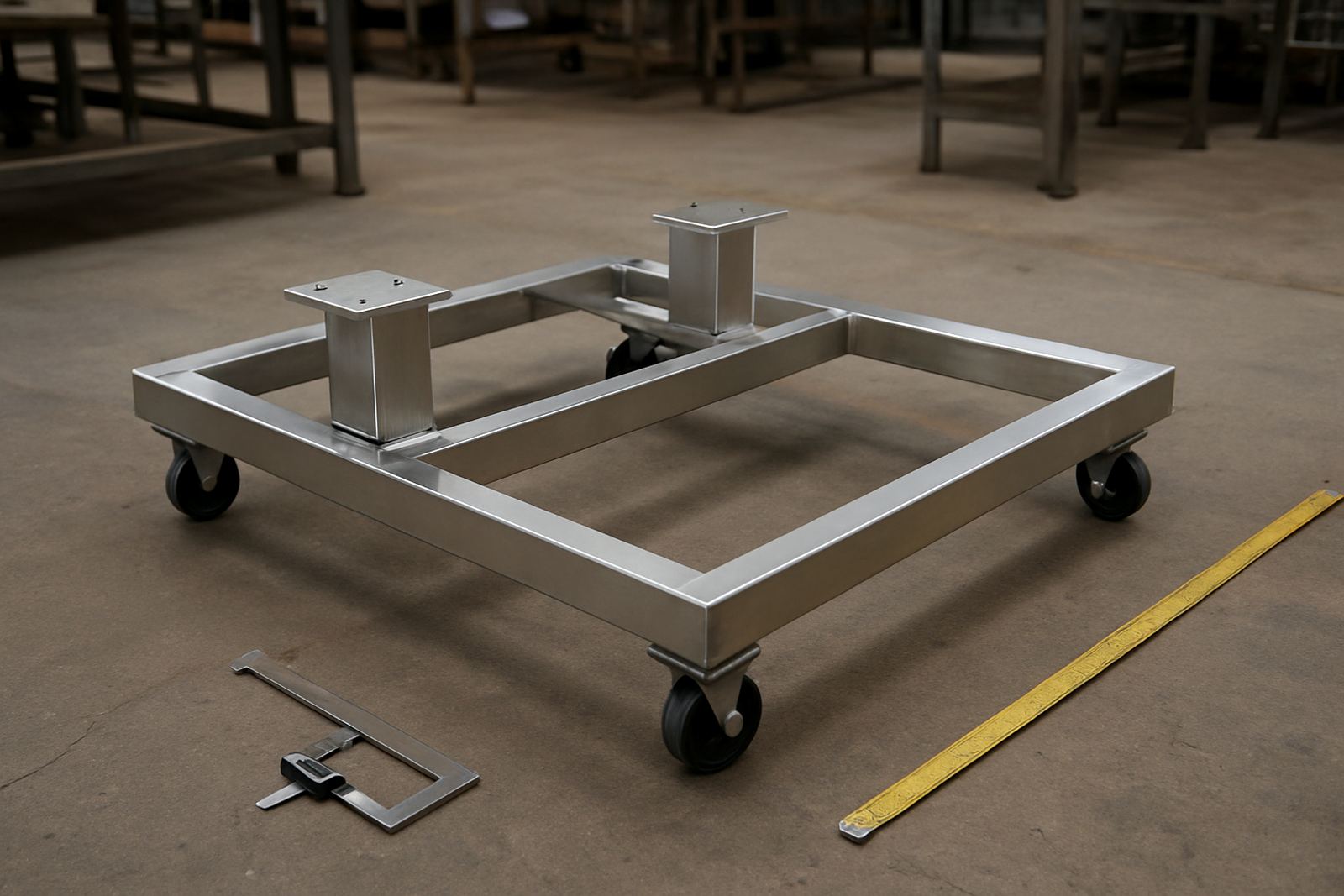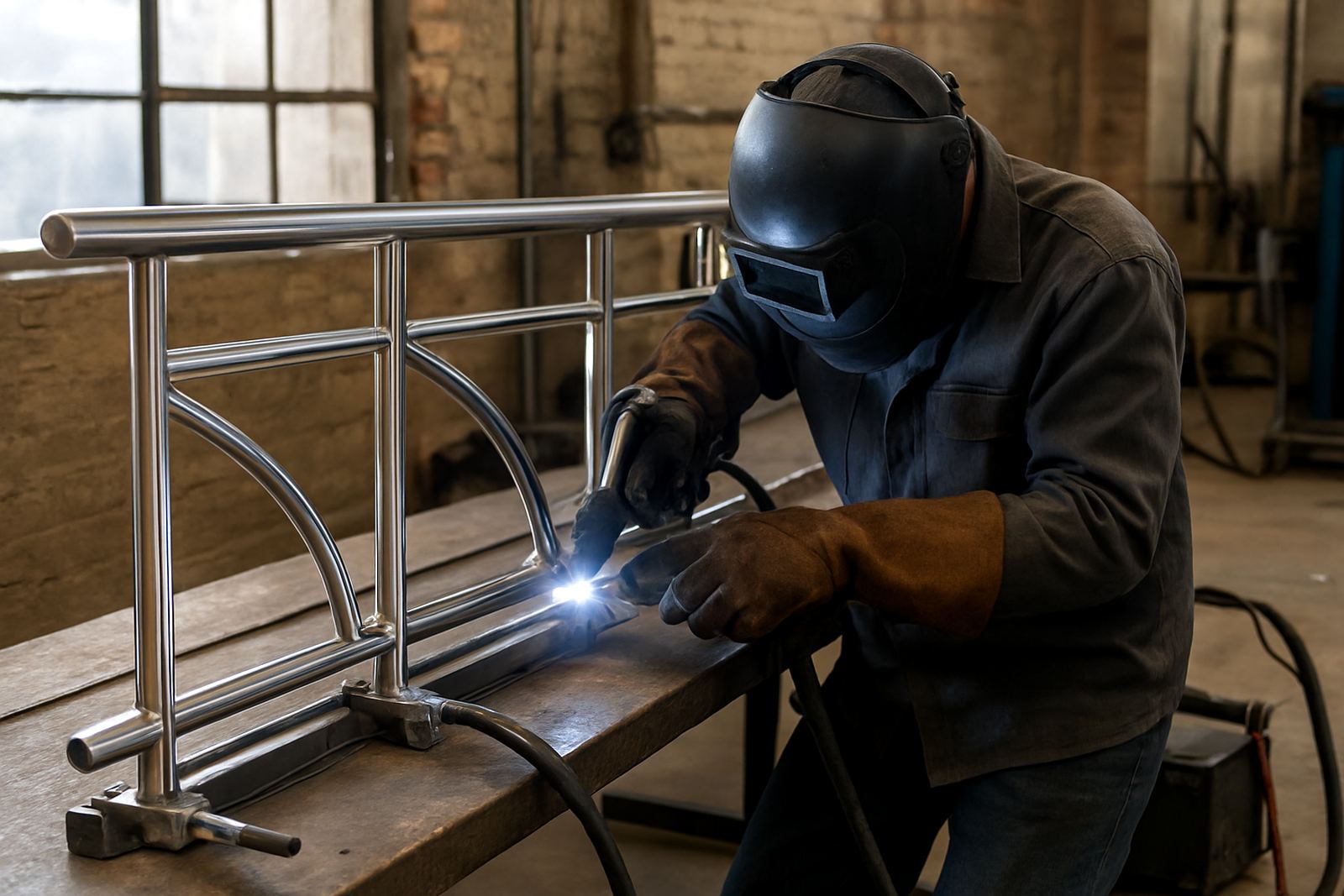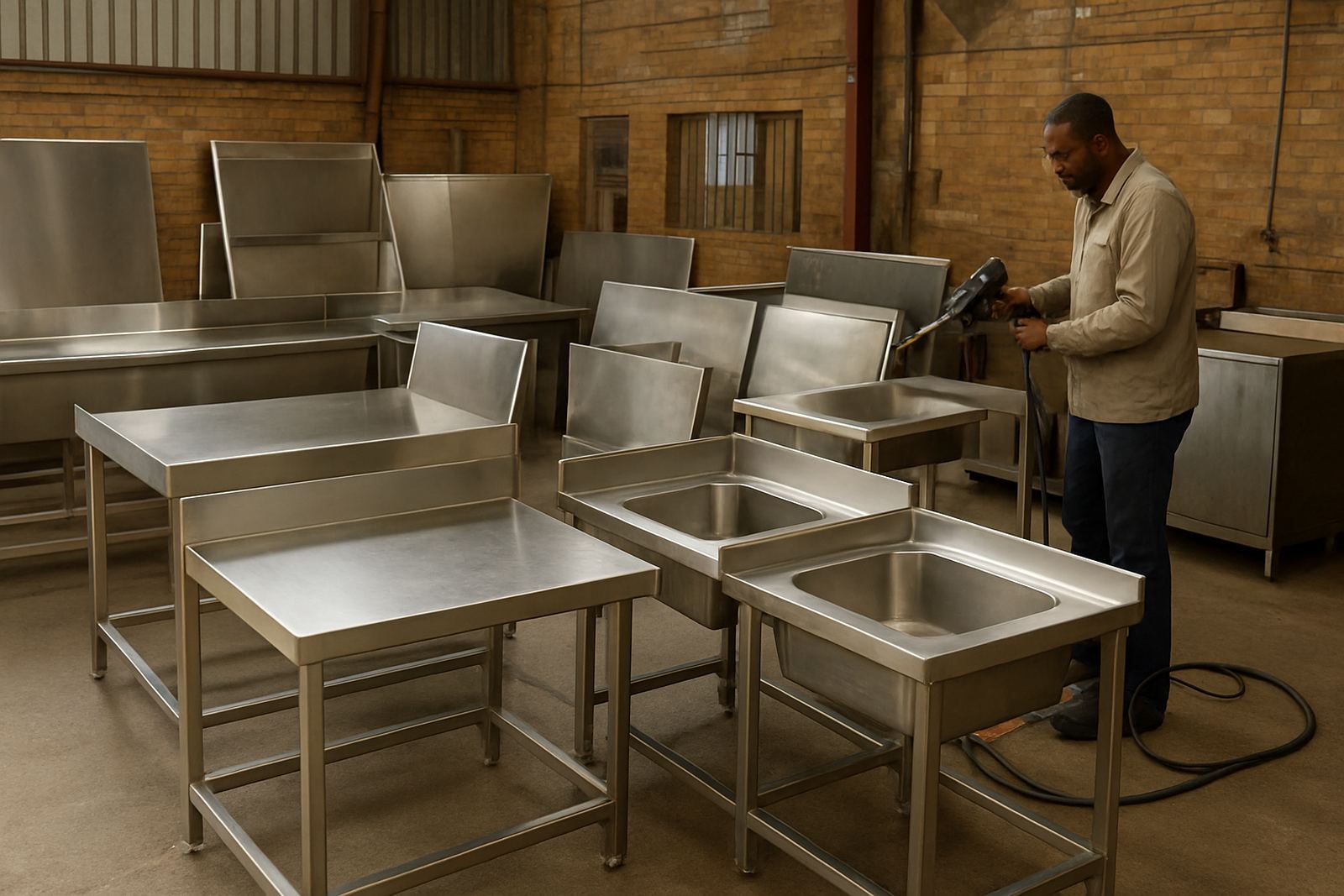
When counter work must look good and clean up fast
Catering counters are built for busy prep areas, serving lines, wash bays and back-of-house kitchens, so the welds have to hold up to daily cleaning, hot pans and constant movement. On stainless steel work, a handheld fibre laser welder can help fabricators make tight seams with less heat input and less distortion, which matters when you are joining visible aprons, splashbacks, sinks, shelving frames and drawer surrounds.
For many shops, the main gain is time. Instead of spending long hours on grinding and rework, your team can move from fit-up to finishing much quicker, especially on straight runs and short return corners. That helps when you are turning around a school kitchen, restaurant counter line or canteen fit-out under a tight handover date.
- Cleaner weld beads on visible stainless joints
- Less warping on thin sheet and boxed sections
- Faster handover after fabrication and polishing
- Better consistency across repeated counter units
Typical equipment set for stainless catering counters
Most catering counter jobs use 304 or 316 stainless steel, depending on the location and cleaning regime. Coastal work in places like Durban, Gqeberha or the Vaal edge may call for more careful material selection and finish control because salt air and humidity can punish poor prep work. In a typical shop, the laser setup is paired with a clean fit-up area, a stable jig, and basic tooling for trimming, clamping and finishing.
A practical equipment set usually includes the laser welder, shielding gas, clean nozzles, a steady bench, angle grinders for edge prep, clamps, squares, marking tools and a dedicated finishing station. If your team fabricates sinks and drain trays, you may also need jigs for radius corners and repeated cut-outs. A few shops keep a small stock of spare tips and wire for rush jobs so production does not stall when load shedding or a breakdown interrupts the day.
- Handheld fibre laser welder for thin to medium stainless sections
- Fit-up jigs for straight counters, returns and sink surrounds
- Clamps, magnets and squares for repeatable alignment
- Grinding and polishing kit for final surface finishing
Planning the counter layout before the first weld
Good planning saves hours later. Before welding starts, confirm the final counter lengths, the position of under-shelves, service openings, toe-kicks and sink cut-outs. Measure the kitchen route as well, because a beautiful counter that will not pass through a loading bay, lift or narrow service corridor creates an expensive problem on site. In Ekurhuleni and across Gauteng, that sort of mistake shows up often on tight restaurant refurb projects.
Laser welding works best when the team agrees on a clear sequence: fit, tack, weld, inspect, then finish. If the unit has long visible seams, work from the centre out to control movement. For modular counters, leave a little tolerance for site scribing and floor unevenness, because municipal buildings and older commercial kitchens are rarely perfectly square.
- Confirm all dimensions against the approved drawing before cutting
- Allow space for plumbing, electrical and drainage services
- Plan weld sequence to reduce heat build-up and pull
- Check access for delivery, lifting and final placement
Common mistakes on catering counter jobs
Most of the poor results we see are not caused by the machine, but by rushed prep. Dirty edges, poor clamping and inconsistent gaps will still show up in the finished seam, even when the weld process itself is accurate. On stainless counter work, contamination from mild steel tools or a dusty bay can leave marks that are hard to hide later. This is where a tidy fabrication area pays off.
Another common mistake is chasing speed without checking the heat input on thin sheet. If the operator moves too slowly, the panel can distort and the top line starts to wave. If the shop is under pressure during a power interruption, some teams rush the restart and skip the test weld. That can cost more than the time saved, because a bad seam on a serving counter usually means rework and delay.
- Poor surface prep before welding
- Wrong clamping on long counter runs
- Using contaminated tools on stainless steel
- Skipping test pieces before full production
- Forgetting to account for site access and final clearances
Budget ranges for workshops and production lines
Budget depends on the size of the workshop, the thickness of the stainless steel and how many operators need training. For a small fabrication shop producing catering counters, a practical starting budget for a handheld fibre laser welding package is often in the region a quoted price, depending on configuration and support needs. A larger production environment with commissioning, process setup and refresher training can move higher, especially where the team wants to roll the system out across multiple work stations. Ask for a quote
It also helps to budget for the full working setup, not just the machine. That includes shielding gas, consumables, maintenance, operator time and the first round of training. If you are replacing a slower process, the savings usually come from reduced grinding, less rework and shorter lead times. For many fabricators, that is where the value starts to show. It is not only about the weld, but the whole job from first cut to final polish.
- Small workshop setup: a quoted price Ask for a quote
- Training, commissioning and process support: budget separately
- Consumables, gas and maintenance should be planned in monthly costs
- Higher volume lines may need extra operator training and rollout support
Support for Spartan, Kempton Park and nationwide shop floors
Laser-Welder works from Spartan, Kempton Park and supports demos at fabrication shops nationwide, including Isando, Jet Park, Edenvale, Germiston, Boksburg and Alberton. For catering counter work, that local support matters because a good setup is often the difference between a neat run of stainless and a week of rework. We help with machine commissioning, operator training, process optimisation, preventive maintenance, breakdown response, spares supply, remote help, shop demonstrations, weld testing and production rollout.
For managers and workshop owners, the aim is simple: get clean seams, train the team properly, and keep production moving. Wynand Oosthuizen leads the business, with support from Tshegofatso Ramaboa on training, Gert Wessels on technical sales, Ayanda Mthembu on service, Reuben Daniels on applications and Sindisiwe Makhado on customer support. If your shop fabricates catering counters, we can help you set up a practical welding process that suits your volume, your staff and your delivery dates.
- Shop demonstrations at your premises or in the Spartan area
- Refresher training for new operators and supervisors
- Remote help when a line needs quick guidance
- Preventive maintenance to reduce unexpected downtime