When hopper work needs cleaner welds and less grinding
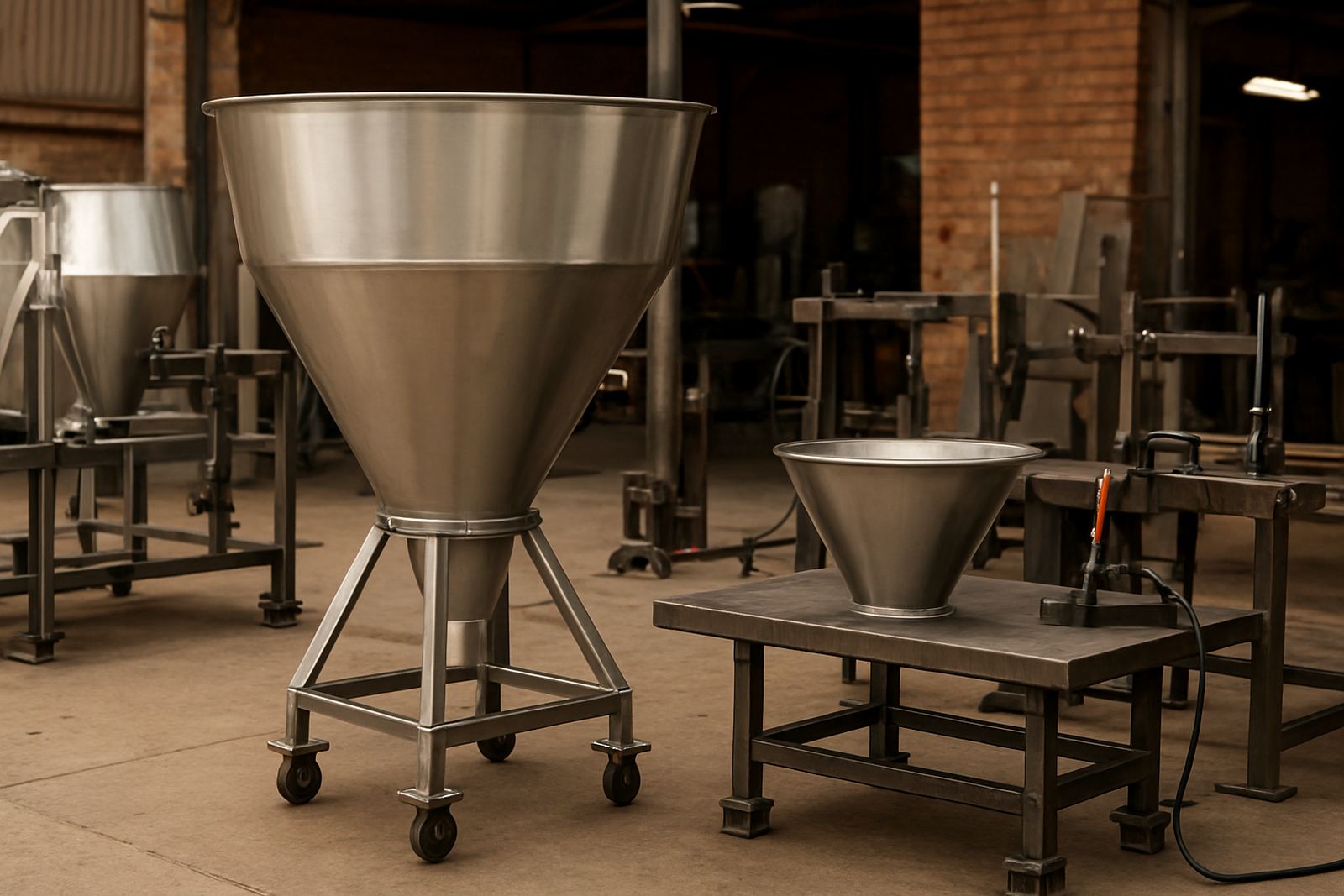
Hoppers are often made from stainless because the material has to handle food, powders, granules or fine offcuts without rust staining or contamination. In practice the job is not just about joining plates. It is about keeping corners square, controlling distortion, and leaving seams neat enough that the finishing team is not spending half the day dressing every corner.
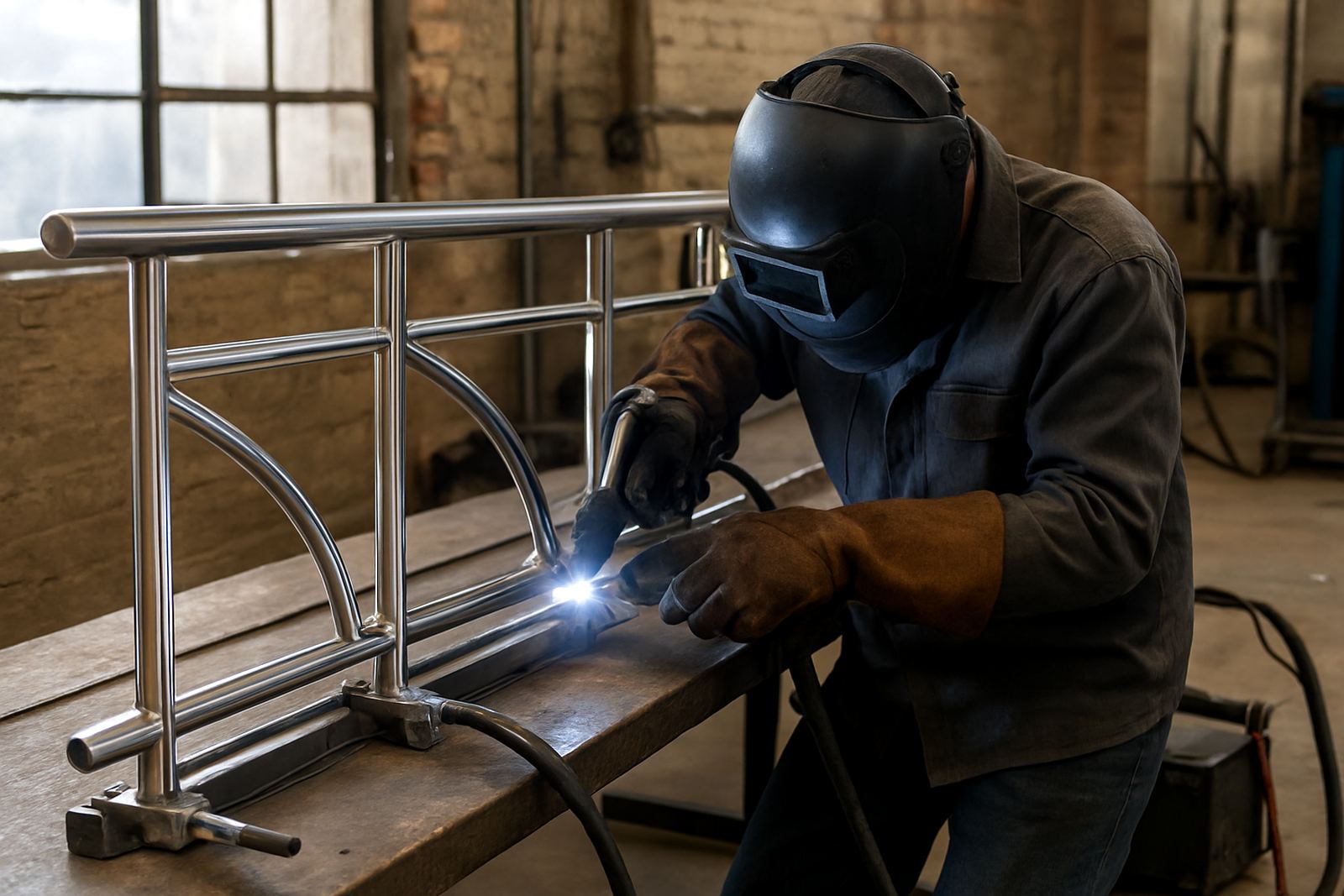
A handheld fibre laser welder suits hopper fabrication where panels are thin to medium gauge and the weld line is long, visible and critical to hygiene. Many shops in Ekurhuleni work with 1.2 mm to 3.0 mm stainless, sometimes thicker at support frames, and want a process that keeps the panel flat. On angular hoppers, less heat means less pull on the corners and fewer corrections later, which helps when the hopper has to fit a stand, chute or valve assembly first time.
Typical hopper jobs we see in fabrication shops
Most hopper work starts with flat pattern cutting, folding and tack-up on a level table. The welding stage then has to hold the geometry while still keeping the outside face tidy. A handheld fibre laser setup is often used for long seams, corner seams, internal seams and local repairs where a clean finish matters more than heavy bead build-up.
- Small dosing hoppers for powders, tea, seed or additives
- Transfer hoppers for stainless process lines
- Feed hoppers for conveyors and packaging systems
- Bin hoppers with angled sides and reinforced corners
- Repair work on cracked seams, worn chutes or retrofit outlets
In shops around Kempton Park, Boksburg and Germiston, we also see hoppers built with removable lids, inspection doors and welded brackets. Those details need careful heat control because one poor pass can throw off the fit of the lid or the door gap. That extra fit-up time costs money, and it is easy to avoid with the right process set for the job.
Planning the weld sequence before you strike an arc
Good hopper welding starts with layout. If the side panels are not tacked square, no welding process will save the job. The team should check base dimensions, diagonal measurements, panel angle, and whether the discharge point is centred. It sounds simple, but plenty of rework starts because the shell was pulled into shape after the first long seam.
For hopper bodies, we usually suggest welding in a sequence that balances heat. Do not run one full side from top to bottom without checking movement. Break the work into sections, move around the body, and let the part cool between passes. On thin stainless, a steady hand and controlled travel speed matter more than brute force, and the machine should be set to suit the material not the other way round.
If the hopper is going into a plant with washdown routines, make sure corners, seams and support points are planned for cleaning access. A neat weld is only part of the answer. The unit must also be practical for the people who have to clean it every shift, or every breakdown becomes a complaint from production and QA.
Equipment that usually sits with the welder
For hopper fabrication, the laser unit is only one part of the station. Shops normally need stable workholding, clean stainless prep, and the right safety layout. In Spartan and Isando, where many fabrication floors run on tight space, the machine set-up has to be compact enough to move around the hopper while keeping the operator comfortable.
- Handheld fibre laser welder with suitable power for thin to medium stainless
- Clean clamps, corner squares and a flat assembly table
- Back-up shielding gas for the weld zone where required
- Hand tools for edge prep, deburring and fit-up correction
- Extraction or ventilation suited to the workshop layout
- PPE, including eye protection and gloves suitable for hot stainless parts
Load-shedding also affects planning. If your production depends on hopper assemblies leaving the shop on a tight schedule, it helps to think about generator support, battery-backed controls or scheduling the welding stage around reliable power windows. Nothing stalls a job faster than getting the shell half welded and then losing output before the sequence is done.
Common hopper welding mistakes that add cost
One of the biggest mistakes is over-welding. Some teams still try to make every seam look strong by laying down too much heat and filler. On stainless hoppers that usually means more distortion, more grinding and a rougher internal surface. It also increases the chance of sugar, dust or product catching on the inside edge later on.
Another common issue is poor fit-up at the folded corners. If there is a gap, the welder works harder and the finish suffers. This is why process optimisation matters. A small correction in cutting or folding can save hours on the welding bench, and it often improves the look of the final unit more than changing the weld setting alone.
We also see problems where the team does not test the material thickness or confirm the stainless grade before starting. Different grades and thicknesses need different approach. For hopper fabrication, a quick weld test on offcuts can prevent the sort of seam that looks fine from the outside but shows distortion or burn-through once the part cools.
What hopper projects usually cost in Rand
Budget depends on the hopper size, material thickness, finish standard and whether the job is a one-off or repeated production. For a fabricator considering a handheld fibre laser welder for hopper work, the investment can range widely. Smaller workshop units may start around the low hundreds of thousands of Rand, while higher output systems with stronger accessories, commissioning and training can move into the mid to upper six figures.
When clients ask about payback, we look at three things: time saved on grinding, fewer distorted panels, and better output consistency. On repetitive hopper work, the savings are often not just in welding time but in the reduction of rework and touch-up. If your team is making several hoppers a month, or running urgent repair work, that difference becomes visible fairly quickly.
Training and commissioning should be part of the budget from the start. A machine that sits idle because operators are unsure of settings is bad value, even if the initial price looked attractive. The better plan is to factor in machine setup, operator training, process checks and maintenance from day one, so the equipment earns its keep instead of gathering dust in the corner.
Support for shops across Ekurhuleni and beyond
Laser-Welder works from Spartan, Kempton Park and supports fabrication shops nationwide with demos, training and service. For hopper work, that usually means we come in, assess the current welding method, test on your material, and help the team settle on a practical setup for daily production. We support machine commissioning, operator training, process optimisation, preventive maintenance, breakdown response, spares supply, consumables support, remote help, shop demonstrations, weld testing, production rollout and refresher training.
We often work with teams in Jet Park, Edenvale, Alberton, Germiston and Boksburg that need a solution for stainless hopper fabrication without turning the floor into a grinding bay. If your shop is dealing with tight deadlines, municipal noise limits, or product cleanliness requirements, the right weld process can make a real difference. When you are ready to discuss a hopper project, use the enquiry form on our contact page and we will take it from there.