Why ducting jobs suit handheld laser welding
Stainless ducting is often made from thinner sheet, with long seams, collars, bends, flanges and access panels that all need to fit together properly. On this kind of work, heat control matters. Too much heat can pull the section out of shape, leave wide discolouration, or create a lot of dressing and straightening work after welding.
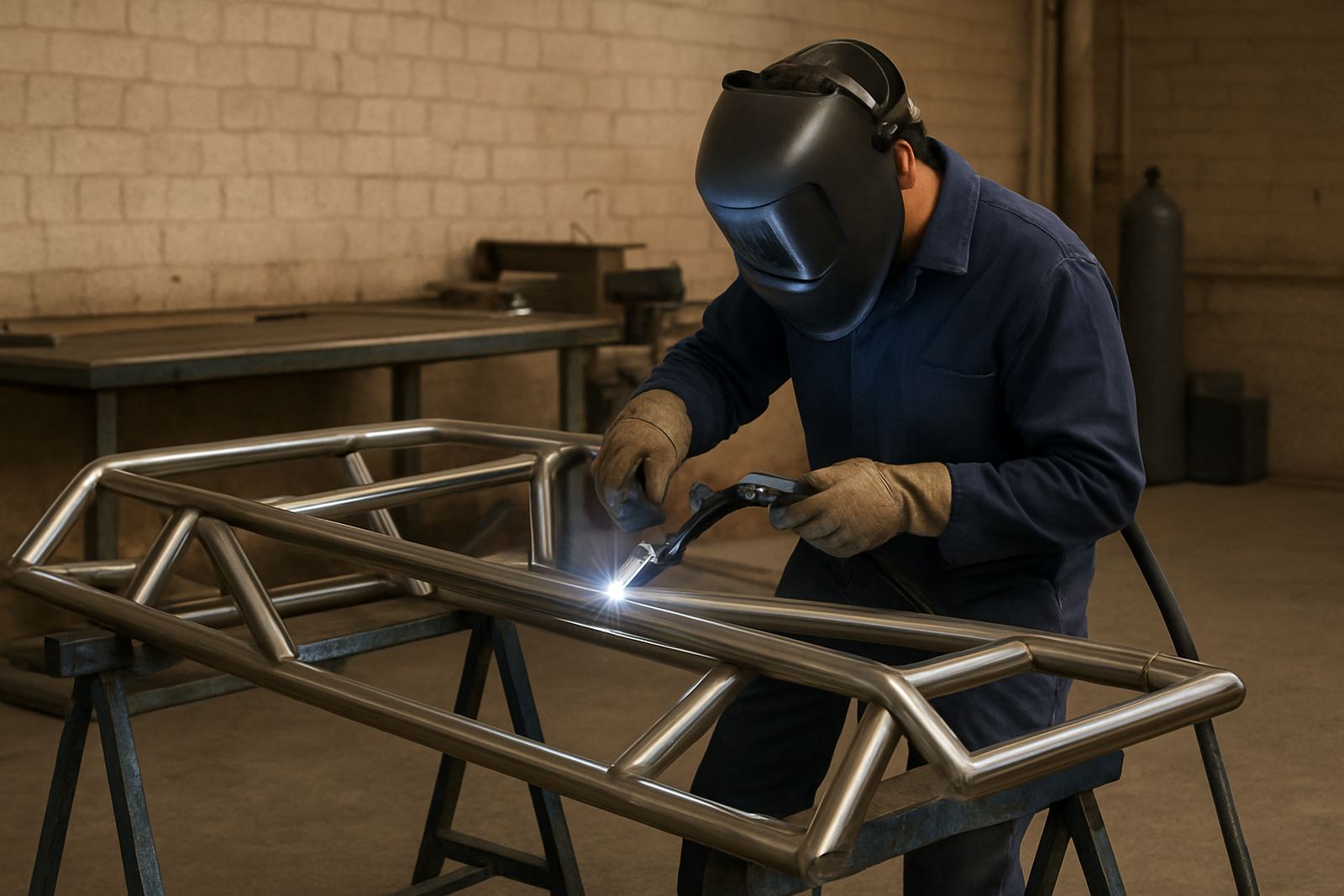
Where parts are clean, fit-up is accurate and faster turnaround matters, handheld fibre laser welding can be a strong fit. It gives a narrow heat affected zone, so lighter extraction sections stay flatter and are easier to assemble in batches. For firms working on kitchen extraction, dust collection, fume lines or light process ducting, that can save time on the floor and improve consistency from one job to the next.
In Spartan, Kempton Park and the surrounding industrial areas, many fabricators are already working under tight delivery windows, with power interruptions and customer pressure on lead times. A laser welding setup can help keep production moving when the team is trained and the work is planned well. It is not a fix for poor prep, though. Good results still start with proper cutting, cleaning and clamping.
Typical set-up for small and medium duct shops
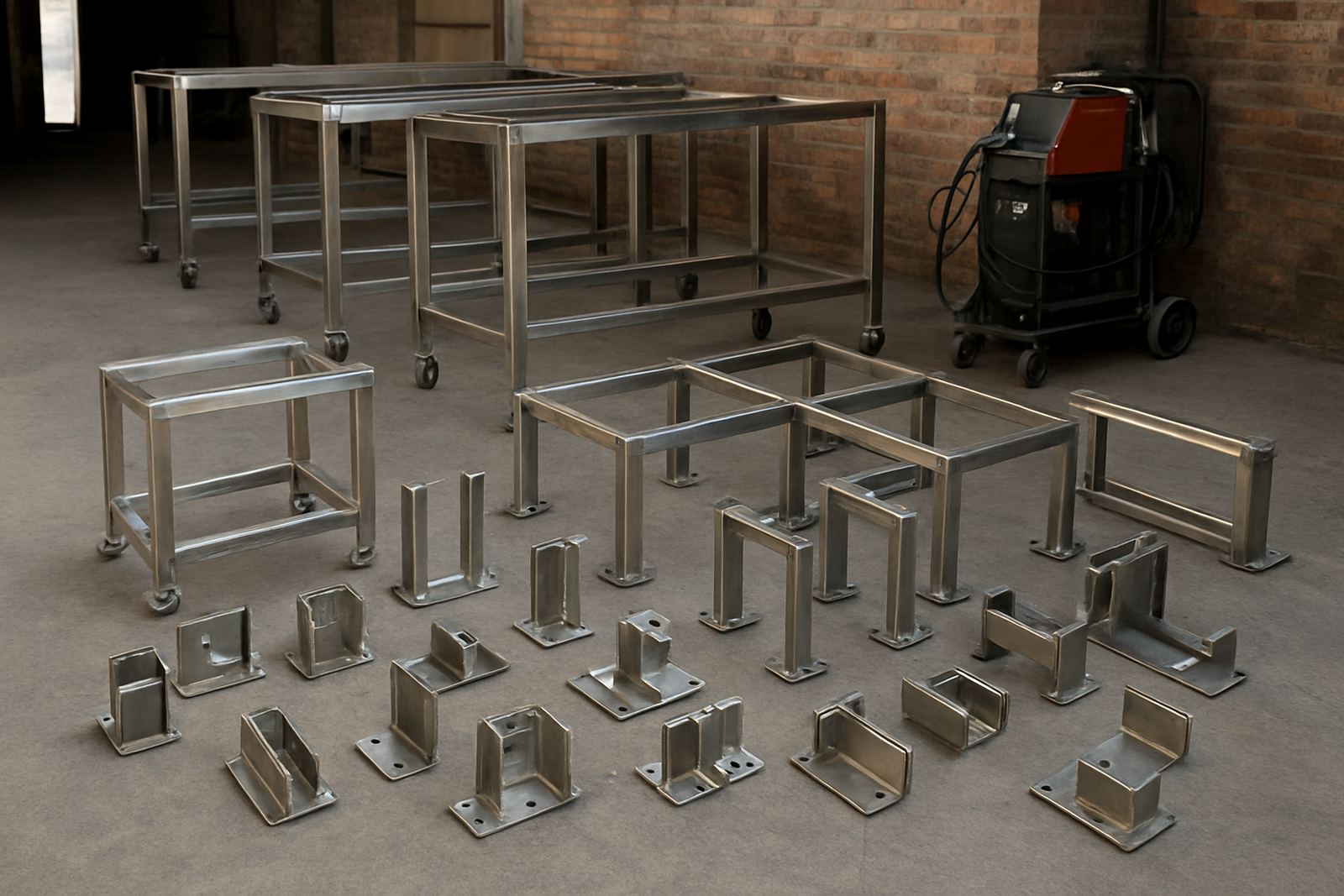
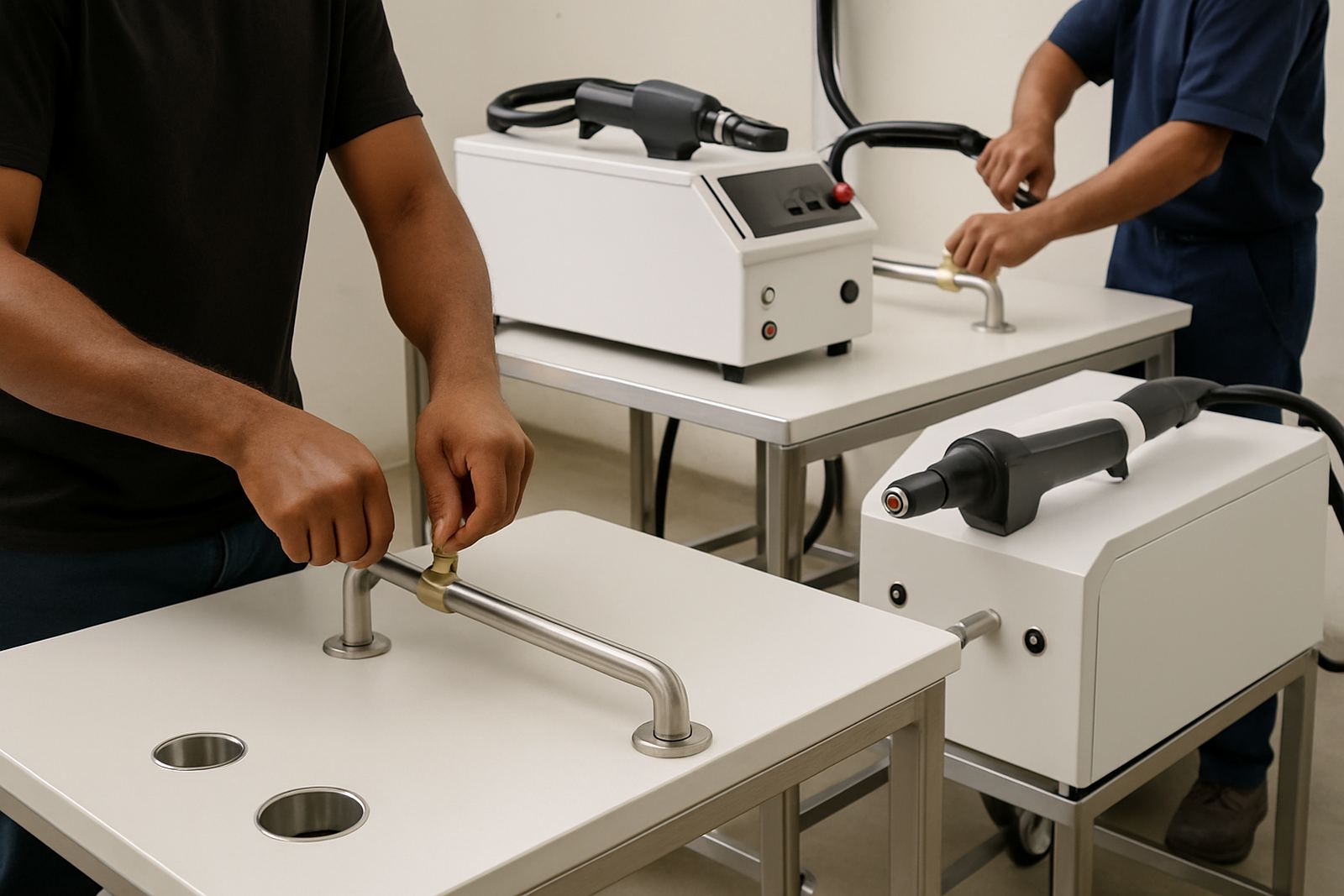
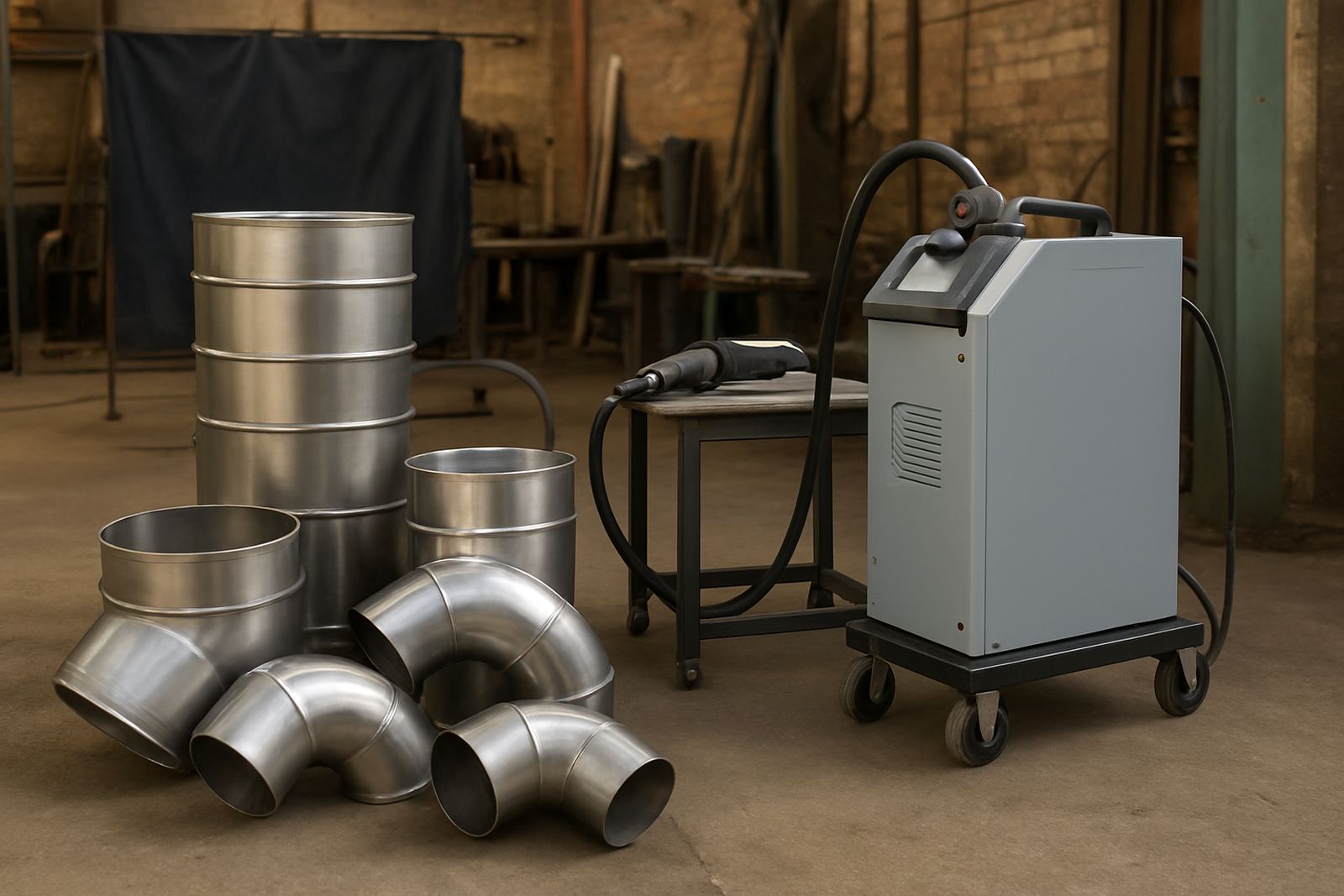
A ducting workshop does not need a massive production line to make use of this equipment. In many cases, a handheld unit is paired with a basic stainless fabrication area, a clean prep bench, simple jigs, and a dedicated spot for tack-up and final welding. If the work includes cylindrical sections, round-to-square transitions or custom extraction runs, rollers and alignment fixtures help a lot.
- Handheld fibre laser welding unit with suitable stainless settings
- Clean working area for 0.8 mm to 3.0 mm stainless sections
- Fixtures for flanges, collars, elbows and straight sections
- Fume extraction and proper eye protection for the operator
- Compressed air, stable power supply, and space for coolant or service access
For a shop in Germiston, Boksburg or Alberton, the layout should allow easy movement between cutting, deburring, fit-up and welding. The fewer times a section is lifted and moved, the less chance there is of edge damage or misalignment. That matters when the job involves long duct runs or multiple identical pieces.
Planning the job before the torch is switched on
Good ducting work is won before welding starts. A laser welder can speed up the actual joint, but only if the parts are cut accurately and the build sequence makes sense. For light stainless sections, planning should cover joint type, access, clamp placement and where heat is most likely to build up.
It helps to split the job into repeatable stages. Cut, deburr, dry fit, tack, verify dimensions, then weld in a sequence that balances heat. On longer runs, work from the centre outwards or use a staggered pattern so the section stays true. If the design includes thin tabs or narrow returns, test a sample first because those features can distort quickly if the operator is too aggressive.
Our team often sees better results where the fabricator has a simple checklist for each duct size and material thickness. That reduces surprises during production and makes it easier to train new operators. A small typo on a drawing or a missed bend allowance can cost more than the weld itself, so the measuring side needs attention too.
Common mistakes on extraction and duct sections
Most problems are not caused by the laser process itself. They come from poor prep, poor fit-up or trying to weld a part that was never designed for that method in the first place. Thin stainless can move quickly, and if the seams are open or the edges are oily, the finish will suffer.
- Leaving mill scale, oil or marker residue on the weld area
- Trying to bridge a wide gap instead of improving fit-up
- Using no clamping on long seams, which allows movement
- Welding too hot on thin sections and pulling the panel out of flat
- Skipping sample tests before a full production run
We also see shops underestimating the effect of nozzle angle, travel speed and seam access. On round duct or tight corners, the operator needs room to keep a steady hand. If the part is awkward to reach, the answer may be a better jig or a revised sequence, not more power. That is where training makes a practical difference.
Training, commissioning and support for local production
Laser-Welder supports commissioning, operator training, process optimisation and preventive maintenance for fabricators across Ekurhuleni and nationwide. For ducting work, that usually means setting the machine up on actual shop samples, checking weld quality, and showing the team how to get repeatable results on the common thicknesses used in extraction and ventilation work.
We also help with weld testing, production rollout and refresher training. If a shop in Isando or Jet Park is moving from conventional welding to handheld laser welding, the first week is usually about learning the right preparation steps and building confidence on production parts. After that, the focus shifts to cycle time, consistency and keeping the machine in service. Ayanda and Reuben handle support and application follow-through, while Tshegofatso leads training on site.
In practical terms, this means less guesswork for the workshop supervisor and fewer scrap sections on the floor. When load-shedding or a breakdown disrupts a day, clear service support and remote help can save time, especially if production has to restart quickly.
Budget ranges for ducting applications in Rand
Budget depends on thickness range, output, training needs and how much workshop support is required. For lighter stainless ducting, many fabricators start by budgeting for the machine, safety gear, site preparation and an initial training package. If the workshop is building only small batches, the return usually comes from reduced rework and faster assembly rather than from massive labour savings alone.
As a working guide, a compact handheld laser welding setup for light stainless can sit in the lower to middle six figures, while a more fully specified workshop package with added support, setup and production rollout can move higher. For planning purposes, many businesses should allow is quoted per job, depending on the duty cycle and accessories required. Commissioning, training and consumables support should be costed separately so there are no surprises later. Ask for a quote
If the work includes frequent site calls, welding on larger fabricated sections, or training multiple operators, the budget should also include time away from normal production. That investment can pay off quickly when a shop is turning out consistent duct sections for repeated orders, but it still needs a clear job mix to justify it.