Why enclosure work suits handheld fibre laser welding
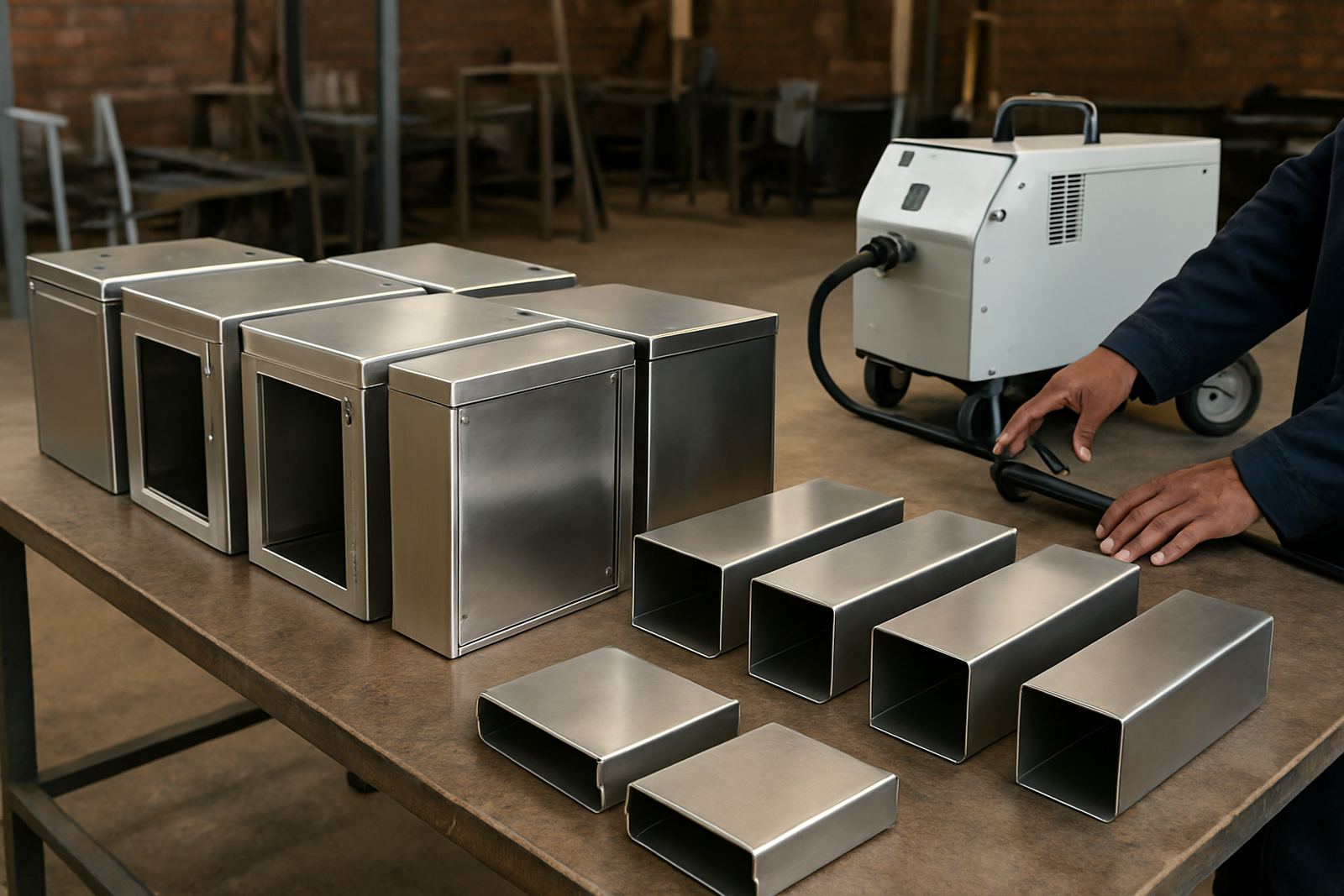
Stainless boxes, control cabinets, electrical enclosures and instrument housings usually need a clean outside finish because the weld is part of the final product. On this type of work, the biggest challenge is not only strength, but also how the corners look after fabrication and how much distortion shows up on the door gaps, flanges and mounting faces.
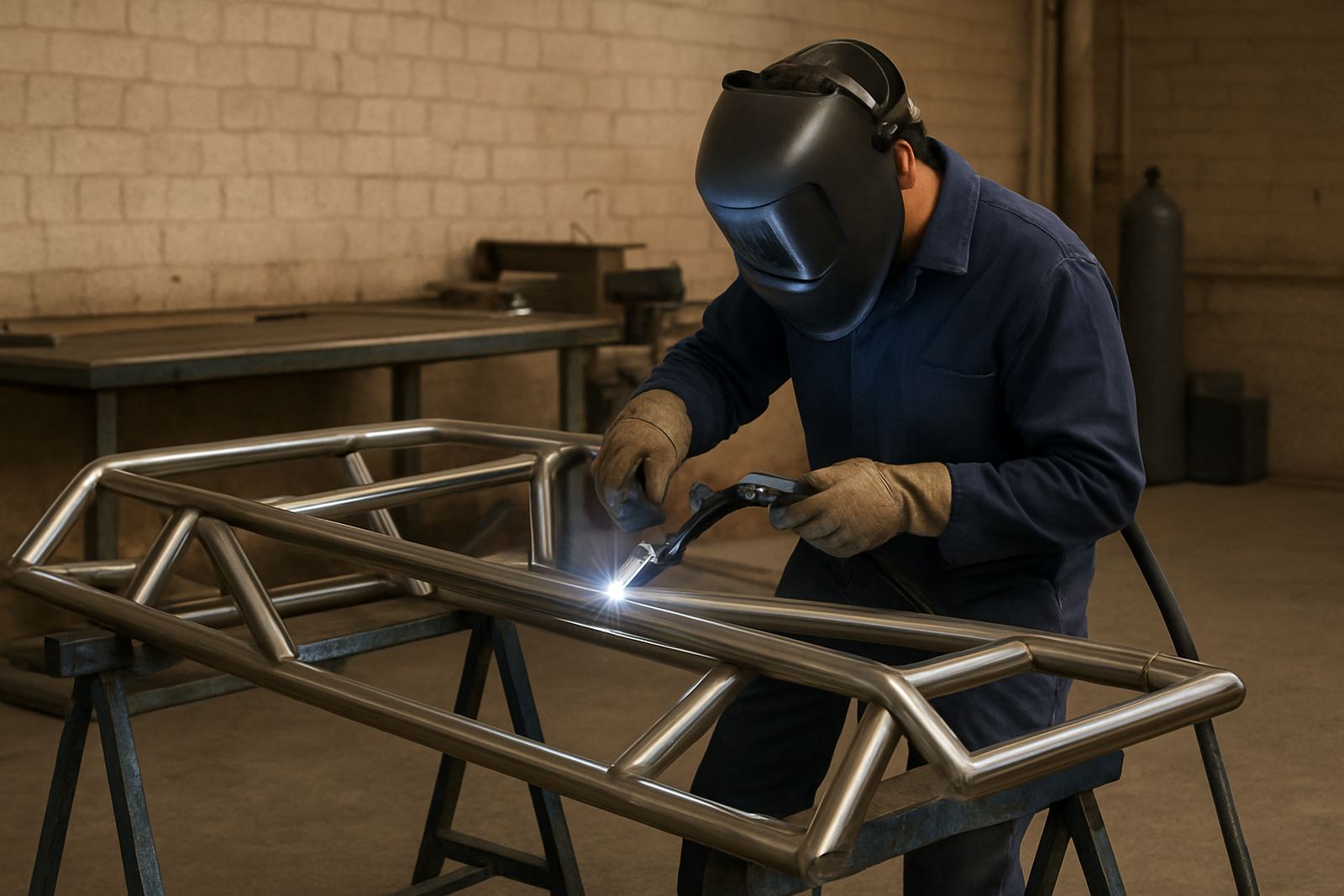
Better heat control is one reason fabricators use handheld fibre laser welding on thin stainless sheet, as it helps keep panels flatter and cuts time spent straightening after welding. For shops in Spartan, Kempton Park, Jet Park and Germiston that make repeat enclosure runs, that means less grinding and fewer reworks before powder coating or final assembly.
The process is especially useful on small to medium boxes where TIG would take longer and need more skilled hand control on every seam. If you are building enclosure batches for mining, food prep, water treatment, electrical distribution or general plant equipment, the ability to make neat, consistent welds can save hours on each job.
Typical machine set-up for a small enclosure shop
A practical set-up for enclosure fabrication usually starts with a handheld fibre laser welder in a power range suited to stainless sheet and light section work. Many shops choose a unit around 1000W to 2000W for box fabrication, with the higher end useful where material thickness, production pace or fit-up variation is more demanding. For heavier frames and deeper corner welds, planning matters more than just power.
Most enclosure work also needs a clean prep area, a stable worktable and clamps that hold panels square while tacking and welding. Good jigs save time because enclosures often repeat the same dimensions with slight changes for cable holes, gland plates or louvre cut-outs. If the parts move during welding, the finish suffers and the lid may not seat properly.
- Laser welder with suitable stainless settings for 0.8 mm to 3 mm material
- Wire feed option for gaps, edges and corner build-up
- Protective enclosure area with clear line of sight and controlled access
- Dedicated stainless prep tools to avoid cross contamination from mild steel
- Extraction and cleaning equipment for fumes, dust and post-weld residue
Power supply planning is important too. If your workshop in Ekurhuleni faces load-shedding or unstable supply, ask about start-up requirements, backup options and how the unit behaves on generator or inverter support. A machine that runs well on paper but trips on site will slow production very quickly.
Layout and planning advice before you weld the first box
Good enclosure work starts before the machine is switched on. Mark out the panel sequence, decide where the welds will be hidden and keep the visible corners as clean as possible. On many jobs the best result comes from welding the inside edges first, then finishing the outside corners only where needed. That reduces discoloration and keeps the external face neater.
Think through how the box will be assembled. If the design includes hinges, doors, gaskets or removable covers, the sequence must leave enough access for the torch and enough clearance for the operator. Poor planning often forces the welder to work at awkward angles, which leads to uneven beads and extra dressing afterwards.
For shops doing custom stainless enclosures in Cape Town, Durban, Pretoria or around Gauteng, it helps to set one standard process for material handling, fit-up, welding and inspection. That way the same enclosure can be repeated with fewer surprises, even when more than one operator is on the floor.
- Keep stainless sheets covered and clean to avoid fingerprints, moisture and grime
- Use proper corner stops so the box stays square during tacking
- Separate stainless tools from mild steel tools to prevent contamination
- Plan weld order around door openings, cable entries and mounting feet
- Allow time for final fit-check before the box goes to finishing
Common mistakes on stainless enclosure fabrication
The most common mistake is treating enclosure work like general fabrication. Thin stainless needs careful heat control and a steady travel speed. Too much heat causes warping, blue colouring and pulled corners. Too little preparation leaves visible gaps that must be filled later, which wastes wire and time.
Another problem is poor fit-up. If the corner gap is too wide or the panel edges are not cut square, the weld may look full but the enclosure can still twist. That is why many fabricators spend more time on cutting and clamping than on the actual weld. The end result is better and the finishing team has less corrective work to do.
Some shops also overlook training. A handheld fibre laser welder is not complicated to learn, but enclosure work still needs correct technique, safe handling and a sensible process sequence. Without proper training, operators can overheat joints, move too fast or hold the torch at the wrong angle. These errors show up quickly on small cabinets where every millimetre matters.
If your team is handling production in a busy workshop, regular refresher training and process optimisation are worth the effort. It is cheaper to fix the method than to keep repairing bad corners and uneven seams after the job has gone to finishing.
Budget ranges for enclosure welding projects in Rand
Budget depends on the size of the enclosure, the thickness of the stainless, the production volume and whether the shop needs only a machine or a full workflow support package. For many South African fabricators, the buying decision is shaped by payback: how much time can be saved per unit, and how much grinding or rework can be removed from the job.
As a practical guide, entry-level handheld fibre laser welding set-ups for light enclosure work may sit in the lower six figures, while higher power systems and better accessory packages move up from there. Once you add commissioning, operator training, process setup, spares support and preventive maintenance, the total investment is usually higher but more predictable in daily use.
For enclosure production specifically, it helps to think in terms of job cost rather than only machine price. A shop making 20 to 50 stainless boxes a month may recover time quickly if each box needs less finishing. On larger contracts, the saving comes from repeatability and reduced bottlenecks at the final assembly stage.
Ask for a site discussion or demo if you want to compare the machine against your own parts. A proper test on your material, your corner details and your finish standard is the easiest way to see whether the setup will suit your budget and output goals.
What local support looks like in the workshop
For enclosure fabricators, support is not just about selling a machine. It includes commissioning on site, operator training, breakdown response, consumables support and help with weld testing when the joint needs to be proven before production. That matters when a job is due for municipal infrastructure, factory equipment or a customer who wants a neat finish and a quick turnaround.
From Spartan, Kempton Park and nearby areas such as Isando, Edenvale, Boksburg, Alberton and Germiston, demos can be arranged to show how the welder behaves on your own enclosure parts. Nationwide shop demonstrations and refresher training also help teams stay consistent when there is staff turnover or a new product line comes in.
If your workshop handles stainless enclosures in short runs or full production, the right support can keep the workflow steady. The point is not only to buy a machine, but to make the machine useful on Monday morning when the orders are waiting and the finish standard is non-negotiable.
Laser-Welder works with fabricators who want clean corners, controlled heat and a practical process that holds up under real workshop pressure. That is what enclosure welding should deliver, every day.