Why pipe spool work suits handheld fibre laser welding
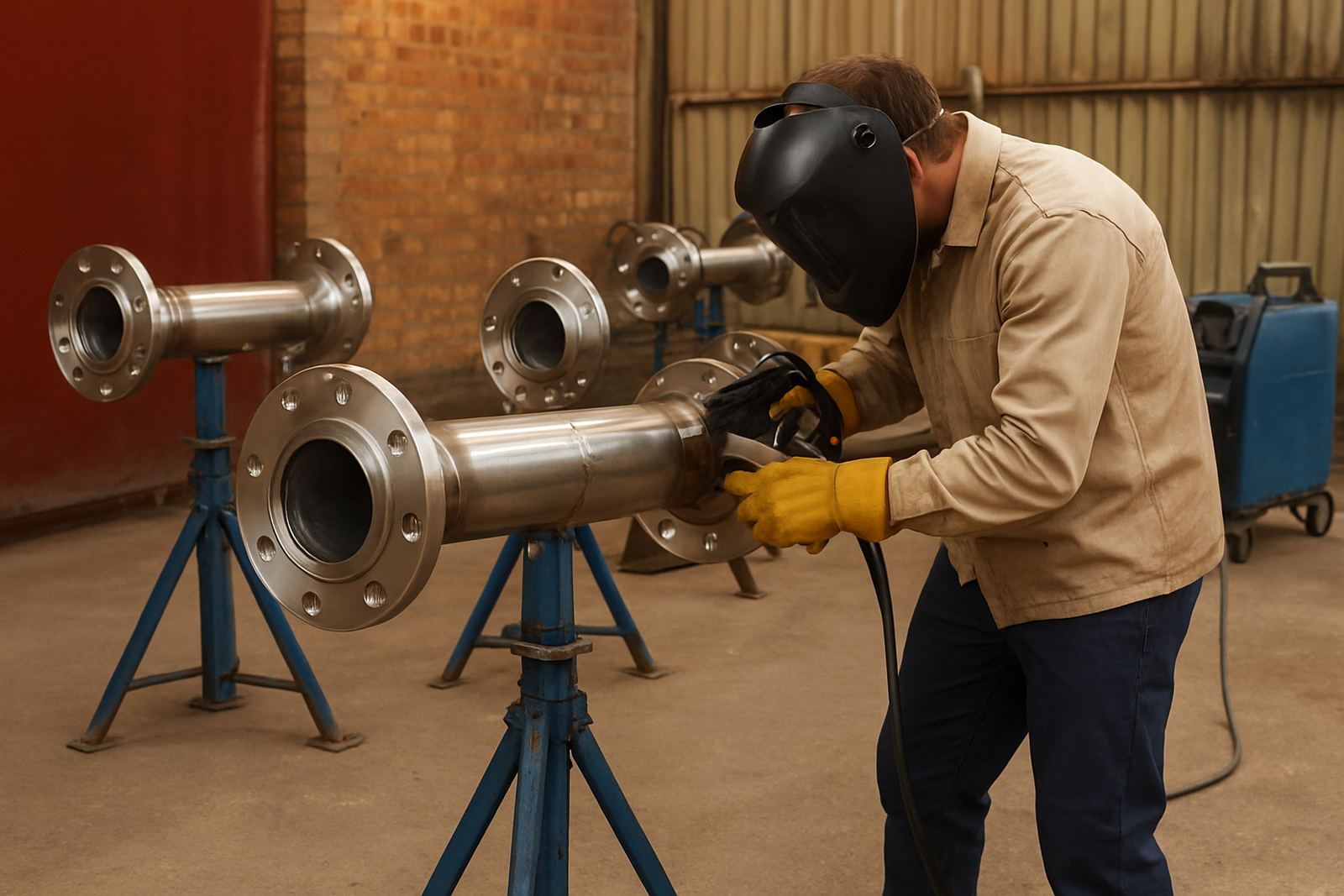
Pipe spools are built on repetition. Once the cut list, diameter, wall thickness and branch positions are set, the real challenge is keeping every joint clean and square enough to assemble quickly. Handheld fibre laser welders suit this kind of work because they help fabricators produce tidy seams with limited heat input, which is useful on thin to medium stainless pipe where distortion can throw off alignment.
For stainless spools used in food plants, process lines, water treatment, dairy, chemical handling and general fabrication, the aim is simple: get a weld that looks clean, seals properly and does not need hours of dressing. A good laser welding setup can reduce grinding and help teams keep pace on short runs or repeat orders. It is especially practical in busy Gauteng workshops where labour time, floor space and power interruptions all matter.
At Laser-Welder in Spartan, Kempton Park, we work with fabricators who need a process that is predictable. That includes small shops building a few spools a week and larger plants turning out multiple assemblies for site installation. The machine is only part of the picture though. Clamping, joint prep and training make the difference between neat results and wasted material.
- Best suited to stainless steel spool fabrication
- Useful where fit-up must stay consistent over repeat jobs
- Helps reduce post-weld clean-up and rework
Typical equipment set for spool fabrication
A practical pipe spool bay does not need a complicated layout. You need the welder, a clean work surface, proper clamps and a way to hold sections true while tacking and welding. Most shops also benefit from a tube or pipe cutting station, deburring tools, measuring gear and dedicated area for cleaning the joint faces before welding. If the material is oily or marked from transport, the weld will show it.
For stainless pipe, the best results come from using a machine that can be adjusted for different wall thicknesses and joint gaps. A handheld laser welder with stable control over power and travel speed can handle straight butt joints, small branch details and attachment work on spool assemblies. Some workshops also keep a separate purge setup for internal protection on critical joints, depending on the spec and end use.
- Handheld fibre laser welding unit with suitable power range
- Pipe stands, clamps and fit-up jigs
- Cleaning tools for oxide, grease and marker removal
- Optional purge gear for higher spec stainless work
Layout and planning advice for a cleaner spool line
Good spool work starts before the first weld. Set up the bay so that material moves in one direction: cut, deburr, clean, fit, tack, weld and inspect. If the team has to carry sections back and forth across the floor, you lose time and the joints pick up dents or contamination. Keep the welding area away from grinding dust and from traffic where offcuts and stock can be knocked over.
In Kempton Park and the wider Ekurhuleni area, many workshops are working around load-shedding, compressed air demand and limited floor space. It helps to place the machine where the operator can work from a stable supply and a clear route to the prep bench. If your site has voltage issues, plan for proper electrical support rather than just hoping the power stays steady. A clean, organised bay also makes training easier because the team can repeat the same sequence on every job.
For spools going to site, label sections early and keep an eye on installation clearances. A joint that looks fine on the bench can become a problem if the spool will need to slide through a tight opening or line up with flanges and supports later.
Common mistakes that slow down pipe spool jobs
Most problems on spool work come from poor prep, not from the machine itself. If the cut ends are out of square, the gap is uneven or the surface still carries mill scale and oil, the weld will need more attention. Another common mistake is pushing the speed too hard to save time, then ending up with a joint that needs repair or dressing. That is false economy on stainless work.
Too much heat can also cause distortion, especially on thinner wall pipe and short runs with several welds close together. Shops sometimes assume laser welding means every joint can be done the same way, but every spool size needs its own settings, clamp arrangement and handling. Training matters here. A technician should know when to adjust travel speed, when to clean again and when to stop and reset the fit-up.
- Uneven gaps between pipe ends
- Dirty joint faces or contamination from handling
- Overheating thin sections and pulling the spool out of line
- Poor clamping that lets the joint move mid-weld
Budget ranges in Rand for a spool welding setup
Budget depends on the work mix. A smaller workshop that mainly builds light stainless spools may start with a basic handheld laser welding package, clamp set and training support. A more active fabrication shop with repeat production, thicker sections and multiple operators will need a higher spec machine, more fixturing and planned maintenance cover. The right choice is usually based on pipe diameter, material thickness, daily output and how often the team changes between jobs.
As a working guide, a starter setup for pipe spool fabrication is quoted per job depending on machine power, accessories and commissioning needs. Mid-range production setups are quoted per job. Larger workshops with added training, process setup, consumables support and rollout planning may spend above a quoted price. These figures are not fixed, but they give a practical starting point for quoting and planning. Ask for a quote
Do not forget the running costs. Consumables, lens care, gas where required, spares and maintenance all affect the monthly budget. A machine that is cheaper up front but unreliable during a busy production week can cost more in lost time and rework. That is why many shops ask for a demo on their own material before signing off.
Training, commissioning and support for workshop teams
When a pipe spool team changes from conventional welding to laser welding, the first few weeks matter. Proper commissioning helps the machine arrive ready for the work, while operator training gives the team a clear routine for setup, cleaning, joint handling and safety. At Laser-Welder, our support includes shop demonstrations, weld testing, production rollout and refresher training, so the process can settle into real workshop conditions not just a test bench.
We support clients from Spartan, Kempton Park and across South Africa through fabrication shop demos and on-site guidance. That is useful for teams in Isando, Jet Park, Edenvale, Germiston, Boksburg and Alberton, and also for fabricators farther afield who need help choosing the right process for stainless spools. If a machine stops during production, breakdown response and remote help can keep the job moving while the issue is assessed.
- Machine commissioning and setup checks
- Operator and refresher training
- Process optimisation for repeat spool work
- Preventive maintenance and spares support