When stainless tank work calls for cleaner joins
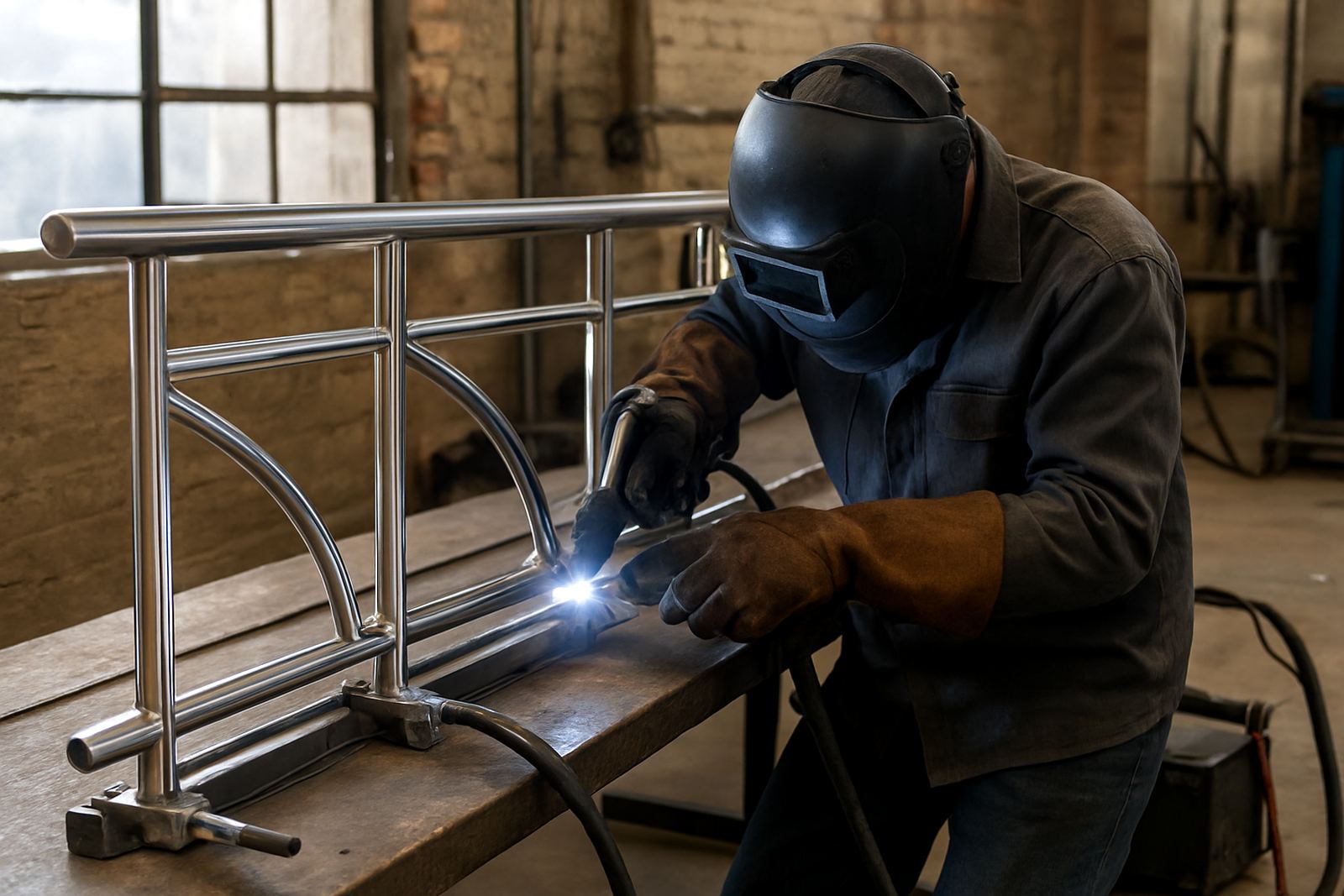
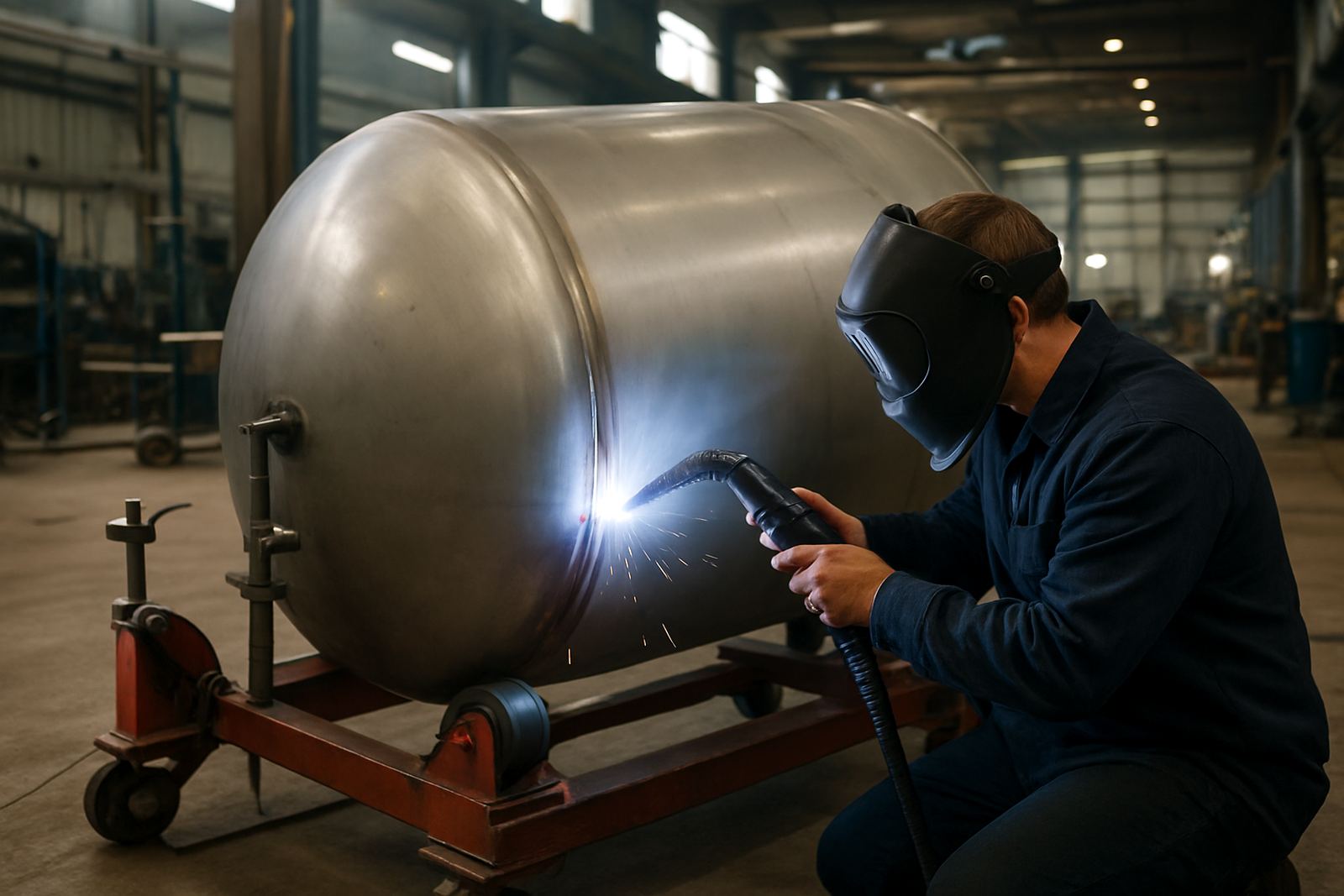
Tank fabrication often starts with simple looking parts, but the tolerance is tight once you get to corners, nozzles, manways, reinforcement pads and top or bottom cones. Handheld fibre laser welding helps fabricators make cleaner seams with less heat spread, which matters on stainless where distortion, sugar and finishing time can become expensive fast.
For food, beverage, dairy, chemical and water storage work, the client usually wants welds that are neat enough to reduce grinding and dressing. On larger tanks, especially when sections are built in batches, the main gain is consistency. You spend less time chasing rework and more time moving panels through the shop.
Typical equipment set for tank fabrication
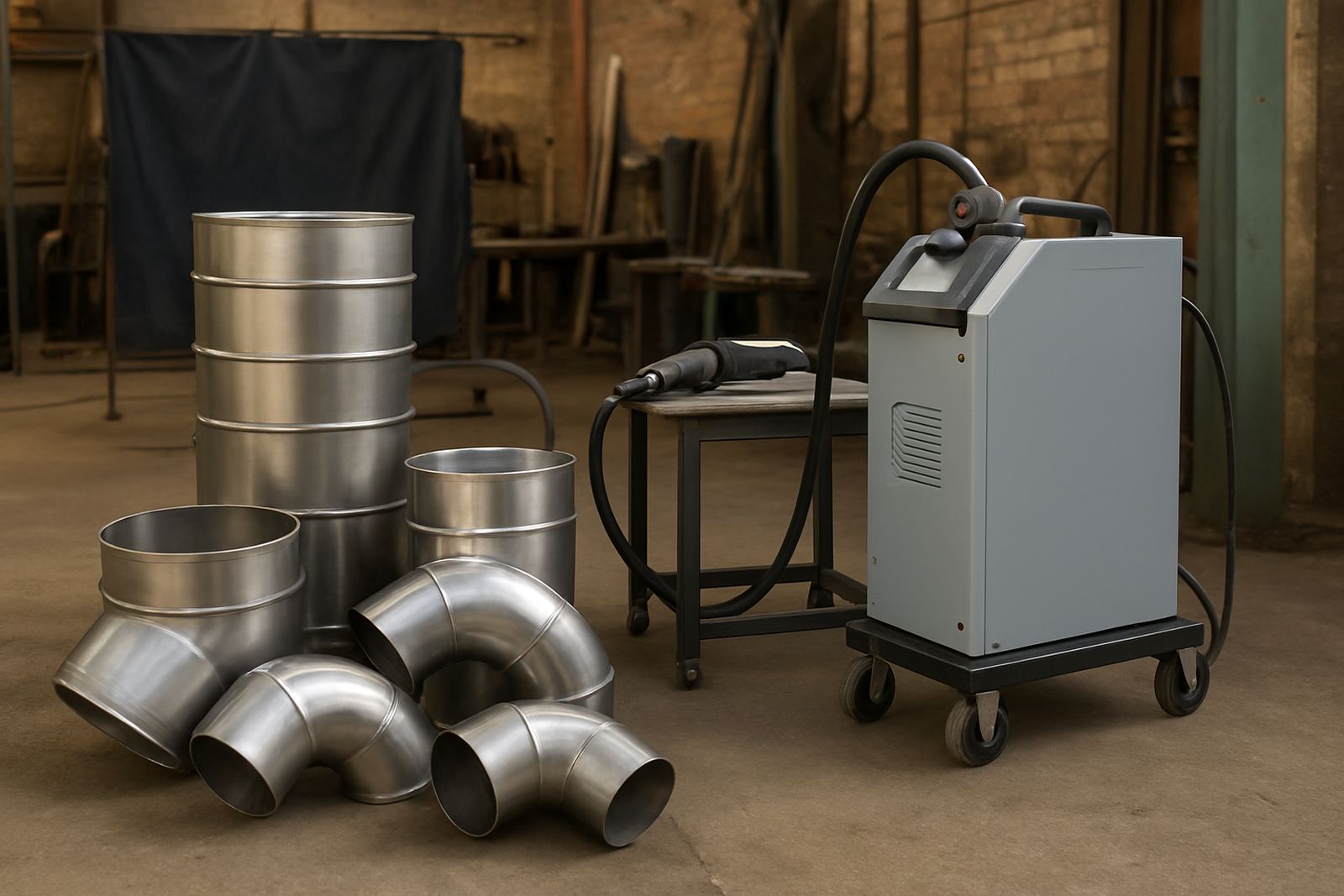
A practical laser welding setup for stainless tanks normally includes the handheld fibre laser welding unit, a suitable cooling arrangement, clean gas supply, preparation tools and dedicated welding fixtures. If the shop works with sheet, pipe collars and light vessel details, the same set can cover a wide range of tasks without changing the whole workflow.
- Handheld fibre laser welding unit for sheet seams, corners and small attachments
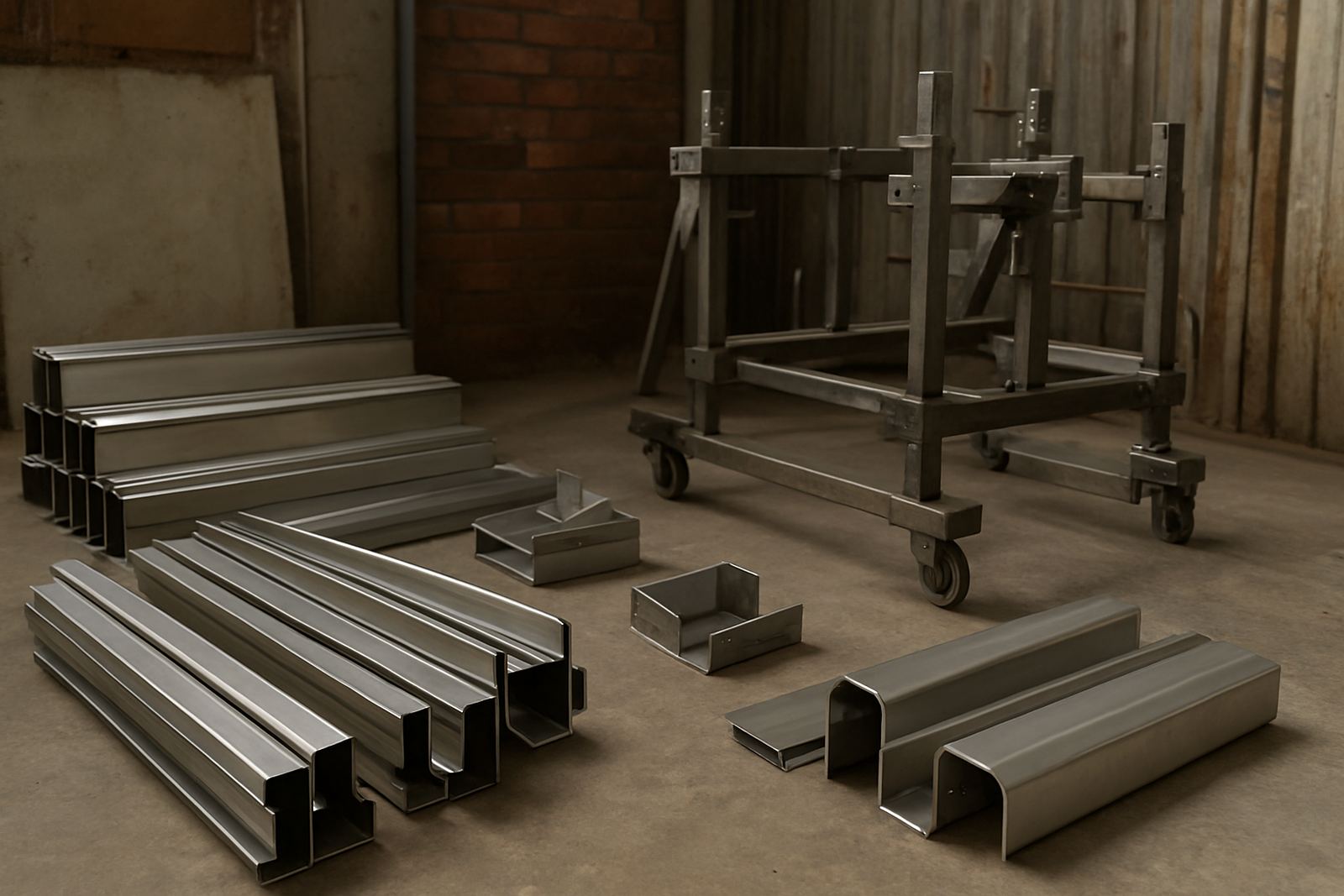
- Jigs and fixtures to hold round sections, cones and end caps in alignment
- Argon supply and proper hose management for consistent shielding
- Preparation tools for edge cleaning, deburring and fit-up
- Marking and checking tools for layout, squareness and repeat length control
Many fabricators also keep a dedicated bench for tack work and a separate area for final welding so operators can work in sequence and avoid mix-ups.
Shop layout and planning that saves time
Tank shops do better when material flow is planned from cut to fit-up to weld and then to test. If plate and profile keep crossing paths, the team loses time and edges get damaged. In Spartan and Kempton Park workshops this can happen quickly when space is tight, so the welding station should be close to prep but away from grinding dust.
For stainless, cleanliness is not optional. Keep carbon steel tools out of the stainless area, and set aside separate brushes, clamps and benches where possible. If the workshop is running during load-shedding, plan for the laser unit, extraction and support equipment to be on a suitable supply arrangement so output does not stop in the middle of a seam.
A good layout also considers the finished tank size. Small vessels can be turned on stands, while larger diameters may need rolling supports or rotators. That decision should be made before the first sheet is cut, not after the shell is already on the floor.
Common mistakes on stainless tanks
Most problems on tank work come from poor fit-up, dirty edges or trying to move too fast before the team understands the process. Laser welding is quick, but it still needs a clean joint and a stable hand. If the gap is too open, the seam can suffer and the operator ends up doing more correction than planned.
- Leaving oil, marker ink or polishing residue on the joint area
- Using mixed tools that contaminate stainless
- Poor clamping that allows the shell to drift during welding
- Skipping test pieces before production starts
- Not training operators on beam control, speed and travel angle
Another common issue is expecting the machine to fix a bad layout. It will not. If nozzle positions, seams and openings are not marked correctly the tank will still need rectification. A small mistake on a cylindrical shell can become a bigger problem by the time the top head goes on, so check measurements more than once.
What budget ranges to plan for
Budget depends on tank size, material thickness, production rate and whether the shop needs one unit or a full rollout across several welders. For a smaller fabrication shop working on stainless water tanks, fittings and light vessel details, a practical starting budget is quoted per job for a capable handheld fibre laser welding setup with the support items needed to get going. Ask for a quote
For a larger manufacturing environment, where multiple stations, training and process support are required, the total project can move into a quoted price to R1.8 million range or more depending on the application mix. That figure may include commissioning, welder training, test welding, process setup and preventive maintenance planning. Ask for a quote
Clients often find the real saving is not only on weld appearance. It comes from shorter finishing time, less rework and a better production rhythm. In practical terms that can matter more than the machine price alone.
How Laser-Welder supports tank fabricators nationwide
Laser-Welder is based in Spartan, Kempton Park and supports fabricators across Ekurhuleni, Gauteng and other parts of South Africa with demos and training at the client’s shop. That includes Spartan, Kempton Park, Isando, Jet Park, Edenvale, Germiston, Boksburg and Alberton, plus nationwide site visits where the job justifies it.
The team handles commissioning, operator training, process optimisation, preventive maintenance, breakdown response, spares supply, consumables support, remote help, shop demonstrations, weld testing, production rollout and refresher training. For stainless tank work, that practical support is often as important as the equipment itself.
Our team works with workshop owners, supervisors and operators so the changeover fits the way the shop already runs. Wynand Oosthuizen leads the business, with support from Tshegofatso Ramaboa, Gert Wessels, Ayanda Mthembu, Reuben Daniels and Sindisiwe Makhado. The focus is simple: get the welds right, keep production moving, and make sure the setup holds up in daily use. No fuss, just proper support.