What our remote help covers for workshop teams
Remote Help is for shops that need answers while a machine is still on the floor, the operator is standing by, and production has to carry on. We assist with handheld fibre laser welder setup, parameter checks, beam alignment checks, wire feed questions, torch handling, shielding gas issues, and first-pass fault finding. If a machine is running but the weld is not coming out clean, we help you narrow the cause before you lose half a shift.
Support is practical and direct. We work through what the operator can see, hear, and measure at the machine so your team can rule out simple causes first. That often includes fibre connection checks, lens condition, nozzle condition, clamp earth contact, cooling flow, and the selected programme for 0.8 mm to 3.0 mm stainless steel work. For many fabricators in Gauteng, the first hour of guidance saves a callout, a truck roll, and a day of waiting.
- Quick settings guidance for common stainless steel joints
- Fault triage for power, cooling, feeding and torch issues
- Operator guidance for first-time users and new shifts
- Support for simple production changeovers and repeat jobs
- Advice on what to check before a site visit is booked
How the support process works from enquiry to action
You send an enquiry through the contact page and give us the machine details, the material grade, the thickness, and what the fault looks like. If possible, include the serial number, duty cycle used, whether the unit is on single-phase or three-phase supply, and whether the problem started after a power interruption or load-shedding event. That helps us get to the point fast instead of asking for the same information twice.
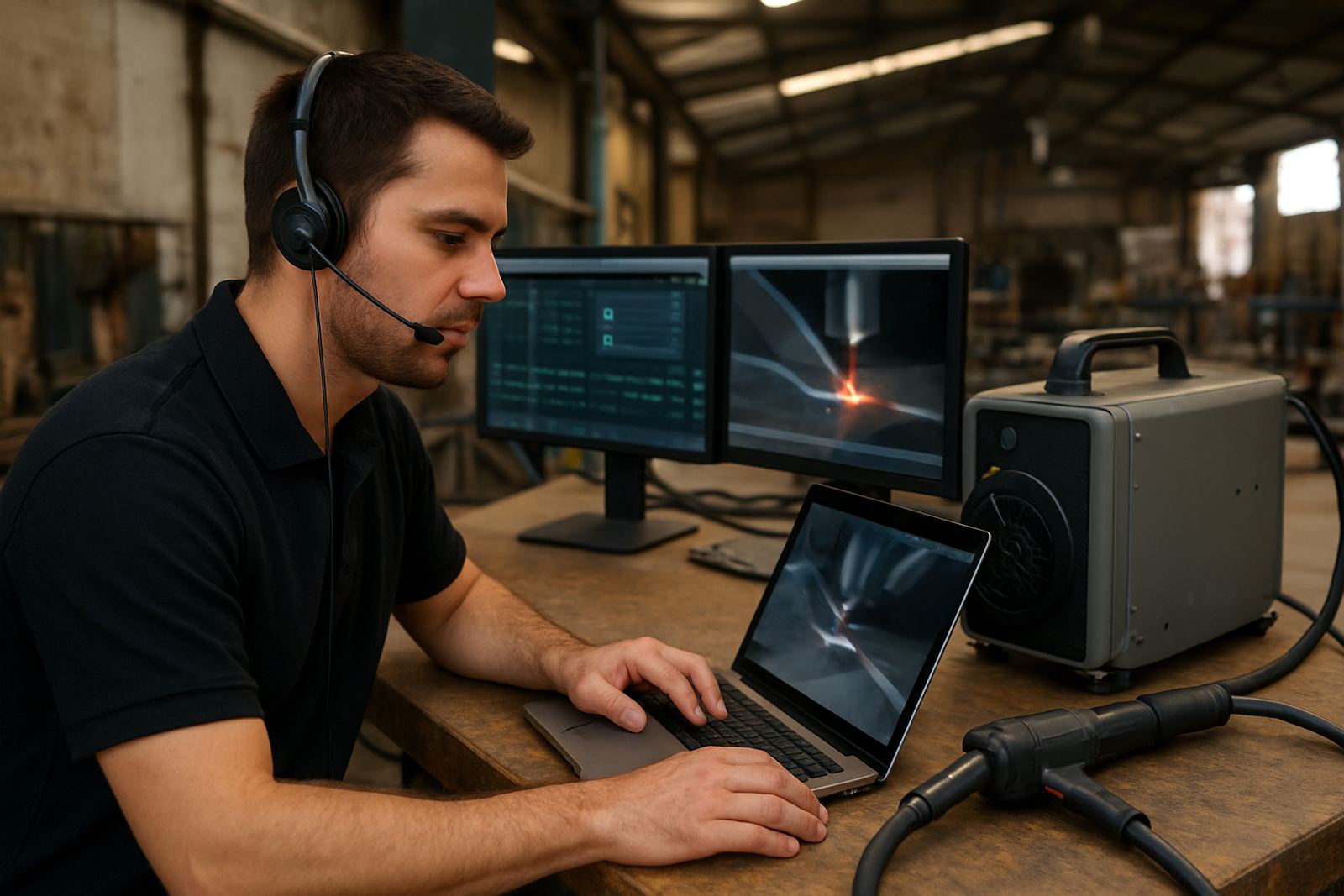
Once we have the details, the team runs a short remote assessment and decides whether the issue can be solved on the spot, needs a follow-up test, or should move to an onsite visit. In many cases we guide the operator through a live check while the machine is idle, then a short test weld. If needed, we can ask for photos or a short video clip so we can see the weld pattern, torch angle, and any alarm message on the display.
- Step 1: Send the machine model, material, thickness, and fault details
- Step 2: Receive a quick assessment and the first checks to run
- Step 3: Do a live test while we talk through the result
- Step 4: Decide on settings changes, spares, or onsite follow-up
Turnaround times and the kind of response you can expect
Remote Help is meant for urgent workshop questions, so the response is normally far quicker than a booking for physical maintenance. Simple settings questions and basic triage can often be handled remotely, while more detailed faults may need several rounds of testing depending on who is on shift and how complex the issue is. If your workshop is in Spartan, Kempton Park, Isando, Jet Park, Edenvale, Germiston, Boksburg or Alberton, we can often line up remote help with an onsite demo or training session if that makes sense.
For manufacturers running tighter schedules, the advantage is not only speed but certainty. You are not guessing at random settings or stopping a batch for a full day. If the problem is caused by consumables, incorrect parameters, poor surface prep, or unstable input power, we can usually identify it quicker than a process of trial and error. In some cases the fix is immediate. In others, we tell you frankly that a physical inspection is the right next step.
- Best for urgent faults, setup questions, and short production delays
- Suitable for day-shift or after-hours checks if the team is available
- Useful when a machine is working, but the weld quality has drifted
- Helps reduce wasted sheet, rework, and operator confusion
Pricing approach for remote support and follow-up work
We keep pricing straightforward and tied to the type of help needed. Basic remote triage is usually handled as a fixed support session, while more involved troubleshooting, welding process optimisation, or repeated follow-up calls may be quoted separately. If the issue turns out to need parts, consumables, or an onsite visit, we explain that before the next step so you can decide how to proceed.
There is no sense in paying for a large service call when the fault is a loose connection, dirty nozzle, incorrect focal setting, or a wrong gas flow rate. On the other hand, if a machine has repeated alarms, unstable output, or visible damage after a power event, we will advise on the right level of support and not oversell what can be done remotely. The aim is to spend money where it actually improves uptime.
- Fixed-fee support for common questions and first-level fault triage
- Quoted work for deeper troubleshooting and process optimisation
- Separate pricing for spares, consumables, and onsite attendance
- Clear approval before anything extra is supplied or booked
Recommended maintenance intervals to keep support calls short
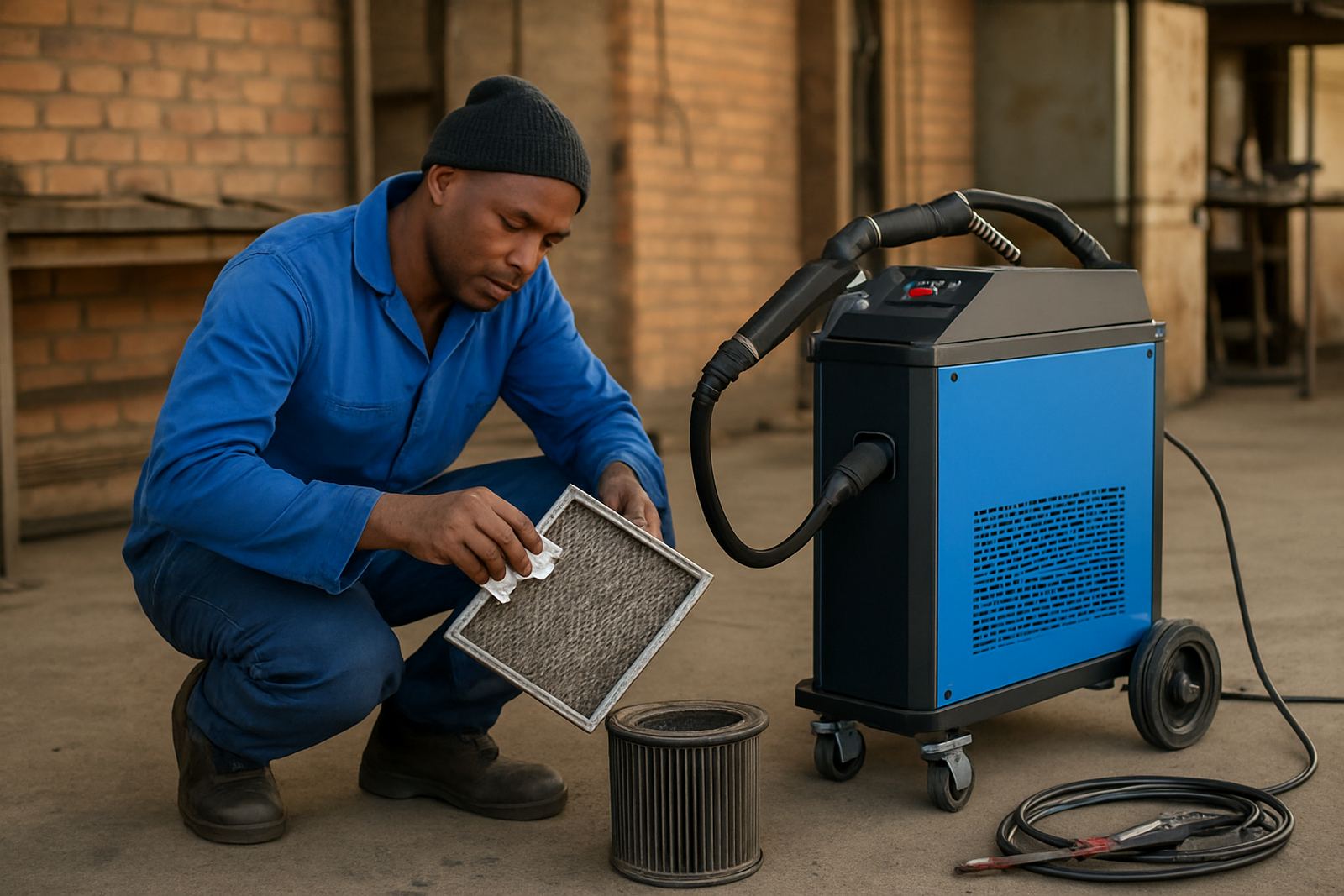
Remote Help works best when the machine is being checked regularly by the workshop team. For busy stainless steel fabricators, we recommend a quick daily check of the torch head, lens area, gas flow, cables, and water or air cooling, depending on the unit. A more detailed weekly check should include nozzle condition, clamp contact, fibre lead routing, and the condition of the work area around the machine.
Monthly, the operator should inspect all consumables, verify weld consistency on a sample joint, and confirm the machine settings used for the main jobs in the shop. After a move, a power interruption, or any unusual alarm, it is worth doing a more thorough check before production starts again. In coastal areas such as Durban or Port Elizabeth, humidity and salt air can speed up corrosion on exposed fittings, so those shops often need a tighter inspection routine than inland plants.
- Daily: torch, lens area, gas supply, cooling, and cables
- Weekly: nozzle wear, earth contact, fibre routing, and test welds
- Monthly: full settings review and consumables check
- After interruptions: recheck power, alarms, and weld quality before batch work resumes
Why remote support suits South African fabrication shops
Many local workshops are running on tight schedules, with limited staff and shared equipment, so a fast remote check is often the difference between finishing a job and missing delivery. Handheld fibre laser welders are efficient, but they still need the right parameters, clean material prep, and trained hands. Remote Help gives your team a place to confirm settings before the job goes sideways.
Laser-Welder operates from Spartan, Kempton Park, and the team includes Wynand Oosthuizen, Tshegofatso Ramaboa, Gert Wessels, Ayanda Mthembu, Reuben Daniels, and Sindisiwe Makhado. That mix of training, service, and applications knowledge means the advice is not generic. It is shaped around real workshop conditions, including power dips, production pressure, and the need to keep stainless work neat for food, ducting, rail, tank, and general fabrication jobs.
- Practical guidance for small workshops and production lines
- Useful when operators need help on a new job or new material thickness
- Supports cleaner welds, fewer rejects, and less downtime
- Can be combined with training, commissioning, or process optimisation
Key facts
| Support type | Phone and digital remote help for handheld fibre laser welders |
|---|---|
| Main focus | Quick checks, settings questions, and fault triage |
| Typical material range | Stainless steel from 0.8 mm to 3.0 mm in common fabrication work |
| Response scope | Routine support requests: send us the machine and fault details |
| Service base | Spartan, Kempton Park with support nationwide |
| Related services | Operator Training, Process Optimisation, Preventive Maintenance, Breakdown Response |