What our weld testing covers
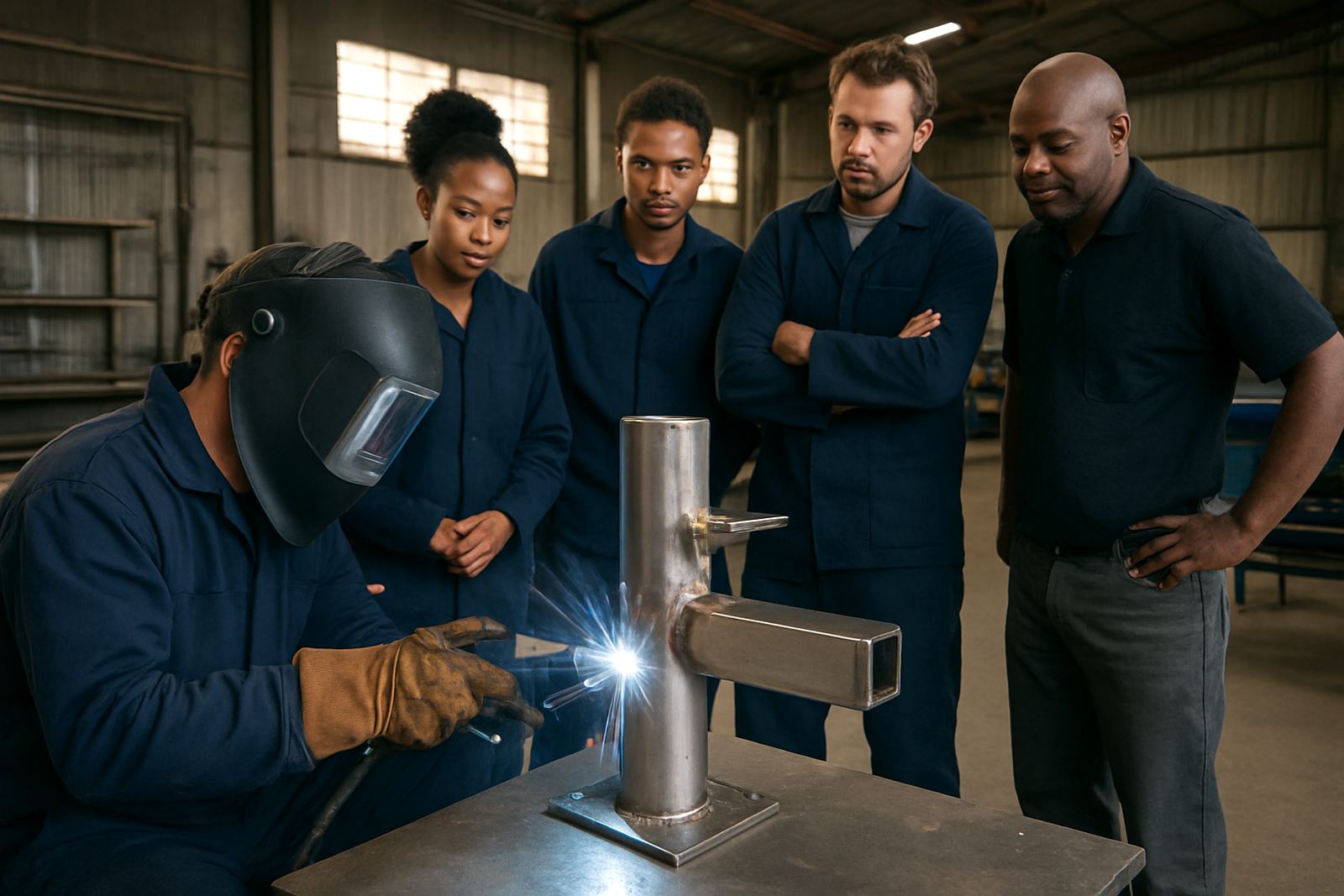
We test handheld fibre laser welds on stainless steel parts that need clean joints, consistent penetration, and a finish that holds up to inspection. That includes thin gauge sheet, boxed sections, tubes, brackets, covers, and assemblies where distortion must stay low. If the job has visible welds, tight corners, or mixed fit-up from fabrication to fabrication, we can assess how the process behaves before you run a batch.
The aim is simple: match the weld method to the real part, not just the drawing. We look at joint gap, edge prep, clamp pressure, travel speed, torch angle, and the visible result after cleaning. For food equipment, shop fittings, signage frames and general stainless fabrication, this saves a lot of back and forth later.
- Butt joints, lap joints, fillets and corner joints
- Thin stainless sheet and heavier structural sections
- Visible finish checks after weld and clean-up
- Fit-up tolerance checks for repeat work
- Heat input and distortion control on small parts
How the testing process runs from sample to sign-off
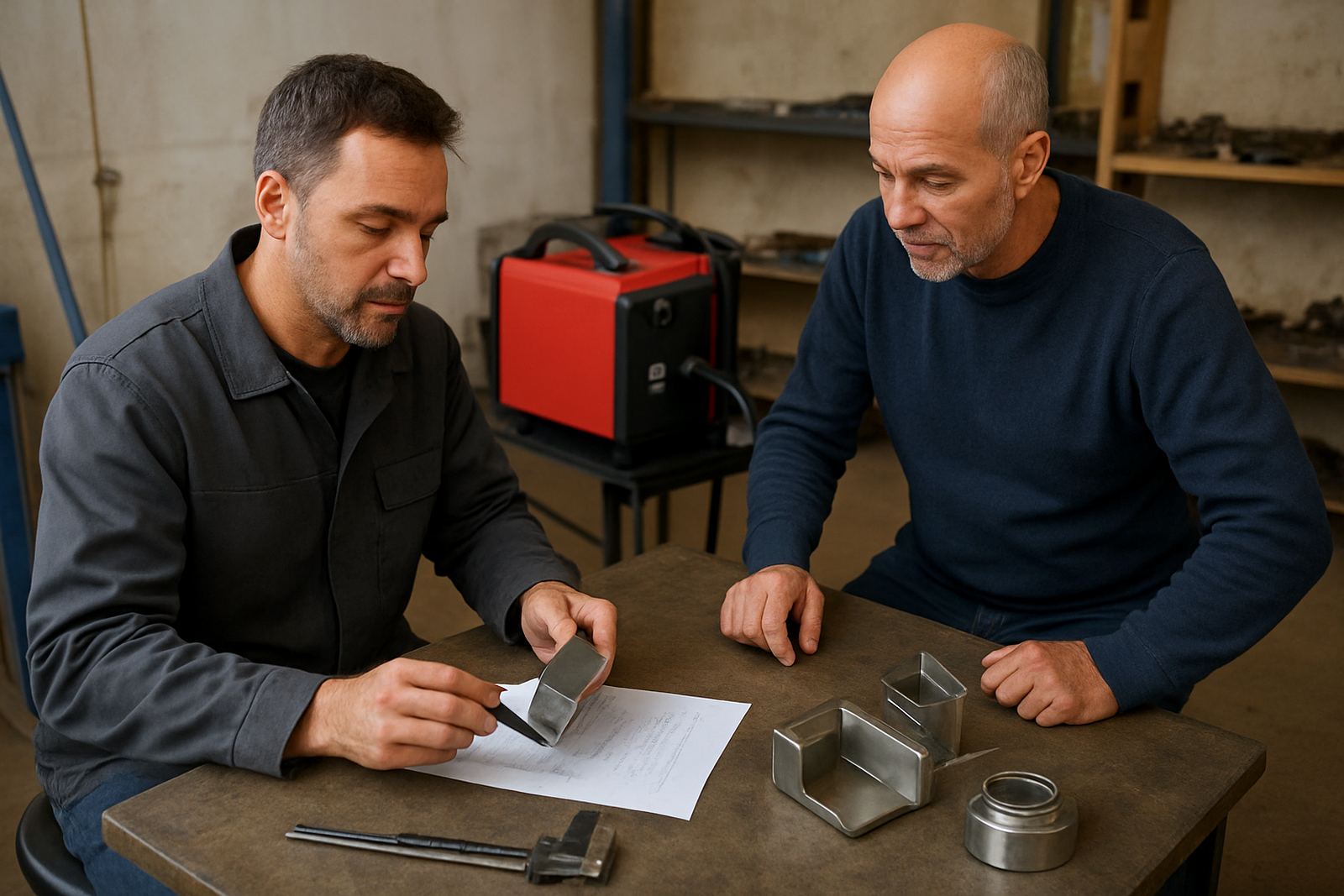
We keep the process practical. You bring sample parts or send a clear job brief, and we confirm the material grade, thickness range, joint type and finish target. If needed, we can set up tests at your fabrication shop in Spartan, Kempton Park, Isando, Jet Park, Edenvale, Germiston, Boksburg or Alberton, and we also travel to clients nationwide for demonstrations and training.
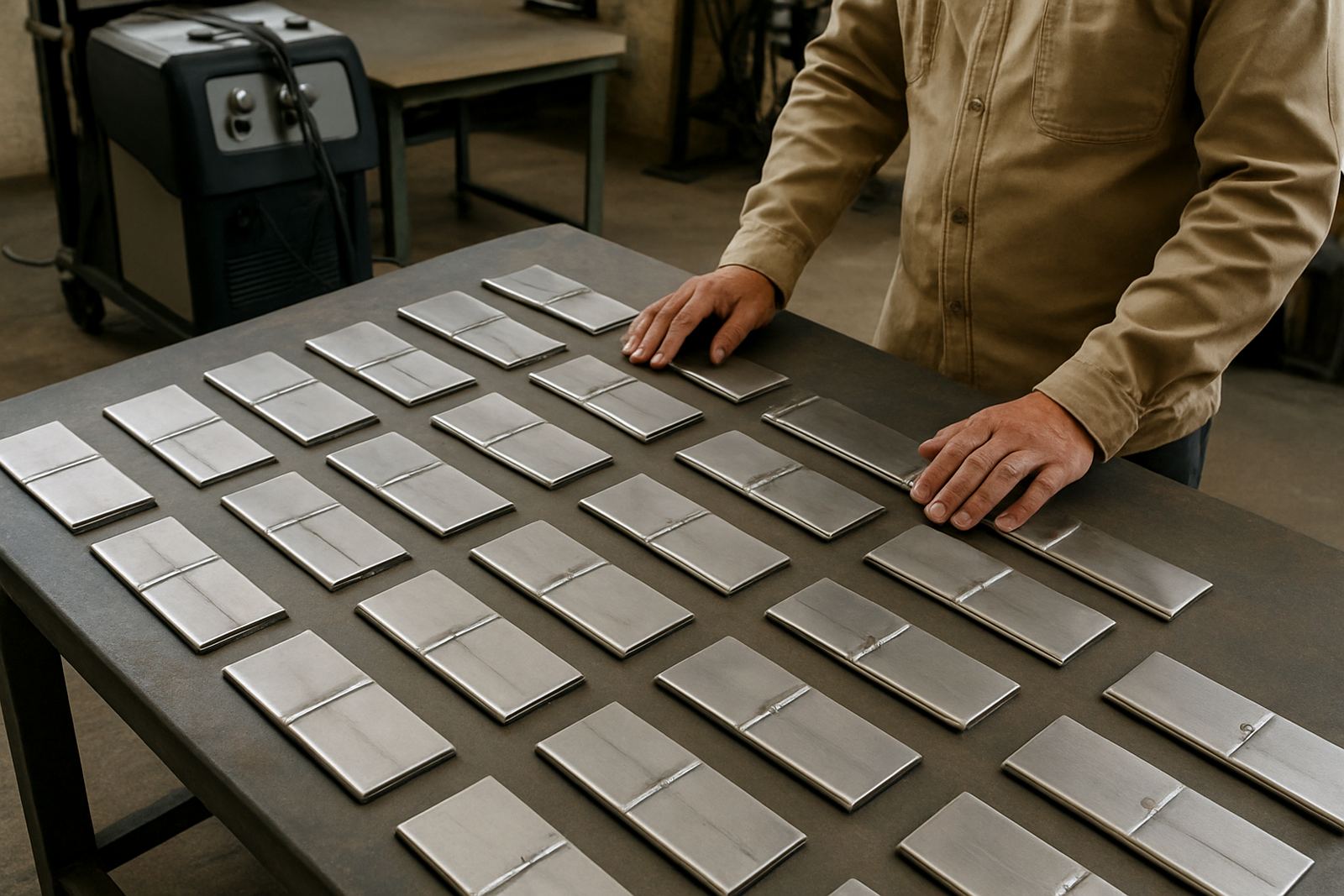
Once the samples are ready, we run a short trial matrix with a few settings and joint variations. We then review bead shape, back side condition where relevant, clean-up effort, and how much grinding or dressing is needed. The point is to give you usable guidance, not just a quick yes or no.
- Step 1: confirm material, thickness and joint detail
- Step 2: set up sample pieces and fixture requirements
- Step 3: run test welds across agreed settings
- Step 4: inspect finish, fit and repeatability
- Step 5: agree the preferred process and next steps
What you receive after the trial
After weld testing, we provide practical feedback on what worked best and where the process can be tightened up. If a joint needs a different edge prep, better clamping, or a change in torch movement, we will say so clearly. You also get guidance on whether the part is better suited to a single-pass finish, a touch-up pass, or a follow-up clean and brush cycle.
For production teams, this is useful when a customer has changed the visible finish spec or when the workshop is trying to reduce rework. We can also compare new operators against your current method so you know where the variation starts. In some cases a small tweak is enough, in other cases the jig or sequence needs changing, which is normal in stainless work.
- Process notes for the preferred weld setup
- Comments on visible finish and clean-up time
- Advice on distortion risk and fit-up sensitivity
- Training points for operators and supervisors
- Recommendations for production rollout
Turnaround times and when to book testing
Typical turnaround depends on sample complexity and how many joint types you want tested. Simple trials can often be completed quickly, while multi-part comparisons, repeat checks, or site-based sessions take longer. If you are under pressure for a quote, a customer approval, or a production start date, tell us upfront so we can plan the test sequence properly.
Bookings are useful before a new job launches, after a spec change, or when you are struggling with inconsistent weld appearance across shifts. We also recommend testing before buying in extra fixtures or committing to a large run. For coastal clients in places like Durban, Richards Bay or Port Elizabeth, testing can help confirm how the finish behaves where humidity and storage conditions affect prep and clean-down. Sometimes a small change saves a whole batch, which matters when time is tight.
Where possible, we align testing with operator training so the people doing the work can see the result first hand. That makes adoption faster and keeps the weld standard more consistent across the workshop.
Pricing approach and maintenance intervals
Pricing depends on the number of samples, the joint variety, whether testing happens on your premises or ours, and whether you need a full written summary or only process guidance. We keep the pricing approach straightforward: first we assess the scope, then we quote for the time, travel and consumables involved. There are no vague extras added later for basic trial work.
For shops running the same stainless jobs regularly, weld testing should not be treated as a once-off event. It is worth repeating when material thickness changes, a new operator takes over, fixtures wear, visible finish expectations tighten, or the machine has had a service. As a working guide, many fabricators schedule a check every 3 to 6 months, or sooner if quality starts drifting. If a machine has sat unused during load-shedding or downtime, a fresh validation is a good idea before the next production batch.
- Re-test after process changes or new material batches
- Re-check after maintenance, transport or long idle periods
- Repeat when finish complaints or rework rates increase
- Book refresher support when operators rotate between shifts
Sample trials for stainless steel fabricators
Laser-Welder works with stainless steel fabricators, fitters and workshop teams that need practical results, not theory. Our base in Spartan, Kempton Park gives us quick access across Ekurhuleni, and our team travels to fabrication shops nationwide for demonstrations, weld testing and operator training. The team is led by Wynand Oosthuizen, with support from Tshegofatso Ramaboa, Gert Wessels, Ayanda Mthembu, Reuben Daniels and Sindisiwe Makhado.
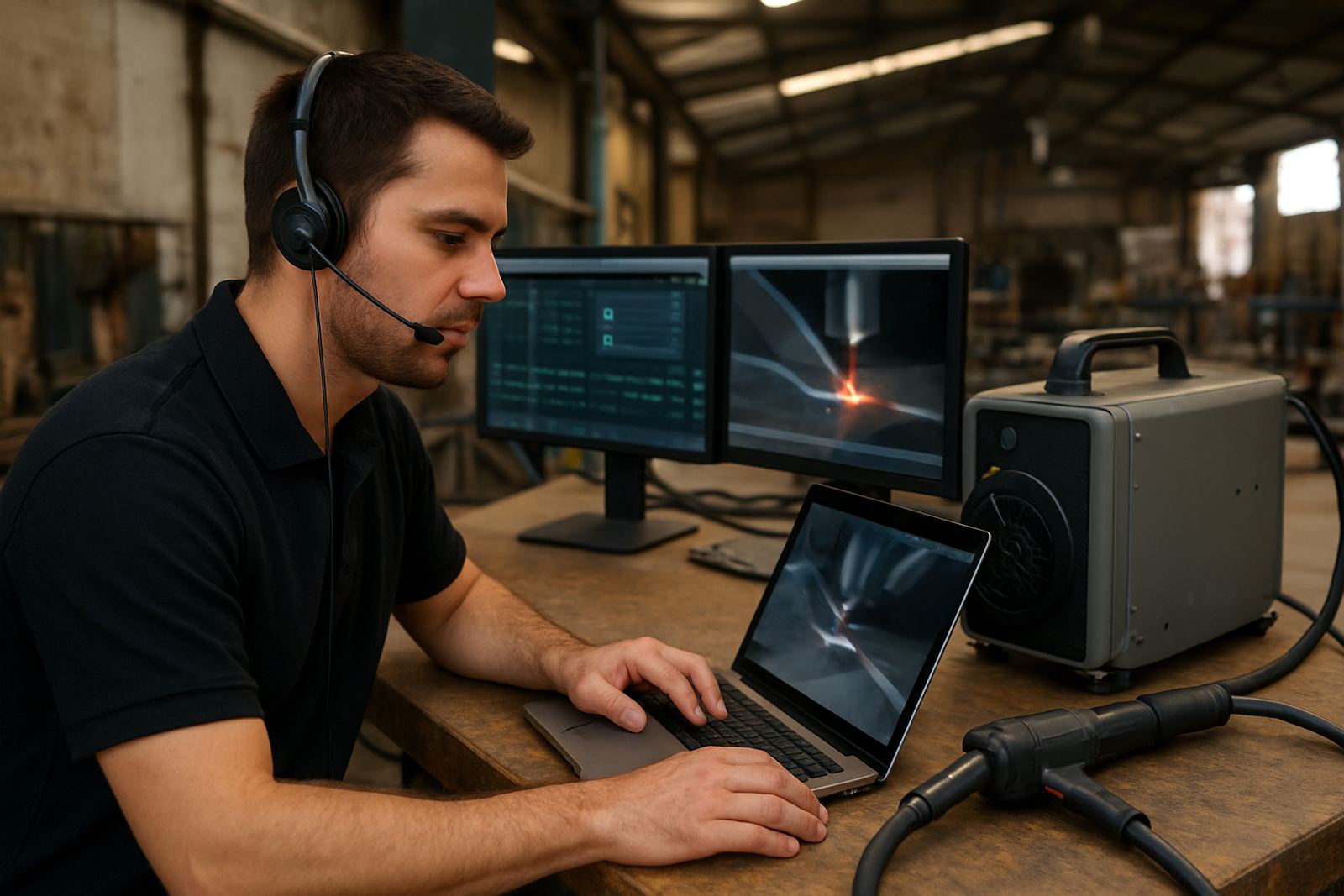
Because we deal with commissioning, process optimisation, breakdown response, spares, consumables and remote help as well, we can look at the whole setup around the test. That includes power supply stability, maintenance intervals, operator handling and how the machine fits into your daily output. If you need the weld to look right, hold right and be repeatable from one shift to the next, that is the standard we work to.
- Hands-on support from first sample to production rollout
- National travel for shop-floor testing and training
- Clear advice for small workshops and larger manufacturing plants
- Practical guidance on repeatability, finish and uptime
Key facts
| Weld process | Handheld fibre laser welding for stainless steel |
|---|---|
| Material range | Thin gauge sheet through heavier fabricated sections |
| Joint types | Butt, lap, fillet, corner and mixed fit-ups |
| Test outputs | Finish notes, process settings and operator guidance |
| Site coverage | Spartan, Kempton Park and nationwide on-site support |
| Typical review cycle | Every 3 to 6 months, or after process changes |