Why the first few days matter more than the first few weeks
From the first pass, handheld fibre laser welding feels different from MIG or TIG. The torch is lighter, the travel speed is higher, and the heat goes into a narrower zone. That means the operator is not only learning a new process, but also a new rhythm for moving, aiming and holding distance. In most workshops, the quickest progress happens in the first three to five days, when the welder stops overthinking every bead and starts trusting the machine settings.
The learning curve is usually shorter for fabricators who already understand stainless steel prep, fit-up and weld appearance. They already know why clean edges matter, why gap control matters, and why contamination causes problems. What changes is the method. Instead of spending time correcting distortion or cleaning up heavy welds, the operator learns to control speed, angle and overlap with much tighter tolerance.
What skilled welders pick up quickly, and what still needs coaching
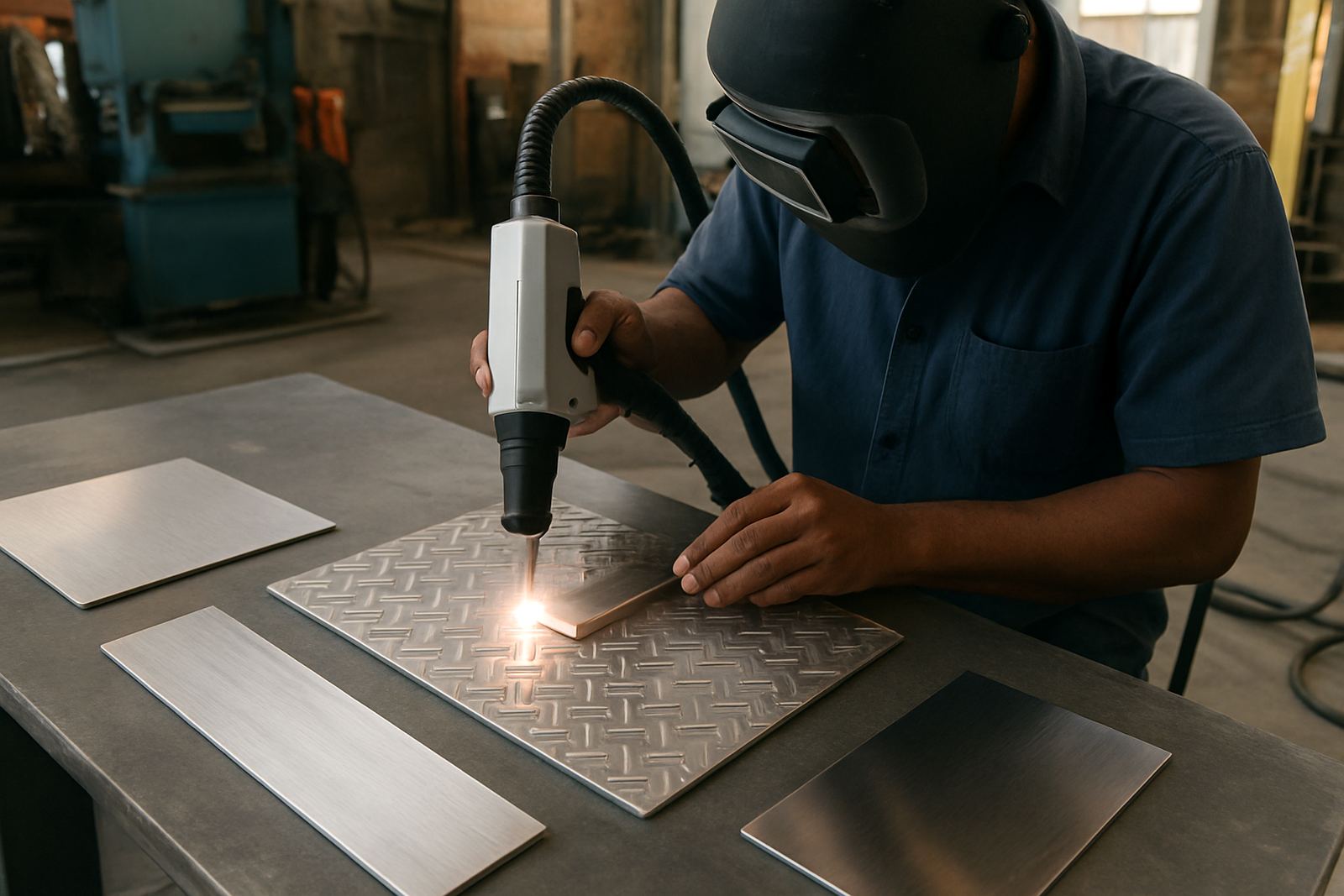
Many experienced stainless steel welders adapt faster than expected because they already understand how heat moves through thin sheet, tube and box section. They also know when a joint is ready and when it needs more prep. Still, handheld laser welding is not a plug-and-play skill. Even good operators need guidance on parameter selection, travel speed and seam tracking.
In practice, most learners pick up these basics early:
- How to keep the nozzle distance consistent
- How to move at a steady pace without pausing mid seam
- How to read the bead shape and adjust on the next run
- How to avoid overheating corners, laps and start-stop points
- How to prepare stainless surfaces so the weld stays clean
What takes longer is judgement. Knowing when to slow down, when to change technique, and when a joint needs a different setup usually comes after a few test pieces and proper feedback. That is where most workshops save time if support is practical and hands-on.
Training that shortens the curve instead of stretching it out
Operators settle faster when training is tied to the actual parts they make every day. A general demo has value, but a workshop learns more when the training includes its own sheet thicknesses, joint types and production pace. A welder making stainless kitchen equipment in Kempton Park will need different guidance from a team working on railings, tanks or architectural frames in Germiston or Boksburg.
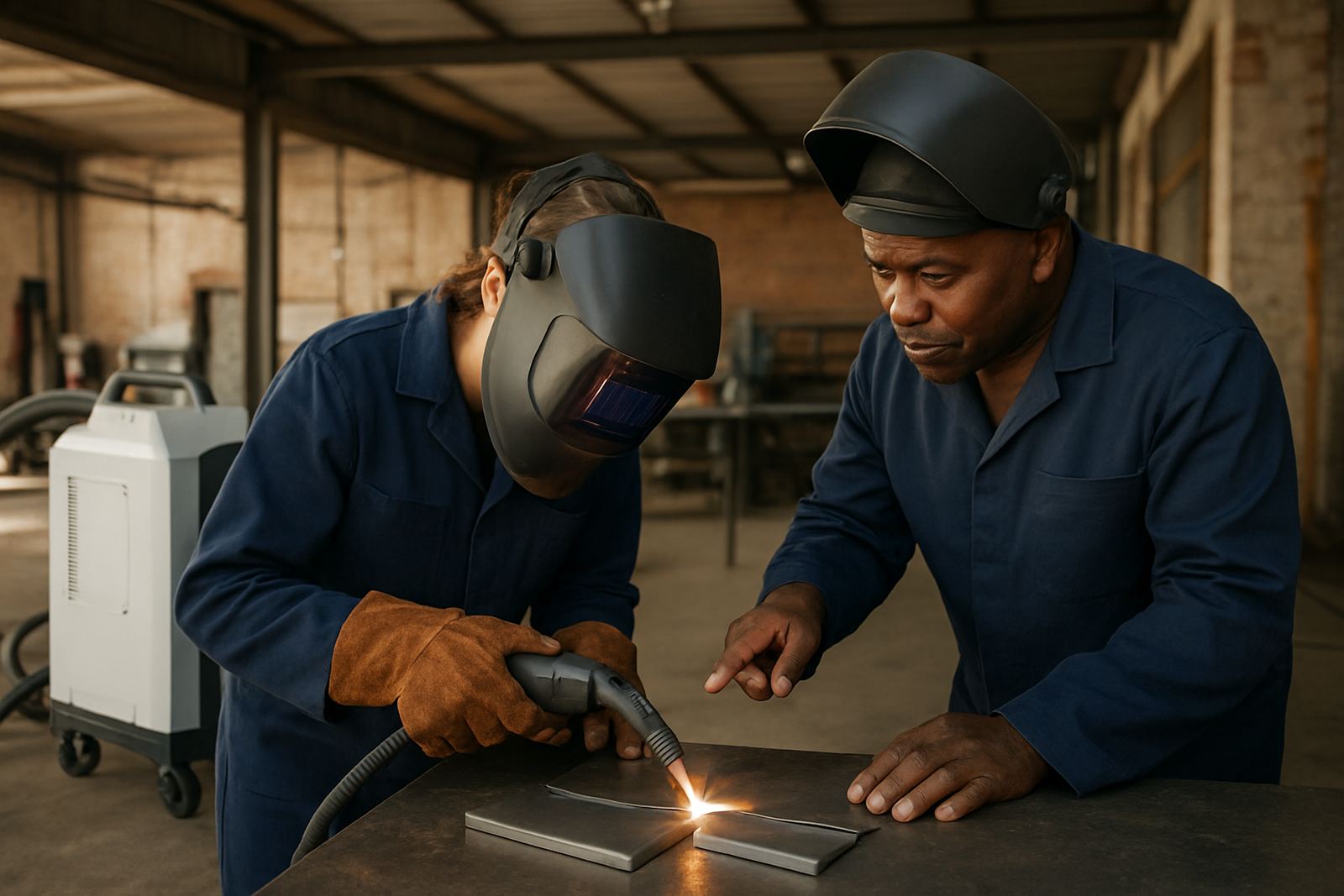
The strongest learning support usually includes a mix of one-on-one coaching and shop-floor repetition. That should cover the basic setup, a few controlled test welds, then live production runs while someone watches the first changes in bead quality. If a team is under pressure to keep production moving, refresher training can be just as useful as the first session.
- Start with sample joints before going straight into production
- Use the same material grade and thickness the shop runs daily
- Document the settings that work for each job type
- Let operators compare a good weld to an average one, not just a pass or fail result
- Build in short follow-up sessions after the first week
Why stainless steel fabricators often settle faster than they expect
Stainless steel is one of the better materials for handheld laser welding because the process gives a neat finish with less spatter and less post weld cleanup. That is a real advantage for workshops chasing a cleaner product and shorter turnaround times. Once the operator sees how quickly a seam can be completed, confidence usually rises quickly, especially on repeat work.
The best results come when the workshop is already organised. Good clamping, clean parts and clear work instructions reduce mistakes. If the operator is not chasing a poorly aligned joint or stopping to grind out contamination, the process becomes much easier to repeat. In that sense, the learning curve is not only about the welder. It is also about the workshop around it.
At a fabrication shop in Spartan, a team moving from TIG on thin stainless panels needed only a few days before their first operator was producing acceptable test welds. The second operator took a little longer, mainly because he was rushing the travel speed. Once the trainer adjusted his stance and showed him how to keep a steady line, the improvement was obvious. By the end of the week, the shop had a repeatable method for common joints and less rework on cosmetic parts.
The support that helps most after commissioning
Commissioning is only the start. Most workshops need support after the machine is running because real production always exposes small issues that do not show up in a demo. That may be a nozzle choice, a cleaning step, a setup habit, or simply an operator who is trying to weld too fast.
Helpful post-start support usually includes remote help, process optimisation and breakdown response if something interrupts the schedule. Preventive maintenance also matters, especially in workshops where dust, heat and long shifts can affect equipment condition. In areas like Spartan, Kempton Park and Isando, where many fabrication shops run hard and often work around load-shedding, it helps to have a service plan that keeps the machine ready instead of waiting for a problem to appear.
- Remote help for quick setting checks
- Preventive maintenance before faults affect output
- Weld testing when a new job or material grade comes in
- Spares supply and consumables support for steady running
- Refresher training when operators change shifts or teams
How managers can speed up operator confidence
Managers play a bigger role in the learning curve than many realise. If the workshop expects full speed and perfect beads on day one, operators get cautious and progress slows. If the team is given clear targets, proper sample work and enough time to learn the machine, confidence improves faster.
A practical rollout helps more than a rushed handover. Start with one or two operators, choose a standard job, then use those results to train the next person. Keep a simple log of settings, material thickness, travel speed and finish quality. That makes it easier to repeat good results and harder for small mistakes to keep coming back. It also helps when a supervisor needs to compare output across shifts.
For smaller workshops, this approach avoids wasting stainless material during the first round of testing. For larger plants, it helps standardise output across multiple operators and production lines. Either way, the machine becomes part of the workflow sooner when the team has clear support and no guesswork.
What a steady rollout looks like in Ekurhuleni
In Ekurhuleni, many fabricators work to tight deadlines, short delivery windows and strict client specs. That is why handheld laser welding is often judged not only on quality, but on how quickly a workshop can put it into daily use. A good rollout should include shop demonstrations, operator training, process optimisation and follow-up once production starts.
When a team in Kempton Park, Germiston or Alberton gets hands-on training in the same kind of stainless steel work they do every day, the learning curve becomes manageable. The first welds may be tentative, but after a few test runs and one or two corrections, the process starts to feel normal. The key is steady coaching, not pressure.
That is also why local support matters. If a shop needs commissiong, test welds, spares or a quick refresher, it should not have to stop production for long. With the right guidance, most welders settle into handheld laser welding sooner than they expect, and the shop starts seeing cleaner joints and less rework within a short period.