Start With the Work, Not the Machine
Before a welder is moved into place, map how jobs actually pass through the shop. Where does plate arrive, where is material cut, where are parts cleaned, and where does final finishing happen? In many stainless steel workshops, the problem is not the machine itself but the short hops between prep, welding and inspection. Every extra metre walked with a part in hand costs time, and it adds risk when edges are sharp or the job is awkwardly shaped.
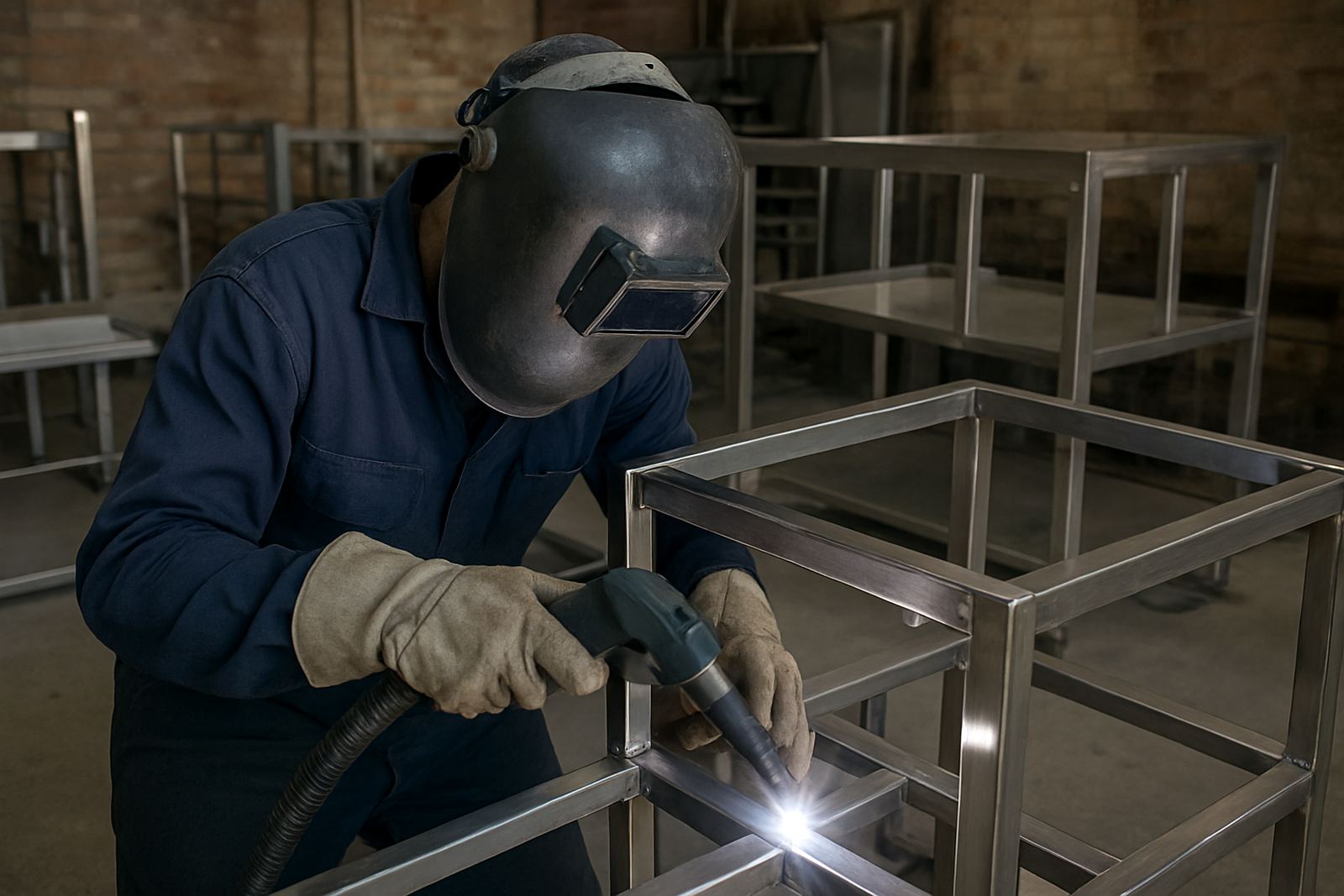
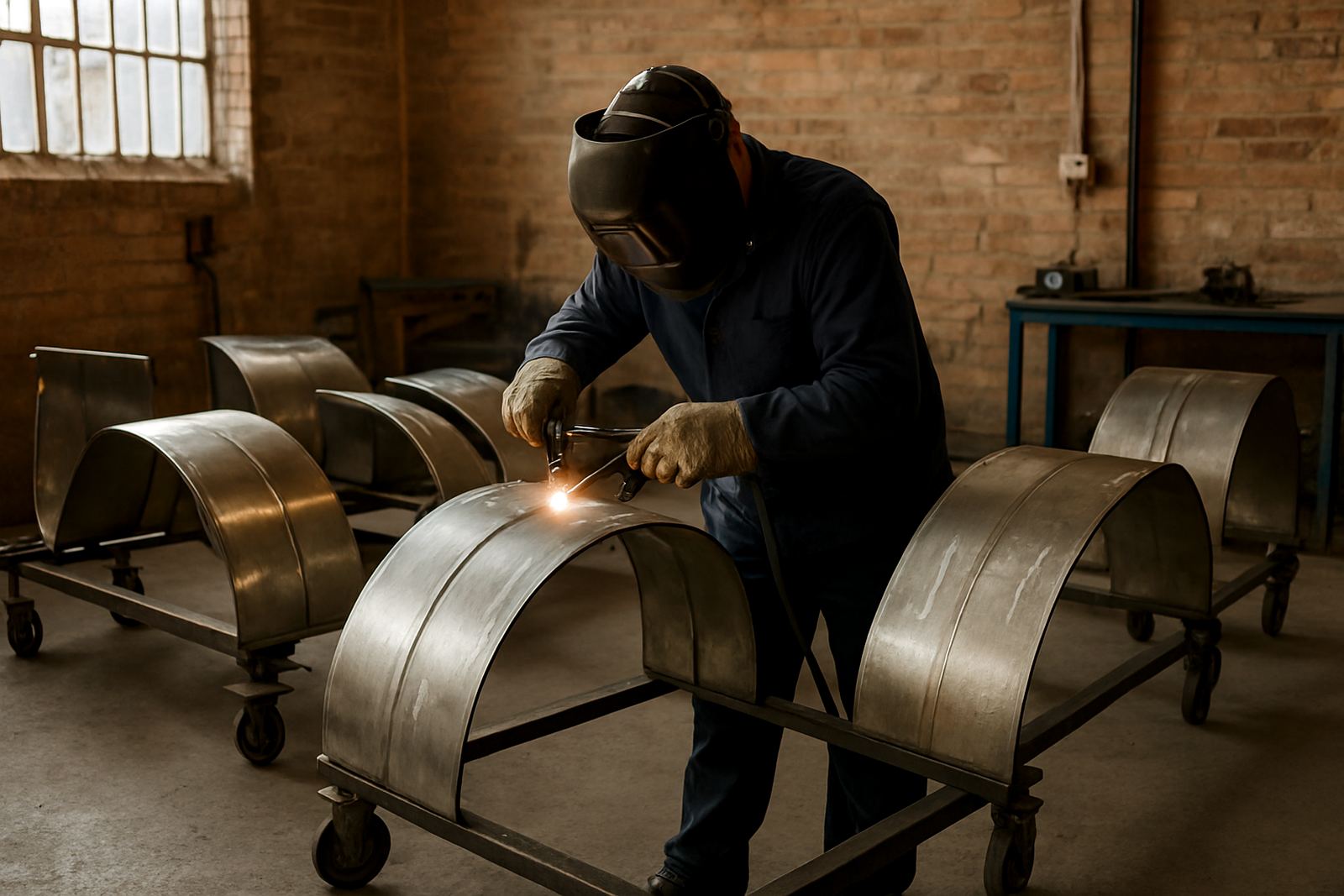
A handheld fibre laser welder should sit close to the main fabrication stream, but not so close that it blocks movement. Leave enough room for an operator to load parts, reposition workpieces and keep leads out of the way. If the shop handles tanks, guards, kitchen fittings or ducting, think about the largest item that regularly comes through the door, not just the small jobs.
- Place the machine near the most common stainless steel work area
- Keep a clear path for parts carts, trolleys and hand movement
- Allow space for clamping, inspection and part rotation
- Avoid corners where finished work has to be carried back on itself
Leave Space for Safe Movement and Clean Cables
In a busy workshop, the smallest trip hazard can stop production for the whole morning. Fibre laser systems need a neat layout so the operator can move freely without stepping over leads, hoses or scrap offcuts. This matters even more in shops that run with mixed teams, visitors or contract labour, because no one should have to guess where a cable lies under a pallet.
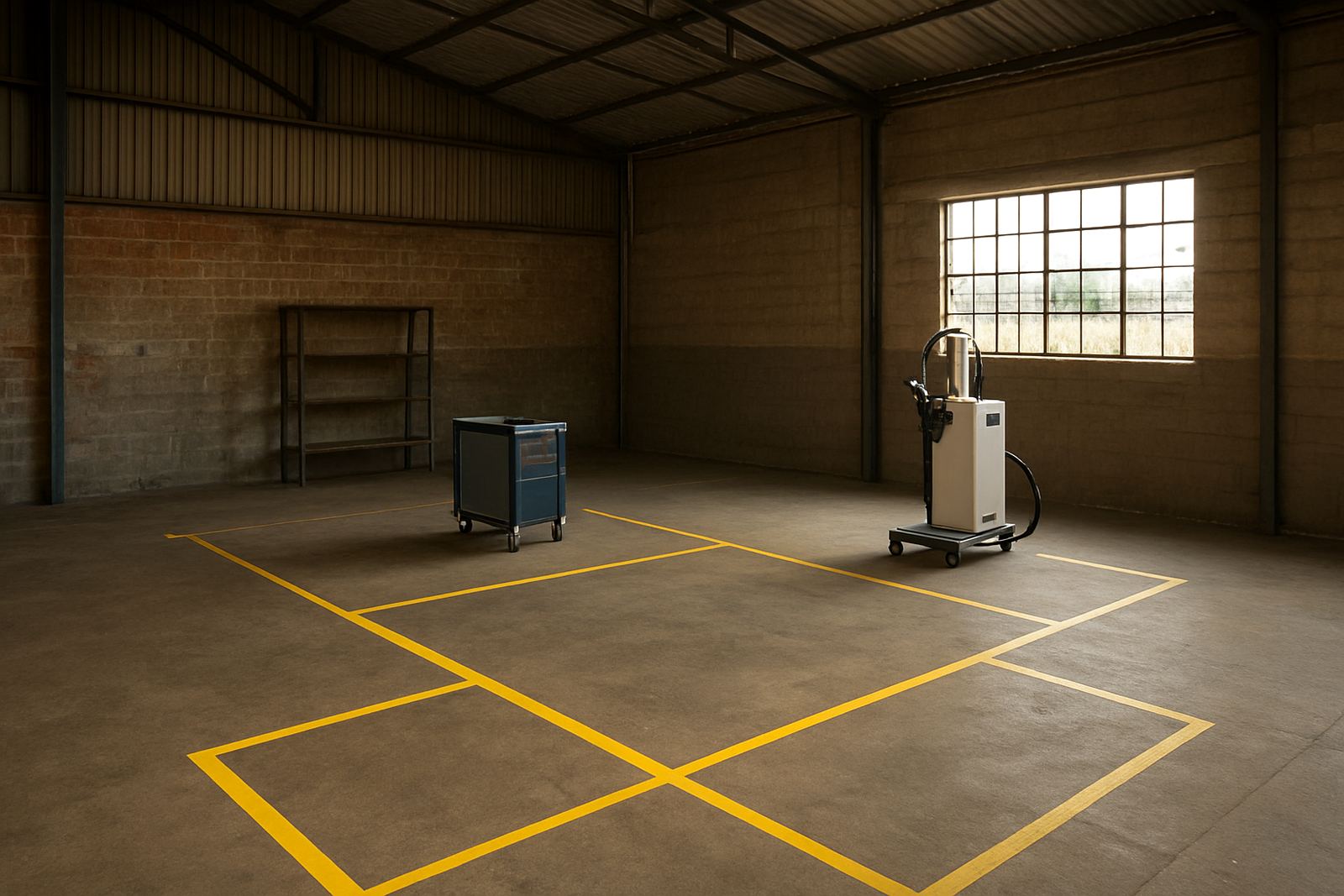
Keep the working bay flat, swept and dry. If the floor collects grinding dust, oil or rain blown in through open roller doors, mark the machine zone clearly and clean it more often. On sites in Spartan and Isando, where forklifts may be moving in and out all day, it helps to separate pedestrian routes from machine handling routes. A clear bay reduces bumps, snagging and unnecessary strain on the operator.
- Run leads along walls or through overhead supports where possible
- Mark walkways with visible floor tape or paint
- Keep scrap bins, argon cylinders and cleaning materials off the main path
- Check that the operator can reach the workpiece from both sides if needed
Plan Around Power, Ventilation and Heat
South African workshops have to think about load-shedding, voltage dips and the heat that builds up in a steel building by midday. A laser welding bay should be placed where power supply and cooling are practical, with enough room for safe cable runs and stable connections. If your site uses a generator or backup supply, the machine position should make that changeover as simple as possible. Long, messy runs across the shop floor are asking for trouble.
Ventilation also matters. Although handheld fibre laser welders are cleaner than many older welding methods, the bay still needs good air movement for fumes and general comfort. In hot months, especially on east Rand sites with corrugated roofs, equipment placed near direct sun can make the operator tire faster. A shaded, well-ventilated spot near extraction points is better than a cramped corner with stagnant air.
- Keep the machine close to a stable electrical point
- Allow for backup power access if load-shedding interrupts production
- Position the bay where extraction or ventilation can work properly
- Do not trap the operator between hot equipment and a wall
Make Room for Training and First Pass Setup
Good layout is not only about production, it also supports training. A handheld fibre laser welder is easier to introduce when the operator has elbow room, clear visibility and space to stand with the right posture. If the bay is too tight, training takes longer and the first weeks on the job are more frustrating than they need to be. That is why machine placement should suit both experienced welders and staff still learning the process.
At a fabrication shop in Kempton Park, the best setup is often a dedicated bay near the main stainless steel line, with a small zone for test pieces, settings checks and quick adjustments. That way the team can run weld tests without interrupting other work. Reuben Daniels often sees better results when the shop leaves a little extra room beside the machine for sample joints, clamps and inspection tools, rather than packing everything into one corner.
- Set aside space for sample joints and test coupons
- Keep the instruction area free from unrelated tools and scrap
- Make sure the operator can see the weld line clearly
- Leave space for a second person during setup or refresher training
Choose a Layout That Fits Stainless Steel Jobs
Different stainless steel products need different handling. A shop making food-grade components will want a cleaner, more controlled bay than one doing general fabrication. A workshop focused on sheet-metal assemblies may need benches close to the welder, while a shop building larger frames needs wider access for movement and turning. There is no single perfect layout, but there is always a better one than putting the machine wherever there is a spare plug.
In practice, the layout should follow the type of work that brings in the most turnover. If most jobs are short-run production items, keep the welder close to cutting and finishing. If the shop handles larger fabrications, create a central working lane with enough turning space for long sections. It sounds simple, but shops that get this right spend less time repositioning parts and more time welding them.
- Match the bay size to the biggest regular job, not only the smallest
- Keep clean jobs away from grinding dust and heavy traffic
- Use fixed spots for clamps, jigs and hand tools
- Review the layout when the product mix changes
Review the Bay After the First Few Weeks
Even a sensible plan may need tuning once the team starts using the machine every day. Watch where operators pause, where parts stack up and where cables or hoses collect dust. Small adjustments can improve the whole flow. Sometimes the fix is as simple as moving a trolley, changing the direction a bench faces, or clearing a path to the inspection table. Those small changes add up fast.
Ayanda Mthembu often reminds customers that a workshop should be reviewed after the machine has settled in, not only on the day it arrives. Preventive maintenance, refresher training and process optimisation all work better when the physical space supports the process. A tidy bay also makes breakdown response quicker because the technician can get in, diagnose the issue and get out without moving half the shop.
- Check the bay after the first month of use
- Ask operators where they lose time or bump into obstacles
- Adjust storage so the most used items stay within easy reach
- Keep the area serviceable for maintenance and repair access