Why thin stainless moves so easily under heat
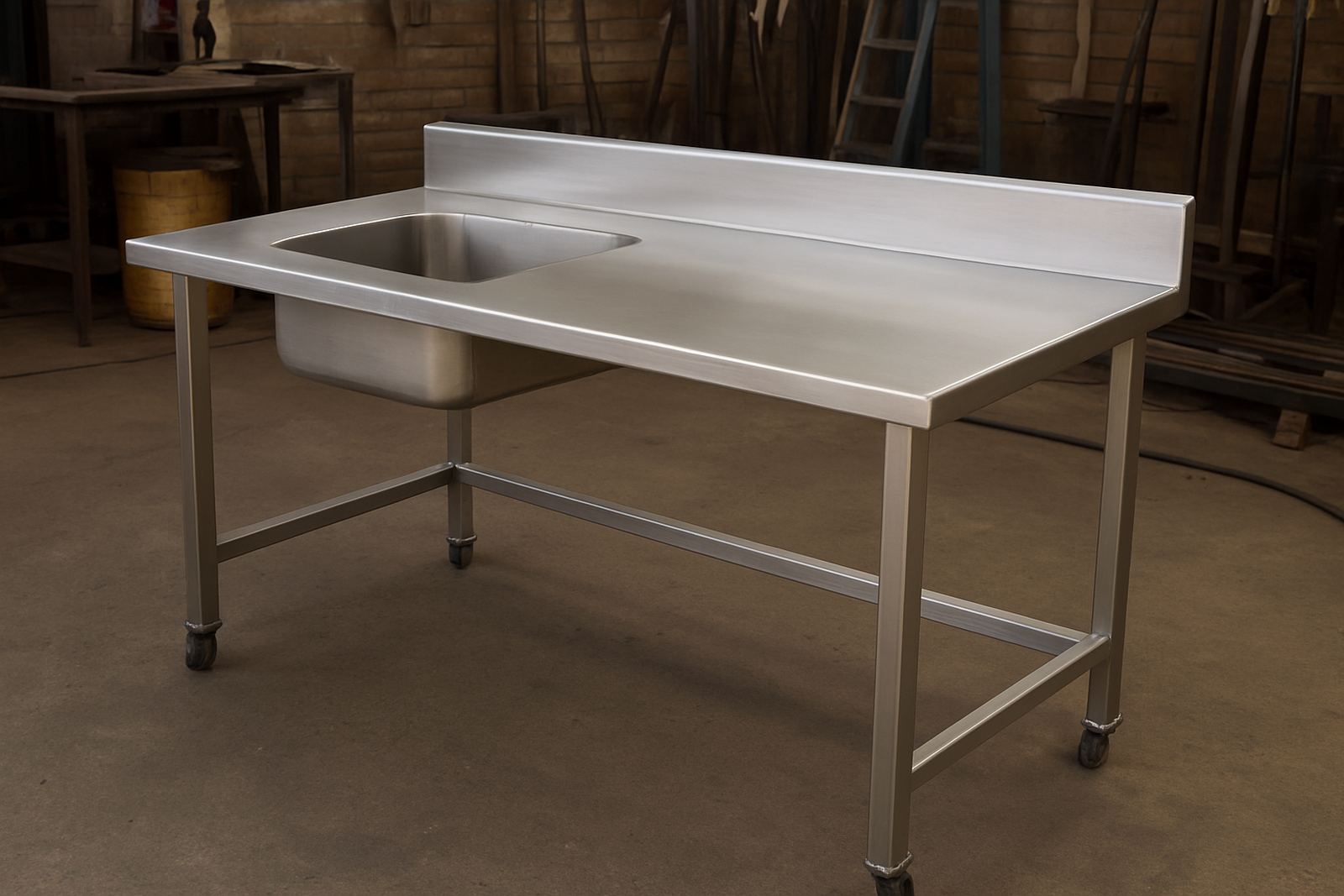
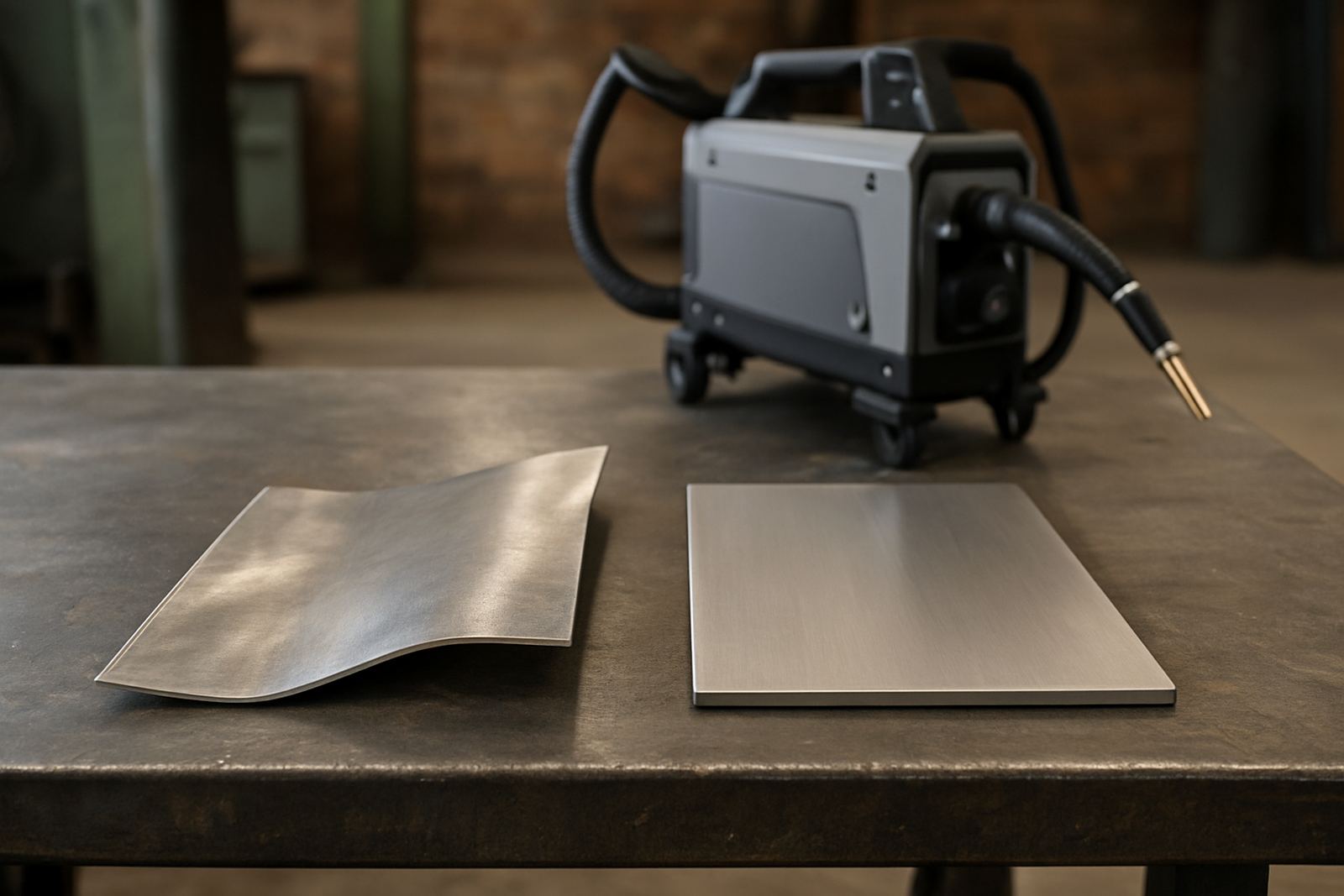
Stainless steel holds heat longer than many fabricators expect, especially on sheet from 0.8 mm to 2.0 mm. Once a joint starts heating unevenly, the metal expands, then contracts as it cools, and that pull is what bows panels, opens up corners and leaves twisted seams. On visible work such as kitchen cladding, lift doors, splashbacks and hygiene panels, even a small amount of movement can show up straight away.
In Spartan and the wider Ekurhuleni area, many shops are balancing small batches, urgent repair work and production runs in the same week. That means the welding method has to suit real workshop conditions, not just a test piece on a clean bench. A hand held fibre laser welder helps because it puts heat where you need it and does not pour extra heat into the surrounding sheet. That lower input can make a big difference when the job has long seams, tight tolerances or polished surfaces.
Distortion is not only about the weld itself. Clamp pressure, joint fit up, tack placement and travel speed all play a part. If one side of a panel is held harder than the other, or if tacks are too hot and too far apart, the sheet will move before the main weld even starts. The cleaner the setup, the less work the welder has to do later.
Set up the job so the sheet stays put
Good control starts before the trigger is pulled. For stainless jobs that must stay flat, spend time on fit up and support. Use a level bench, proper clamping and backing where needed. If the panel is long, support it at several points so the heat does not sag the centre. A simple change in support can save hours of straightening later, and yes it saves consumables too.
- Clamp from the centre outwards so the sheet is not pulled into a curve.
- Use copper or other suitable backing on open joints where access allows.
- Keep tack welds small, even and spaced for the job size.
- Check alignment after every few tacks, not only at the end.
- Clean the joint fully so contamination does not force extra passes.
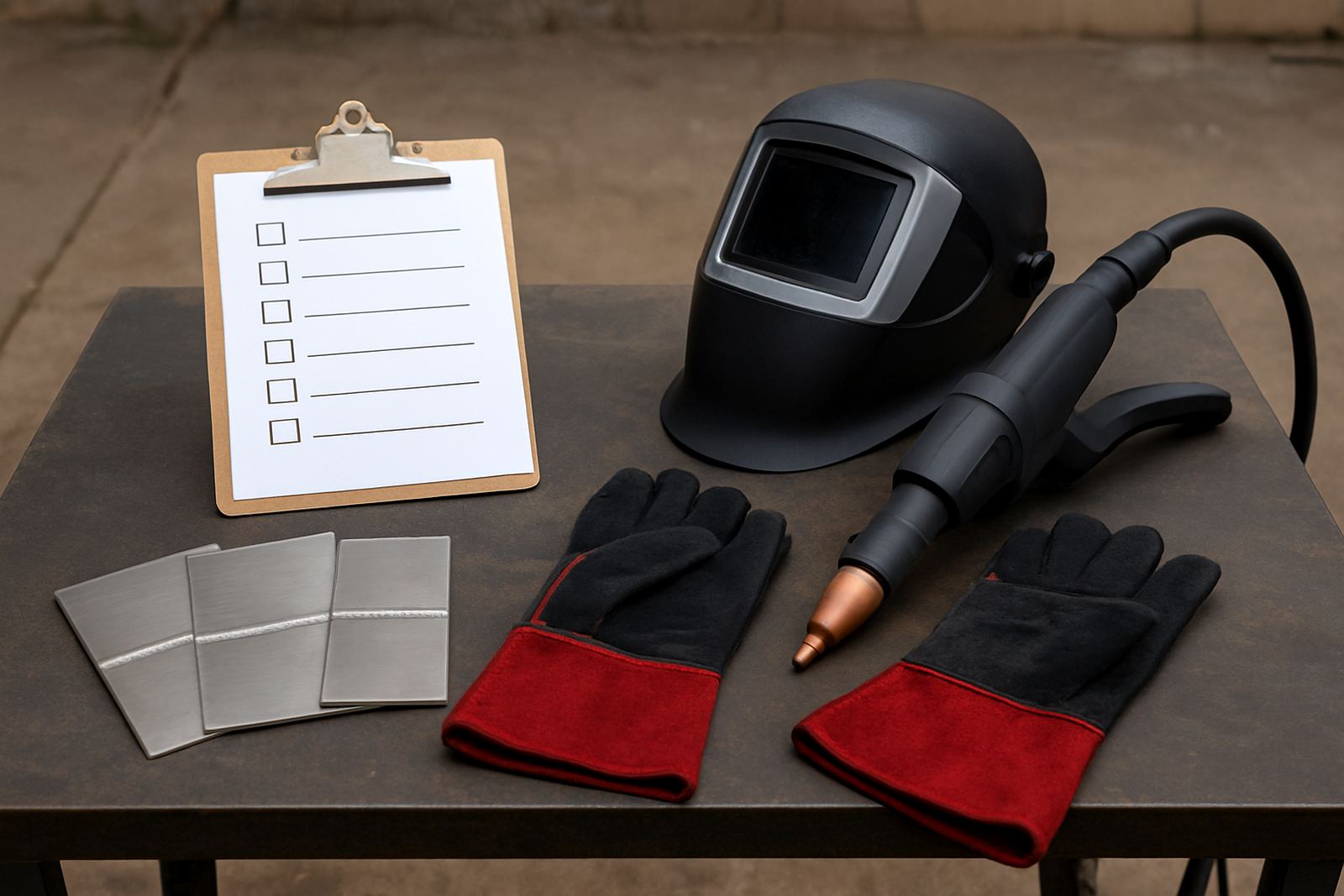
For stainless fabricators in Kempton Park, Isando and Jet Park, one practical habit is to prep the whole set-up before switching on the machine. That includes checking the shielding gas supply, lens cleanliness, cable routing and the workpiece earth point. If the operator has to stop halfway through to fix a loose clamp or a dirty edge, the part cools unevenly and distortion risk goes up.
Lower heat input without losing weld quality
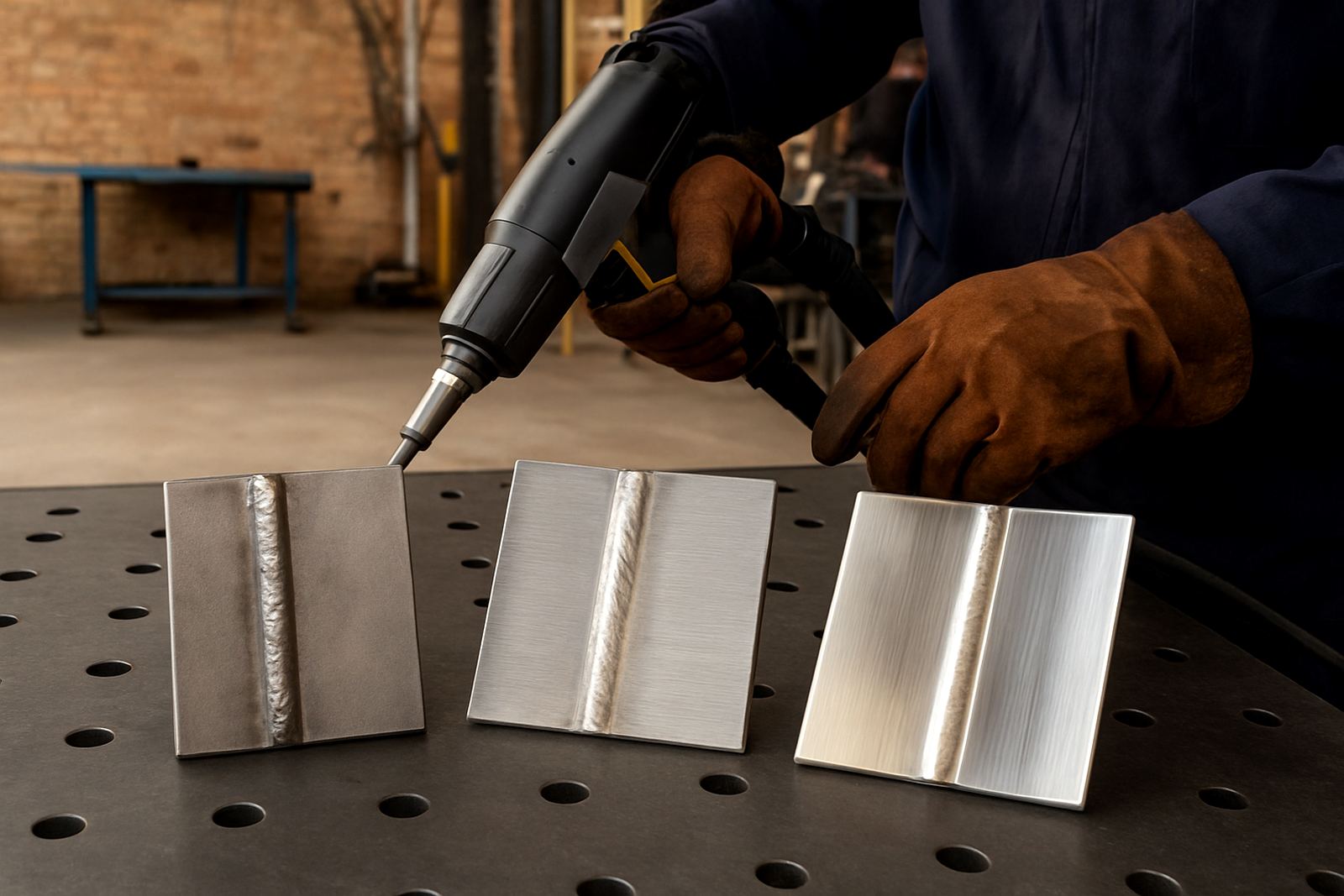
The aim is not just to weld cooler, it is to weld smarter. A fibre laser welder allows a narrow, focused heat zone, which is useful on thin stainless and on visible work where the weld must look neat after finishing. The operator can often move faster, use less filler and avoid the wide heat spread that comes from slower methods. That smaller heat affected zone helps the panel stay closer to its original shape.
Heat input is influenced by travel speed, beam focus, power setting and joint preparation. If the gap is too open, the operator will usually slow down or add more filler, and both can increase movement. A tight fit up reduces the need for extra heat. When the edge prep is consistent, the weld can be shorter, cleaner and easier to control.
It also helps to weld in a sequence that balances heat across the work. On a frame or panel, do not run one long continuous seam if the job can be split into shorter sections. Move around the piece so one area is not overheated while another stays cold. The idea is simple: spread the thermal load instead of putting it into one corner at a time.
- Use the lowest power that still gives full fusion for the material thickness.
- Keep travel speed consistent from start to finish.
- Break long seams into planned sections where the design allows it.
- Let the part cool in a controlled way before handling or dressing.
- Avoid reworking the same joint more than necessary.
Training operators to spot movement early
Even with the right machine, operator skill still matters. Welders need to see the first signs of movement before the part is ruined. A corner opening by a millimetre, a sheen change near the seam or a slight lift on a long edge are all warning signs. Once the movement starts, the best answer is usually to stop, let the part settle and check the setup again rather than pushing through.
For fabrication shops around Ekurhuleni, training is often most useful on the real work the team already makes. A shop demo at Spartan, Kempton Park or on site at a fabrication floor in Boksburg or Alberton gives the team a proper chance to test settings on their own material. That makes the lesson practical instead of theoretical. Operators can see how much faster a seam can be completed and how the panel reacts when the heat is controlled properly.
Refresher training is also valuable when new staff join or when production shifts to a different product range. A weld that looks fine on a sample can still pull a panel out of square if the wrong sequence is used. Training helps the team recognise when to change clamps, when to shorten weld runs and when to move to a different process for a tricky joint.
A local example from a busy stainless shop
A stainless fabricator in the Ekurhuleni area was producing slim cabinet fronts and machine covers for a food processing client. The parts were clean and the welds were sound, but several panels were bowing after welding, which meant more time on straightening and rework before final finishing. The issue was not the material quality. It was the amount of heat being put into thin sections with long seams.
After a shop demonstration and operator training, the team changed the welding sequence, reduced unnecessary pass length and used a more controlled, lower heat process on the visible joints. The result was less movement, faster turnaround and fewer parts sent back for correction. The shop also found that the finished surface needed less grinding, so the panels kept a better appearance. The foreman said the biggest gain was not just the time saved, but the fact that the next batch looked the same as the first one.
That kind of result matters in municipal work, shopfitting and stainless equipment fabrication where customers expect straight lines and repeatable fit. When a panel is off by only a few millimetres, doors can bind, seals can fail and installation takes longer on site. Lower heat input helps avoid those knock on problems.
Keep production steady when power and schedules are tight
South African workshops also have to work around load-shedding, tight delivery dates and mixed workloads. A process that reduces rework gives the shop more control over production time. If the first weld is clean and the part stays flat, there is less need for extra grinding, reset work or repeat clamping. That means fewer interruptions when the power comes back on and the team needs to finish a batch fast.
Preventive maintenance plays a part here too. Dirty optics, poor gas delivery or worn consumables can all affect bead quality and force the operator to use more heat than necessary. A planned service routine keeps output more consistent, while spares support and remote help can reduce downtime when something does go wrong. For shops with a busy calendar, that stability is worth as much as speed.
- Book regular maintenance before peak production periods.
- Keep spare consumables on hand for common stainless jobs.
- Test settings on offcuts before starting the full batch.
- Record the best settings for each thickness and joint type.
- Use the same setup method across shifts so results stay repeatable.
The practical route to flatter stainless work
Reducing weld distortion is not about chasing perfection. It is about controlling heat, setting up the job properly and using a process that suits thin stainless. When a workshop keeps the joint tight, the travel speed steady and the heat input low, the metal behaves better and the finishing work becomes simpler. That is good for quality, good for turnaround and good for the bottom line.
Laser-Welder works with stainless fabricators across Spartan, Kempton Park and nationwide, with demos, commissioning, process optimisation and training carried out at fabrication shops. If your team is dealing with warped panels, twisted edges or too much rework on visible stainless, the right setup can make a noticeable difference. Small changes in heat and sequence often bring the biggest gain.