
Why a kept sample beats memory on busy shop floors
Most fabrication shops can spot a good weld, but memory fades fast once production gets busy. When a job moves from one operator to another, or from day shift to night shift, small changes in torch angle, travel speed, wire feed, or heat input can show up in the finish. A sample weld record gives the team something physical to compare against, instead of relying on a quick note written on a scrap of cardboard.
For stainless steel work, that matters even more. A clean bead on 1.5 mm material can look very different from the same joint on 3 mm sheet, and coastal humidity in places like Durban or Richards Bay can change how a surface behaves during handling and storage. If the sample is saved properly, the workshop can come back to it when a repeat order lands, or when a customer asks for the same finish on a new batch.
In practice, a sample record helps with three things: repeatability, troubleshooting, and operator confidence. It is easier to train a new welder when they can see the target result, not just hear about it. And when a weld starts looking off, the sample tells you whether the problem is settings, prep, cleaning, or material variation.
What to record every time a sample is made
A sample only helps if the notes around it are complete. The aim is not paperwork for its own sake, it is to capture the details that affect the weld. Keep the record simple enough that operators will actually use it, but detailed enough to be useful six months later.
- Material grade and thickness, for example stainless steel sheet, tube or angle
- Joint type, such as butt, lap, fillet or corner weld
- Machine settings used during the trial
- Travel speed, torch angle and filler or no filler
- Shielding gas and nozzle setup where relevant
- Surface preparation method, including cleaning and clamping
- Operator name, date, job number and customer reference
- Visual result, including bead width, colour and any distortion
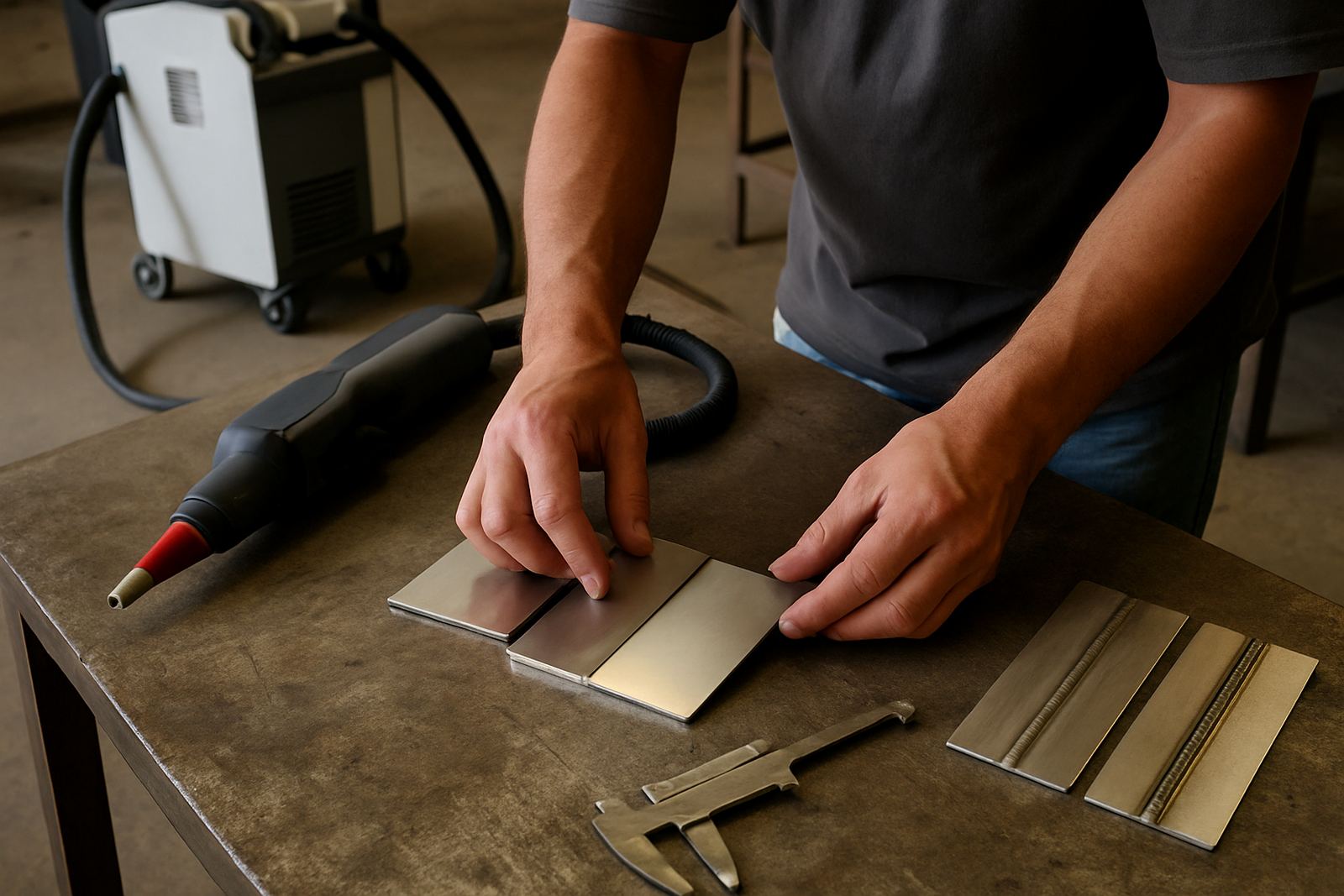
A photo is useful too, but a photo on its own is not enough. Lighting changes, camera quality changes and the angle can be misleading. A small written note next to the physical sample is still the best way to keep the record honest and useful.
How to store samples so they stay useful over time
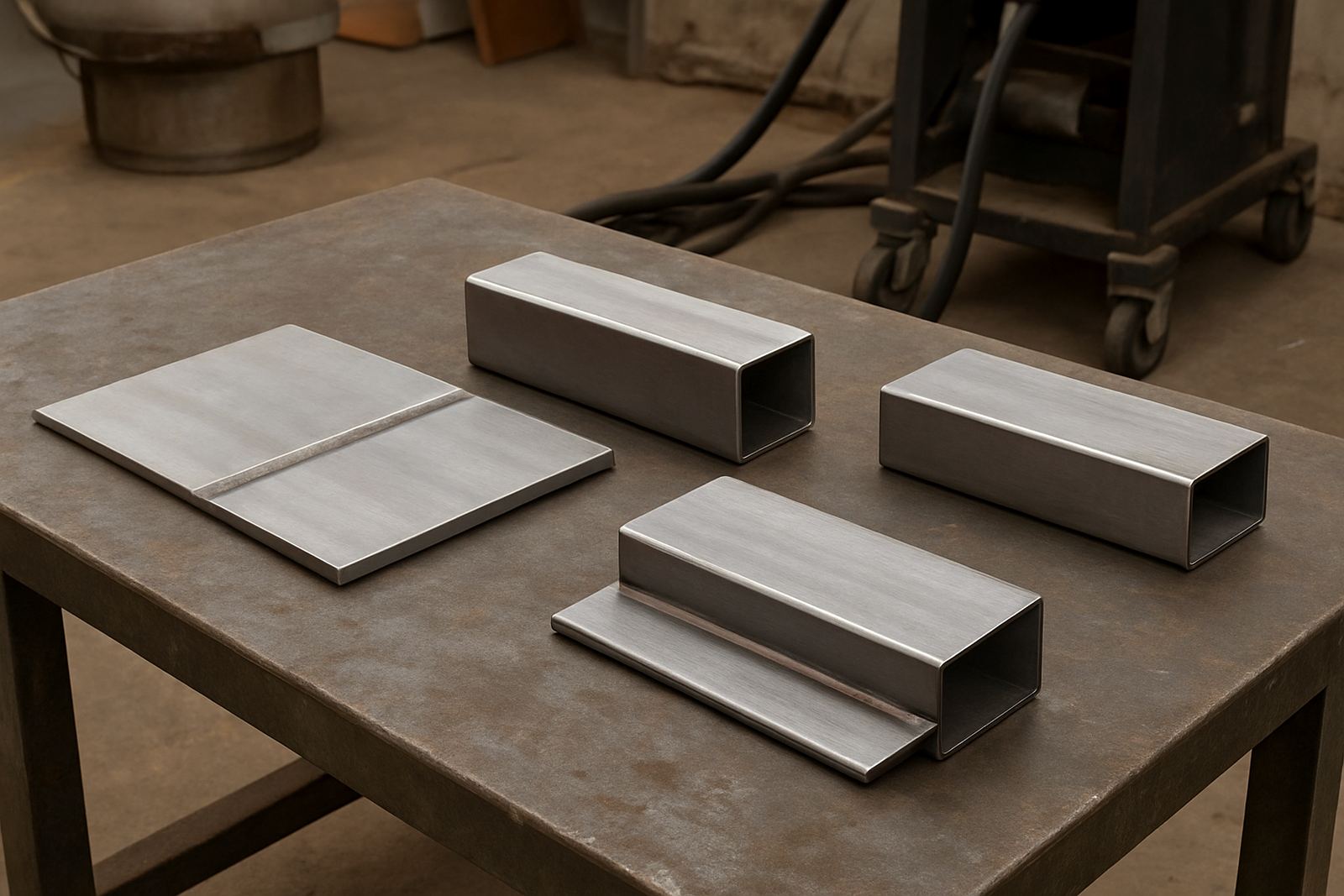
Many shops make a good sample and then leave it on a shelf where it gets scratched, mixed up or thrown away during a clean-up. A better method is to give the sample a fixed place. Use a labelled rack, a sealed container or a marked board in the quality area. If the sample is thin sheet, keep it flat so heat distortion does not become part of the lesson.
For workshops around Ekurhuleni, from Spartan and Kempton Park to Isando, Jet Park and Germiston, space is usually tight and the pace is fast. That means storage needs to be practical. A sample that is too big to handle will not be used often, and one with no label becomes just another offcut. Good recordkeeping keeps the sample linked to the machine, the operator and the process, not just the metal itself.
- Keep samples away from grinding dust and oil
- Store them where shift staff can reach them without moving stock
- Mark samples clearly with date and job reference
- Separate approved samples from trial pieces that were never accepted
- Review old samples when tooling or consumables change
Using reference pieces to train new operators faster
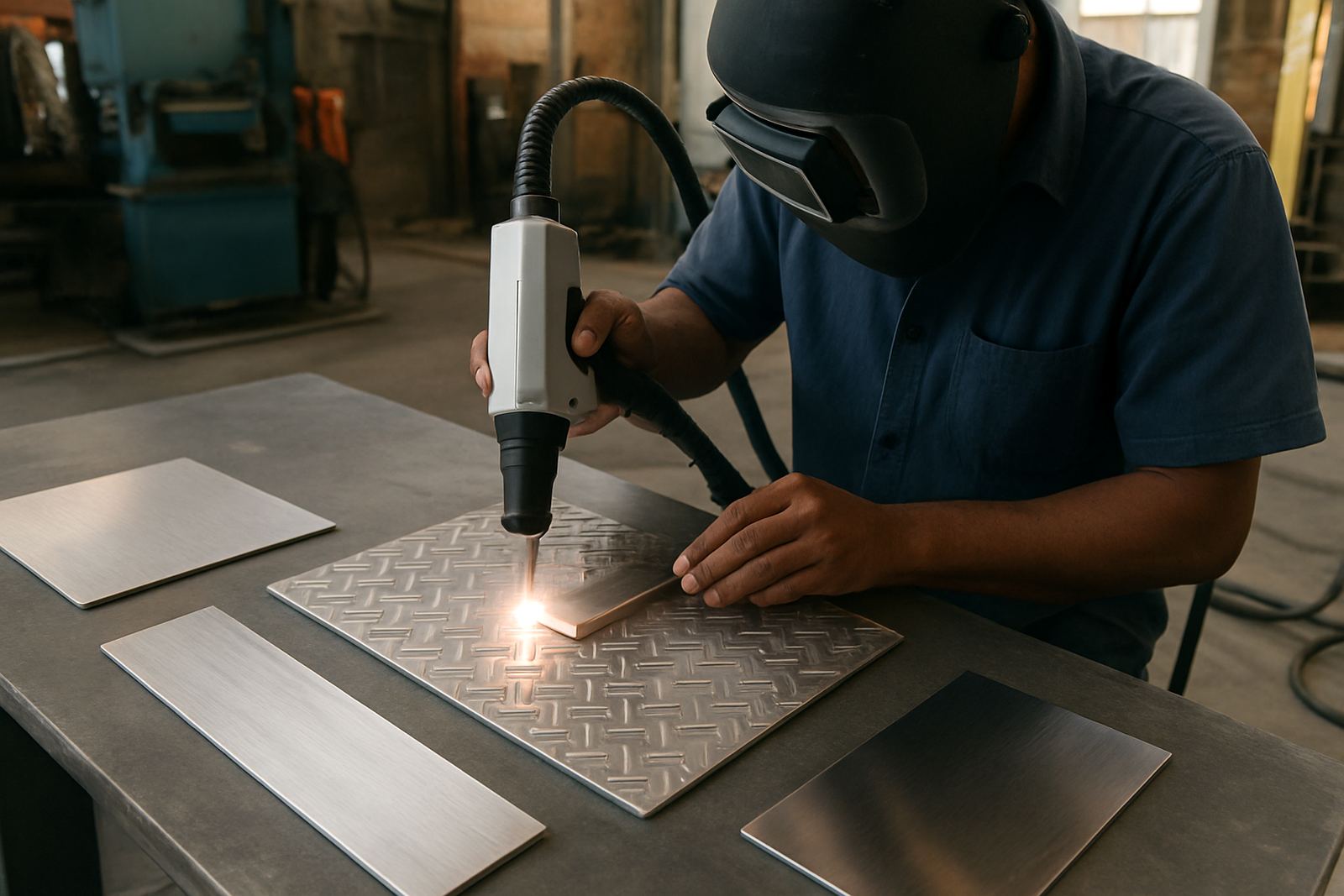
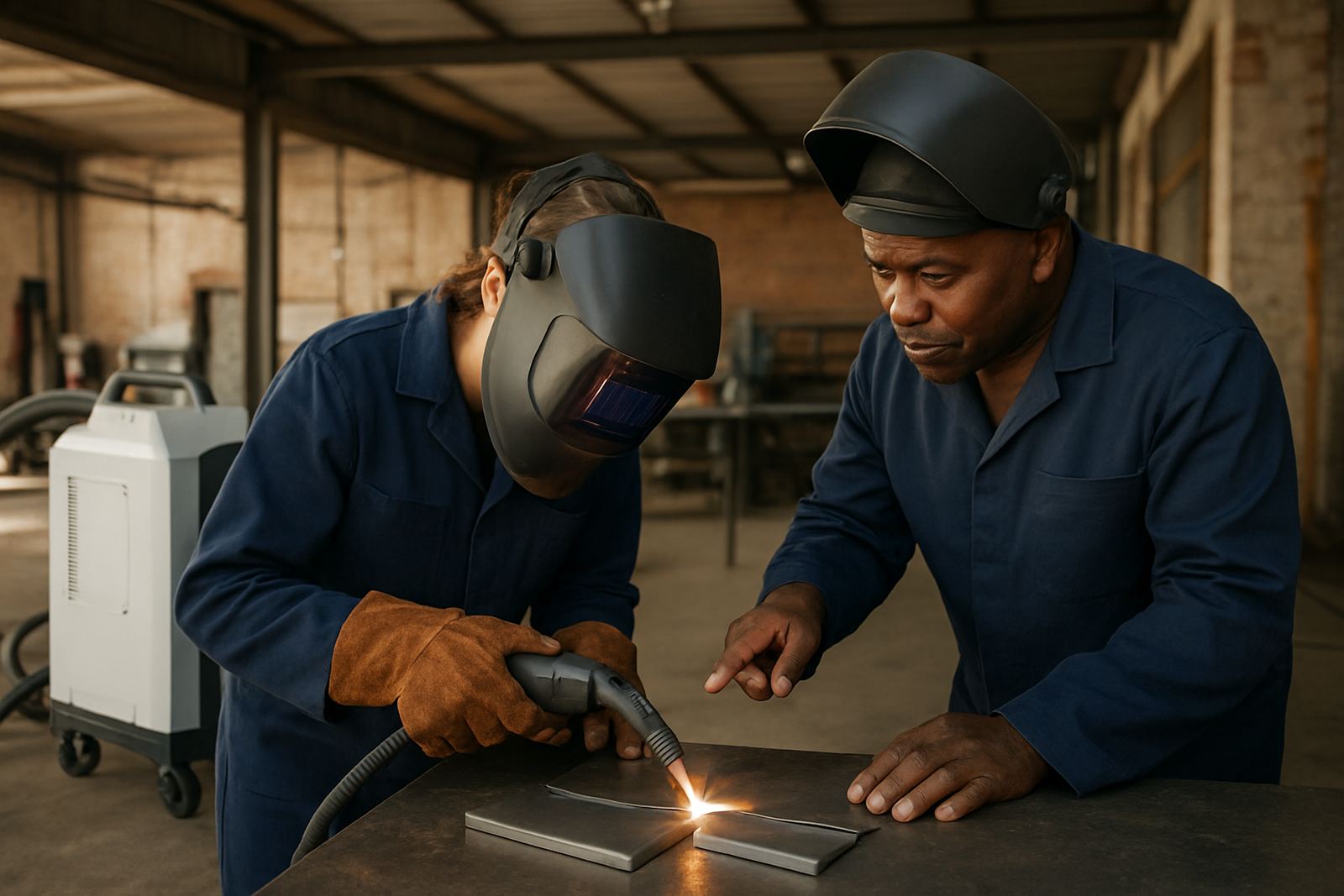
Training goes better when the operator can compare their weld directly against a known sample. That is especially useful for teams new to handheld fibre laser welding, where the process feels different from older methods and the feedback from the puddle is less familiar. A reference piece gives the trainer something concrete to point at. This is the edge you want, this is the bead profile you want, this is the colour that shows the heat stayed in range.
At a fabrication shop in Boksburg, for example, a team working on stainless cabinet frames might save one approved sample for 1.2 mm sheet and another for 2 mm tube. When a new operator starts, the trainer can set up a side by side check and show the difference between a clean first pass and one that ran too hot. That cuts down on guesswork and helps the team move quicker, without pushing scrap through the floor.
It also helps during refresher training. Even skilled welders drift a little over time, especially when production pressure is high or when the shop has had load-shedding interruptions and the workflow is broken up. A sample record brings the standard back into view.
What to do when a weld changes and nobody knows why
When a weld no longer looks like the sample, start with the basics before blaming the machine. Check surface prep, fit-up, material batch, consumable condition and clamping. In many cases, the fault is small and fixable. A dull nozzle, poor cleaning or a slight change in joint gap can be enough to alter the result.
If the sample record is properly kept, troubleshooting becomes much quicker. You can compare the current job against the approved piece and see what changed. That means less wasted time and less arguing over whether the weld is acceptable. It also helps when a client wants a repeat job and expects the same finish as the last run.
Use the record to log any fix you apply, even if it seems minor. If the workshop later sees the same issue again, the notes will show whether the cause was operator technique, maintenance, or material handling. Over time, that makes the whole process steadier and easier to control.
- Compare current settings with the saved sample before changing anything
- Check for wear on clamps, guides and contact points
- Confirm the material is the same grade and thickness
- Record the correction so the next shift can follow it
A practical record system for South African fabrication shops
The best system is the one that busy people will use every day. Keep it simple. One page or one file per job, one approved sample per setting range, and one person responsible for keeping the record area tidy. That prevents old trials from mixing with current standards and helps larger workshops stay organised as output grows.
For shops in Kempton Park, Alberton, Edenvale and beyond, a clear sample archive also supports shop demonstrations, weld testing and production rollout. When an operator, supervisor or client wants proof of the process, the sample is there to show what was done and why it was approved. It is a practical tool, not a trophy.
Laser-Welder works with fabricators across South Africa through shop demonstrations, commissioning, training and process optimisation. In many cases, the first improvement is not a bigger machine. It is a better way of keeping the welds you already know how to make. A sample record is a simple step, but it pays back every time the same job comes around again.