The real work starts after the crate is opened
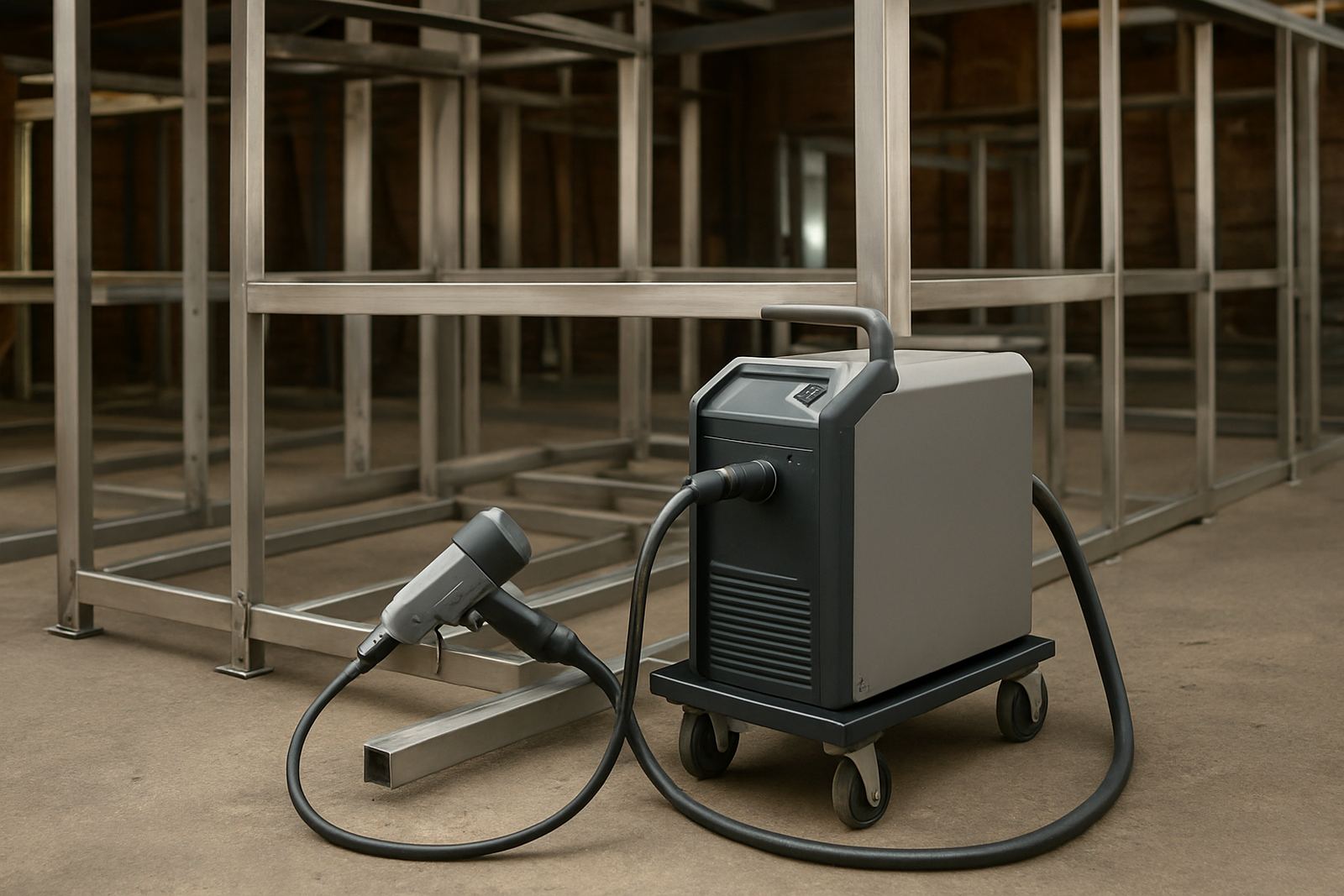
When a handheld fibre laser welder lands in a Spartan workshop, the machine itself is only part of the job. The real value comes from getting the settings right for the material, joint fit-up, shielding gas, cleaning routine and the way the team works on the floor. If support is weak at this stage, productivity can stall for weeks while operators guess their way through parameter changes.
Good support after installation shortens that gap. It gives fabricators a clear path from first power-up to repeatable welds on stainless steel tube, sheet, handrails, tanks and food-grade components. That matters in Ekurhuleni where many shops are running mixed jobs, tight lead times and split shifts, with load-shedding still forcing planning around power availability. A machine can be capable, but if no one is guiding the process, output stays inconsistent.
At Laser-Welder, support is not treated as an afterthought. It is part of the way the equipment is introduced, commissioned and handed over, with the aim of getting stable results quickly and keeping them there.
Commissioning sets the base for clean first runs
Commissioning is where the machine is checked, configured and matched to the work the shop actually does. That includes setting up the laser unit, confirming safety checks, testing the cooling and power supply arrangement, and running sample welds on the grades and thicknesses the client uses most.
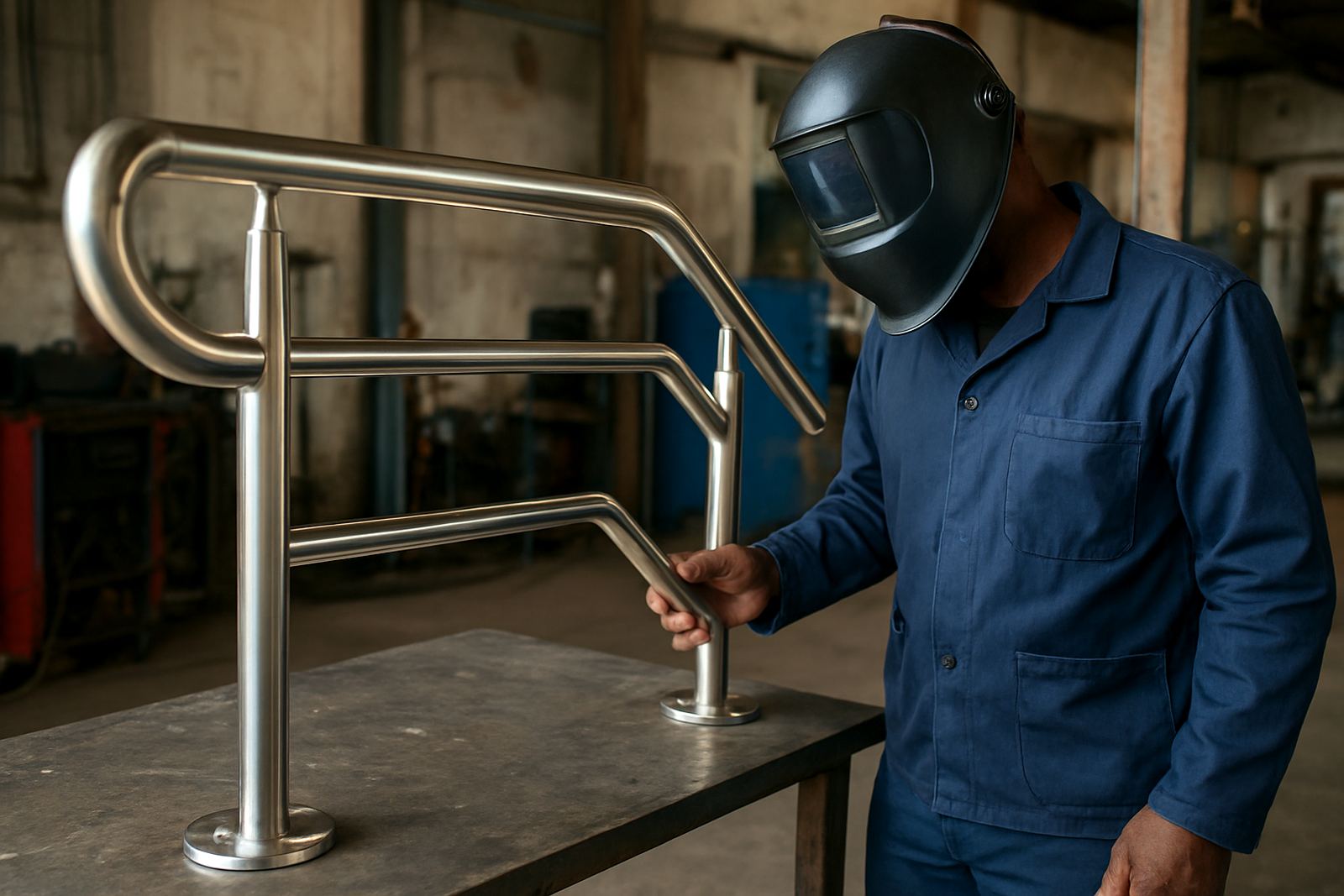
For stainless steel fabricators, small changes make a big difference. A 1.2 mm sheet joint behaves differently from a 3 mm tube seam, and a workshop doing decorative balustrades will not use the same approach as one making processing equipment. Commissioning should leave the operator with practical settings, not a pile of theory.
- Initial machine setup and parameter checks
- Sample welds on the client’s own material
- Safety and handling review for the team
- Basic checks for gas flow, lens care and cooling
- Handover notes for the first production jobs
In Kempton Park and nearby industrial areas, many fabricators need to start production fast after delivery. A careful commissioning visit reduces the chance of burnt edges, uneven fusion or unnecessary rework on the first batch.
Training that fits the shop, not the classroom
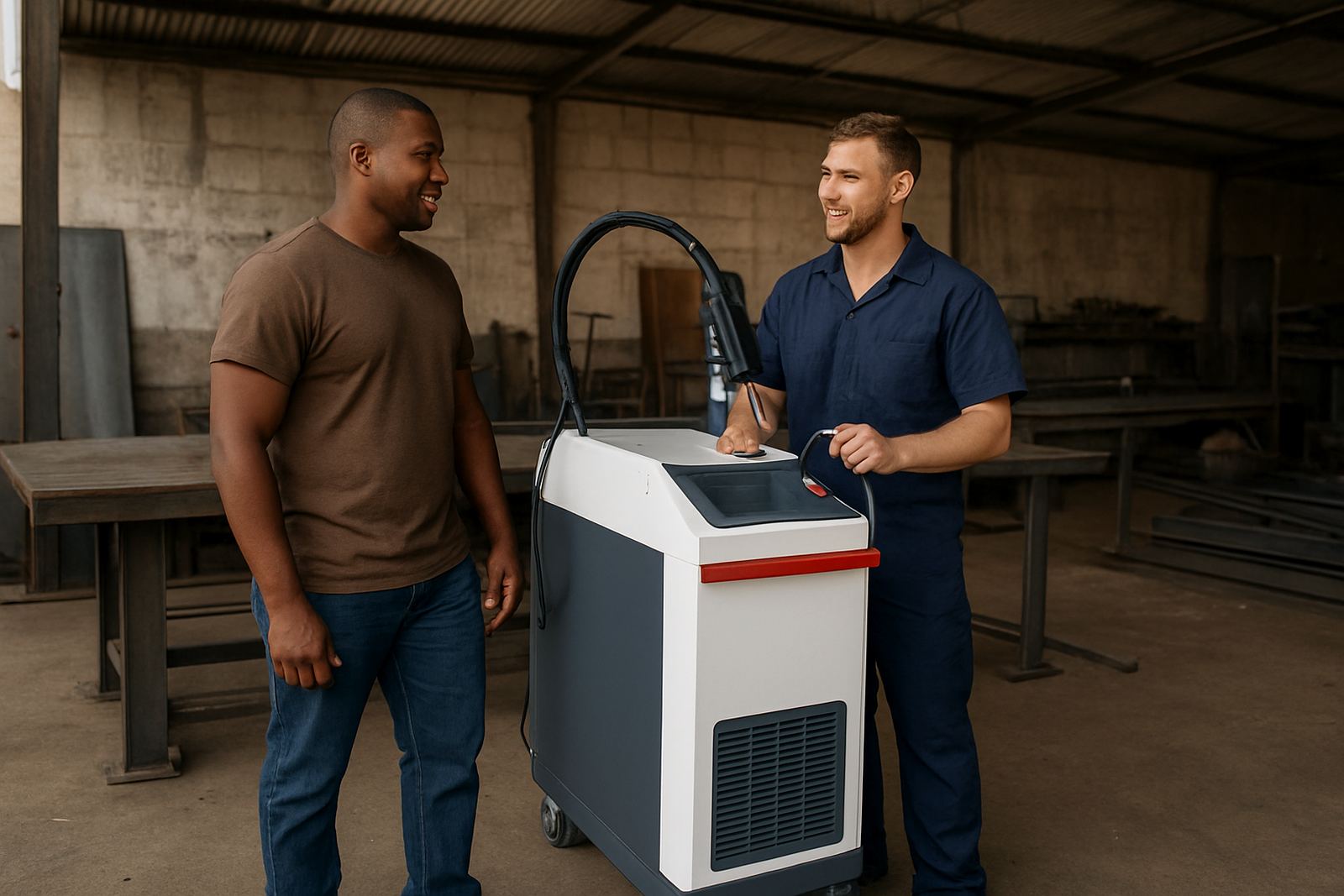
Operator training works best when it is built around the shop floor. A small team in Germiston may need one approach, while a larger production line in Jet Park needs another. The goal is not to turn every operator into a specialist overnight, but to get the team comfortable enough to weld safely and consistently from day one.
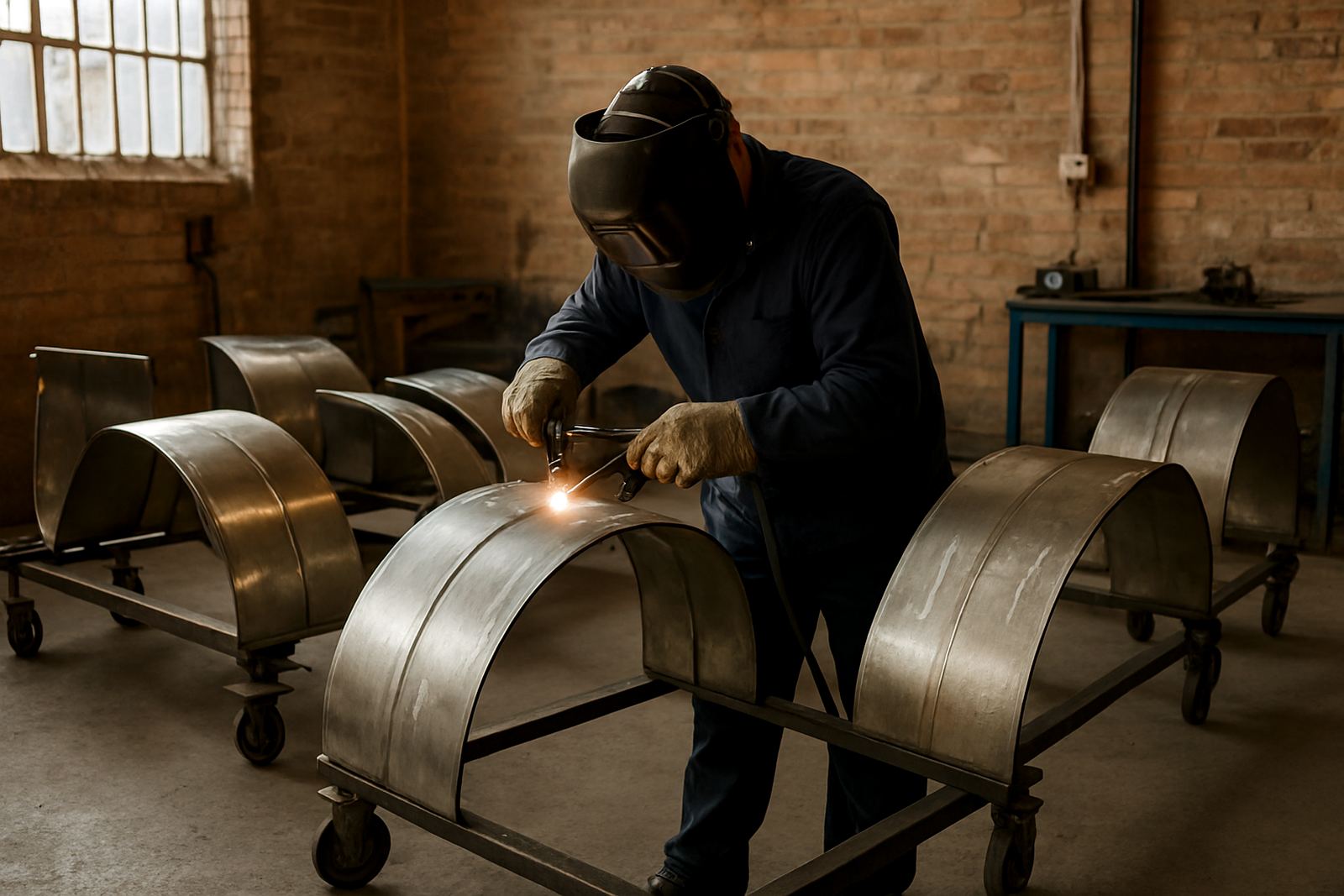
That means covering machine control, joint preparation, travel speed, torch angle, nozzle distance and how to read the weld pool. It also means showing when to stop and reset instead of pushing through a bad joint. In stainless work, poor preparation is often what causes the trouble, not the laser itself.
- Hands-on demonstration on the client’s own parts
- Refresher training for new operators or shift changes
- Process optimisation for cleaner, faster welds
- Weld testing to compare settings and finish quality
- Production rollout support for steady volume work
Tshegofatso Ramaboa and the training team often focus on practical habits that save time on the floor, such as keeping consumables organised, checking fit-up before each run and spotting contamination before it becomes scrap.
Breakdowns are costly when the order book is full
A welding machine that sits idle can disrupt an entire week’s schedule. If a workshop in Boksburg has transport parts due out by Friday, or a fabrication shop in Alberton is working to a municipal handover deadline, every hour matters. That is why breakdown response and remote help have such a direct effect on the bottom line.
Support after installation should include a clear response route. Some issues can be resolved by phone or remote troubleshooting. Others need a technician on site with the right spares and a proper understanding of the application. The important thing is that the client is not left guessing about what to do next.
Common stoppages include simple but disruptive problems such as poor torch handling, dirty optics, consumable wear, gas issues or incorrect settings after a material change. Fast diagnosis keeps those issues from becoming a full day’s loss.
Maintenance is cheaper than downtime
Preventive maintenance is one of the most practical parts of post-installation support. A handheld fibre laser welder needs regular checks to stay accurate, especially in dusty workshops or in coastal areas where humidity can affect equipment storage and consumables. Even inland, daily shop grit and metal fines can work their way into places they should not be.
Routine servicing keeps the machine ready for production and helps extend the life of key components. It also gives the team a chance to catch small changes before they become faults. That is far better than waiting for a problem to appear in the middle of a job.
- Scheduled machine inspections
- Cleaning and condition checks for key parts
- Consumable and spares planning
- Performance checks after heavy production runs
- Advice on storage during periods of load-shedding or shutdown
For shops running early morning shifts or working around unstable power, this kind of planning can make the difference between a smooth week and one full of stoppages.
A local example from Spartan to a production line in Germiston
A stainless steel fabricator in the greater Ekurhuleni area may start with one handheld laser welder for small assemblies, then quickly build demand once the team sees cleaner finish and less post-weld grinding. That is where good support proves its worth. The first month is often about fine-tuning settings, training a second operator and making sure the machine is used to its full ability without unnecessary wear.
In one typical case, a shop working on decorative railings and light process components needed help balancing speed with appearance. After commissioning, the team received hands-on guidance on fit-up, travel speed and finishing. A follow-up visit helped them improve consistency across different grades of stainless steel, and a later refresher session supported a new operator who joined the shift. The result was steadier output and fewer reworks, with less time spent grinding and chasing surface marks.
That kind of support is what shortens the gap between machine arrival and stable output. It turns the welder from a promising piece of equipment into a reliable part of the workflow.
What fabricators should ask before they buy
Before ordering any welding equipment, it is worth asking what happens after delivery. A good supplier should be able to explain training, commissioning, maintenance and the process for getting help when production stops. If those answers are vague, the shop may end up carrying the risk alone.
Useful questions include:
- Will the machine be commissioned on our own material?
- Is operator training included, and can it be repeated later?
- How are breakdowns handled if production stops mid-week?
- Can we get process help for different stainless grades and thicknesses?
- What maintenance schedule is recommended for our workshop conditions?
Laser-Welder supports clients from Spartan, Kempton Park and across South Africa through demos, training and ongoing service. For fabricators who want cleaner welds and quicker production, the handover after installation is not a minor extra. It is part of what makes the machine pay back properly.