Why thin stainless sheet behaves differently
Thin stainless sheet moves fast under heat. If the arc is too hot, the joint opens up, the sheet distorts, or the backside discolours before the weld has even settled. That is why the same settings that work on 2 mm plate can cause trouble on 0.8 mm or 1 mm sheet.
Fabricators working on kitchen fitouts, wall cladding, medical trolleys, food equipment and decorative items know this well. In places like Spartan and Kempton Park, where many shops are balancing small batches with repeat work, the challenge is not only making a sound weld but keeping the finish neat enough to pass straight on to polishing or assembly. On thin material, every second and every millimetre count.
Start with fit-up before you touch the torch
A clean joint starts before welding begins. Thin sheet needs accurate cutting, consistent gap control and firm clamping so the edges stay where they should. If the parts are floating, the weld pool will pull them around and you will chase the seam instead of controlling it.
- Remove oil, marker lines, dust and oxide from both sides of the joint.
- Keep the gap as even as possible along the full length.
- Use clamps, magnets or stops to hold the sheet flat and true.
- Check alignment at tacks before committing to the full run.
Even a small mismatch can show up on thin stainless. A 0.5 mm step on the edge may not look like much in the jig, but once the heat goes in, the joint can distort and leave a visible line. Good preparation saves time later, especially when the job needs a brushed finish or a sanitary weld.
Heat control is the difference between tidy and messy
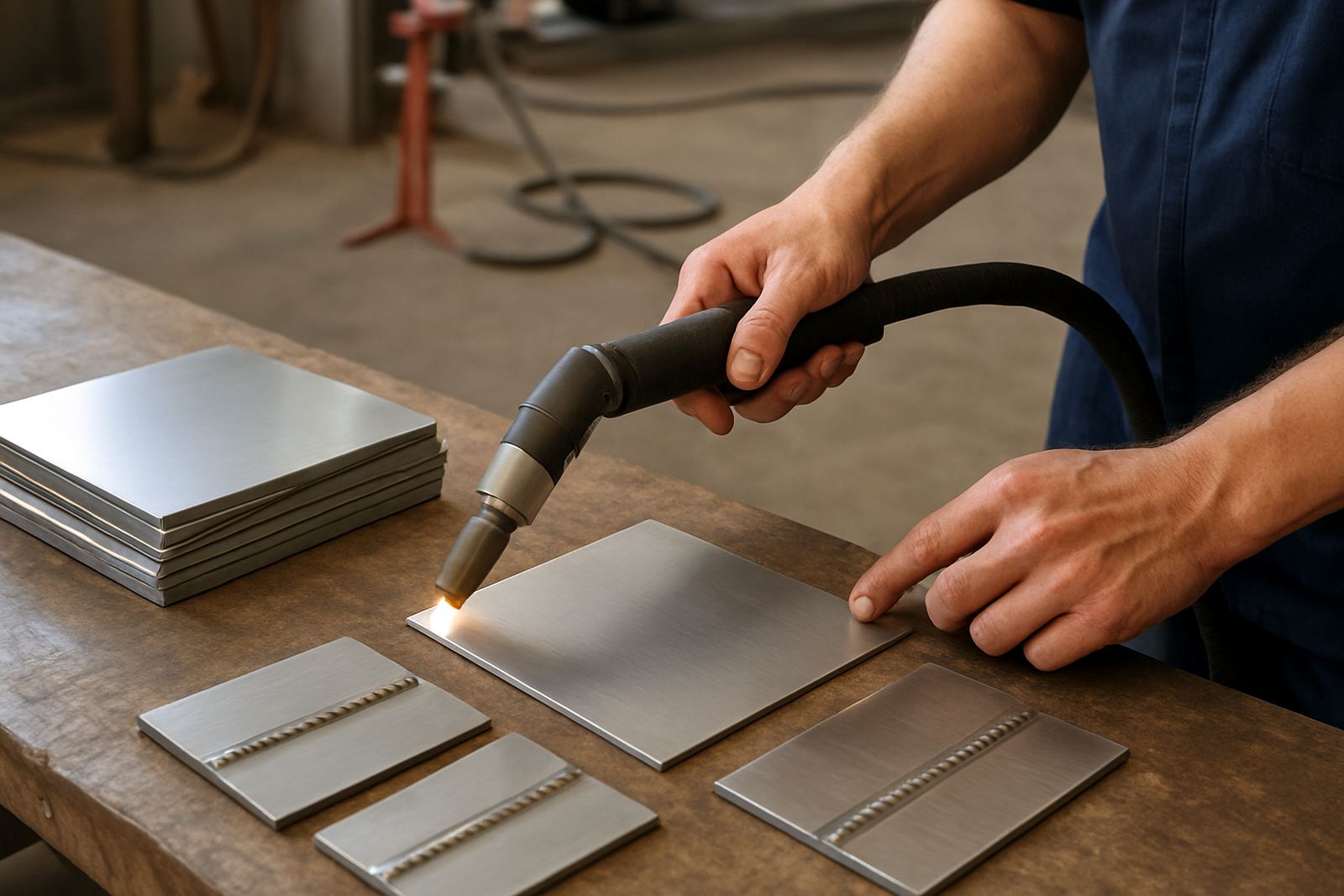
Thin sheet welding demands low heat input and steady travel. The aim is to melt just enough material to form a full joint without blowing through the sheet or cooking the surrounding area. That means correct beam focus, suitable travel speed, and a hand that stays calm from start to finish.
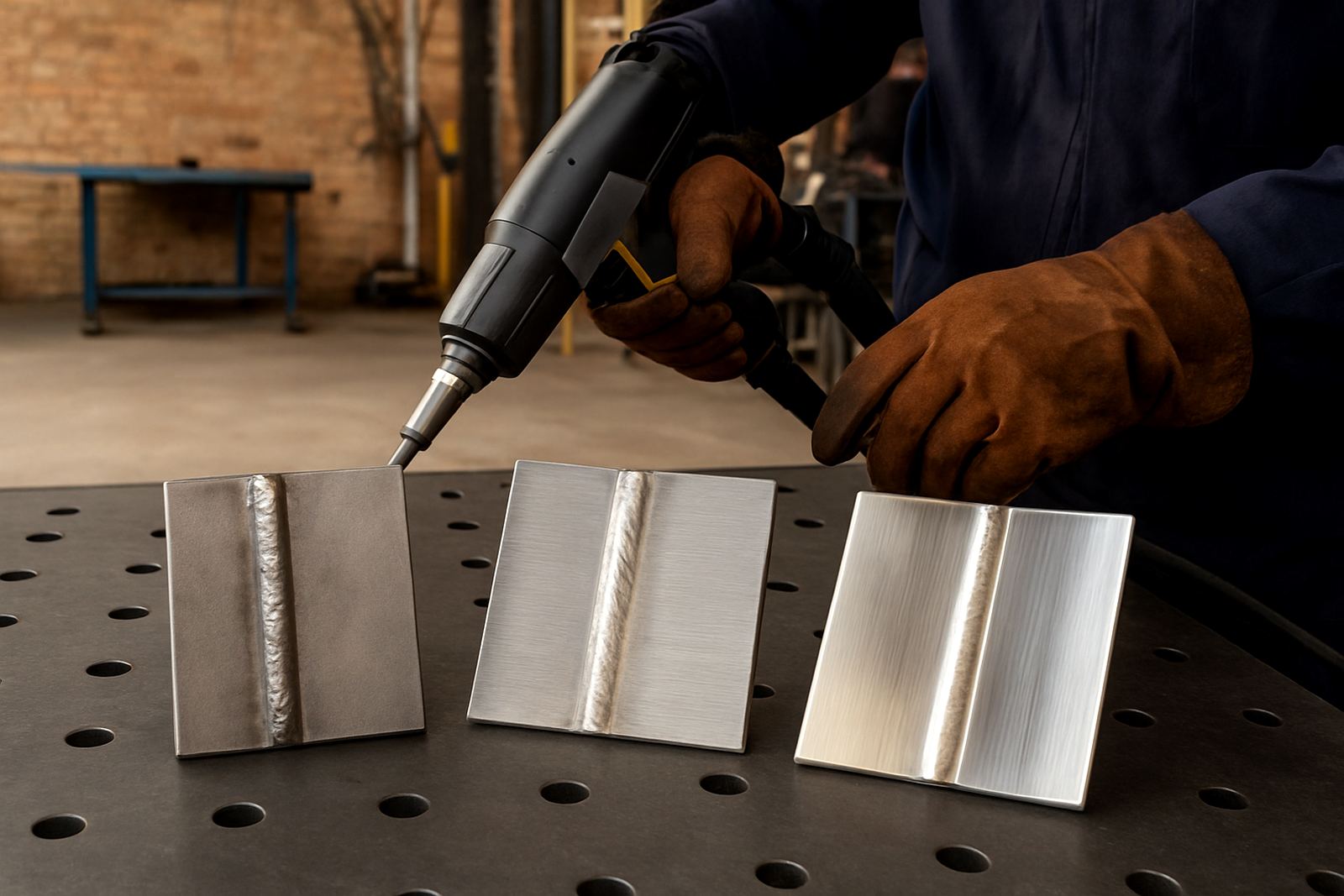
For many fabricators, handheld fibre laser welders offer a practical way to keep heat down while still getting a strong join. The concentrated energy helps reduce wide heat-affected zones and can limit distortion, which is especially useful on visible stainless work. It also helps when the shop is dealing with power interruptions or needing to work around load-shedding windows, because production time is often squeezed into shorter runs.
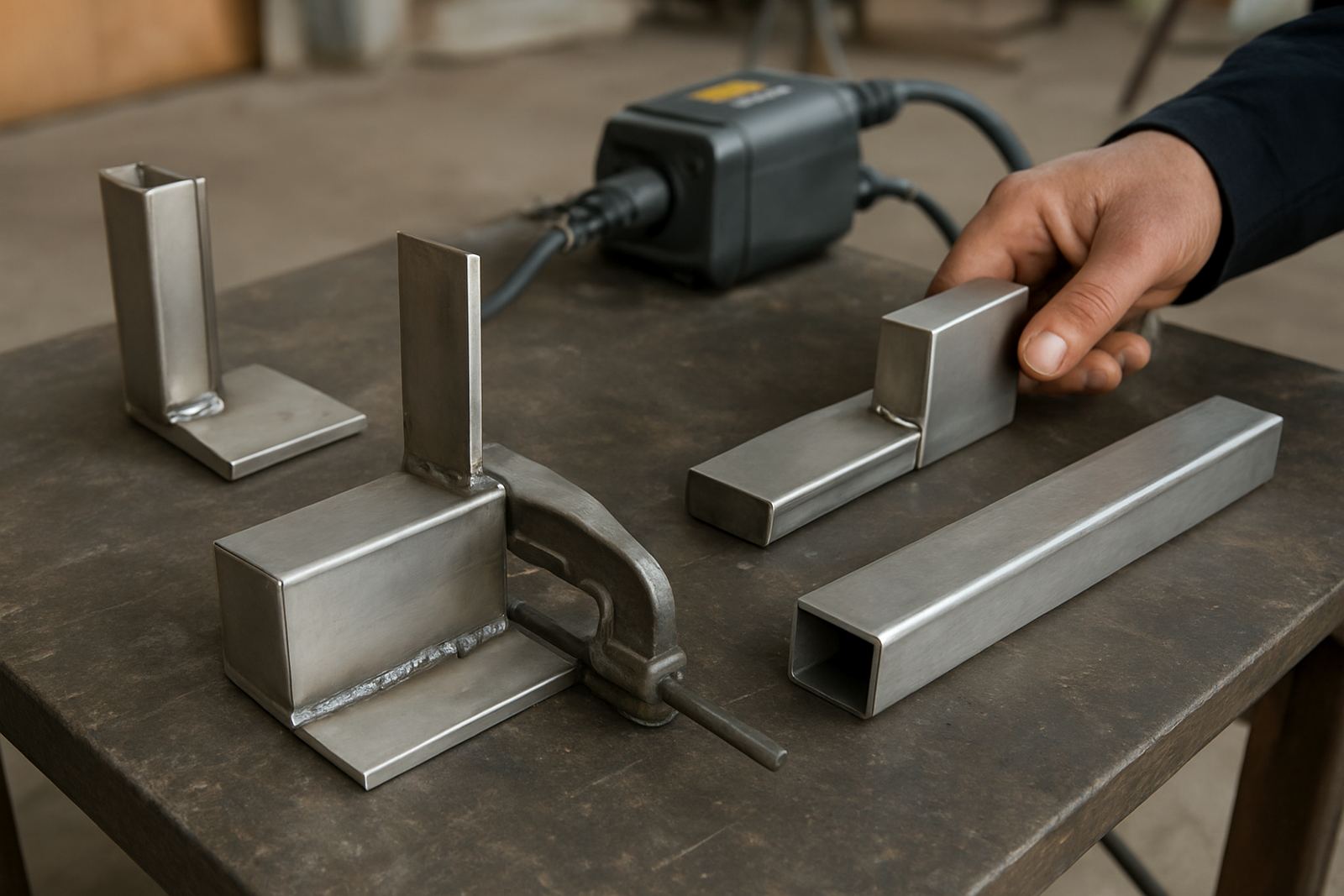
Keep in mind that every material thickness and joint type behaves differently. Flat-to-flat seams, edge joints and small box sections all need their own settings and technique. A quick test on offcut material is worth more than guessing on the live job.
Practical methods that help on the workshop floor
When thin sheet jobs start stacking up, a few habits make a real difference. They are simple, but they work.
- Use short weld runs instead of long continuous passes where possible.
- Let sections cool between runs to reduce warping.
- Support the workpiece properly so the sheet does not sag under its own weight.
- Match the filler approach, if used, to the joint and finish requirement.
- Check the underside for burn-through, especially on corners and lap joints.
Some shops try to move too quickly and then spend twice as long grinding back distortion. On thin stainless, slower and cleaner is often faster overall. A neat weld that needs less finishing keeps the job moving and lowers the chance of overworking the material. That matters when orders are due to go out to Johannesburg, Pretoria, or a local site in Ekurhuleni before the end of the day.
Training matters when the margin for error is small
Thin sheet welding is not only about having the right machine. It is also about the operator knowing how to set up the job, judge the puddle and react quickly if the edge starts to open. Good training shortens the learning curve and gives the team confidence to work on finer material without wasting stock.
Laser-Welder supports fabrication shops with machine commissioning, operator training, process optimisation and refresher training at sites across South Africa. That includes demos and weld testing in Spartan, Kempton Park, Isando, Jet Park, Edenvale, Germiston, Boksburg and Alberton, as well as visits to workshops further afield. For businesses that run mixed work, the same machine may need to handle thin sheet one hour and heavier fabrication the next, so practical process setup is important.
A well-trained operator will also know when to stop and adjust instead of forcing the job through. That habit protects the work, the machine and the schedule.
A local example from a busy Ekurhuleni shop
A stainless fabrication shop in Kempton Park recently needed cleaner welds on thin panels for food-grade equipment. The team was seeing distortion on longer seams and spending too much time on rework. After a shop demonstration and production rollout plan, the operators adjusted their clamping method, changed the weld sequence and started using shorter controlled runs on the thinner sections.
The result was less heat distortion, fewer rejects and a more consistent finish across the batch. The shop did not need to change its whole workflow. It just needed a better way to handle the thin material it was already working with. That is often the real gain with thin sheet welding, small changes that add up over a full week of work.
For a busy team, the benefit is practical: less grinding, less straightening, and more time spent on the next job rather than fixing the last one.
The finishing stage should be planned from the start
Many welding problems show up only when the job reaches finishing. If the bead is too wide, the heat input was too high. If the surface has heavy discolouration, shielding or cleanliness may have been off. If the panel twists after welding, the sequence or clamping likely needed more thought. Thin sheet leaves no place to hide these issues.
That is why the welding plan should include what happens after the weld too. Will the seam be brushed, polished, or left as welded? Does the customer need the back side clean for hygiene or appearance? Will the part be assembled immediately or stored for transport? These questions affect the way the weld is made, not just how it looks at the end.
When the process is planned properly, thin sheet can be welded cleanly and repeatably, even in a workshop that is under pressure. The key is control, not force, and a method that suits the material in front of you.